Zheng Wenjun, Qin Feng
Department of Physics and Department of Physiology and Biophysical Sciences, State University of New York at Buffalo, Buffalo, NY 14260
Department of Physics and Department of Physiology and Biophysical Sciences, State University of New York at Buffalo, Buffalo, NY 14260.
J Gen Physiol. 2015 May;145(5):443-56. doi: 10.1085/jgp.201411335.
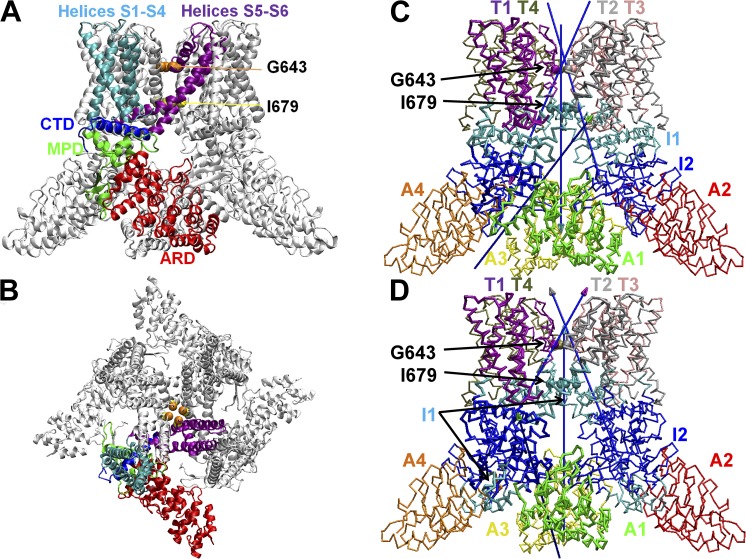
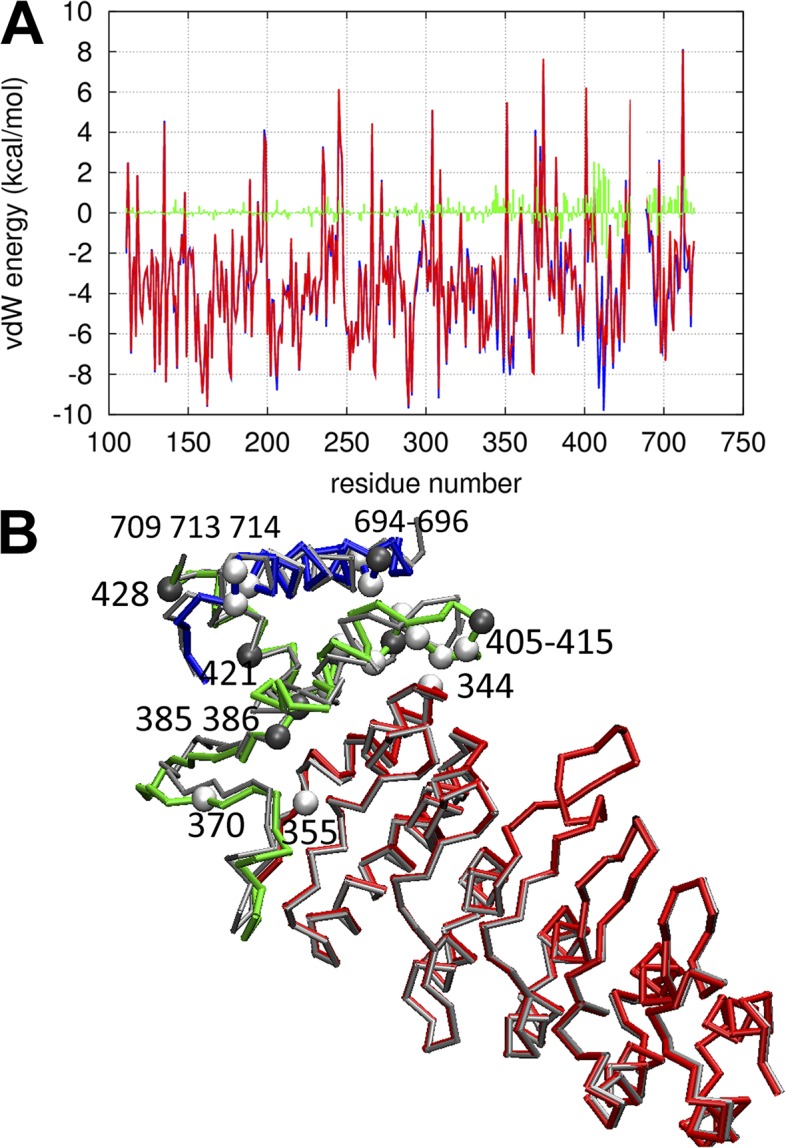
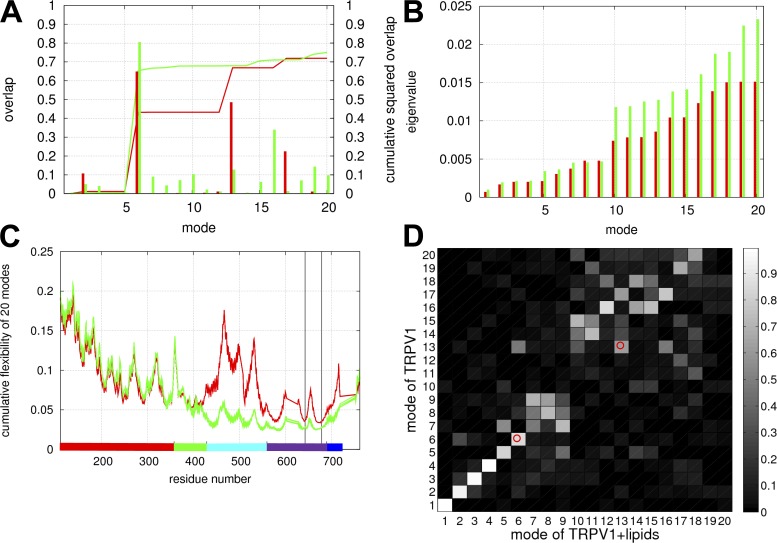
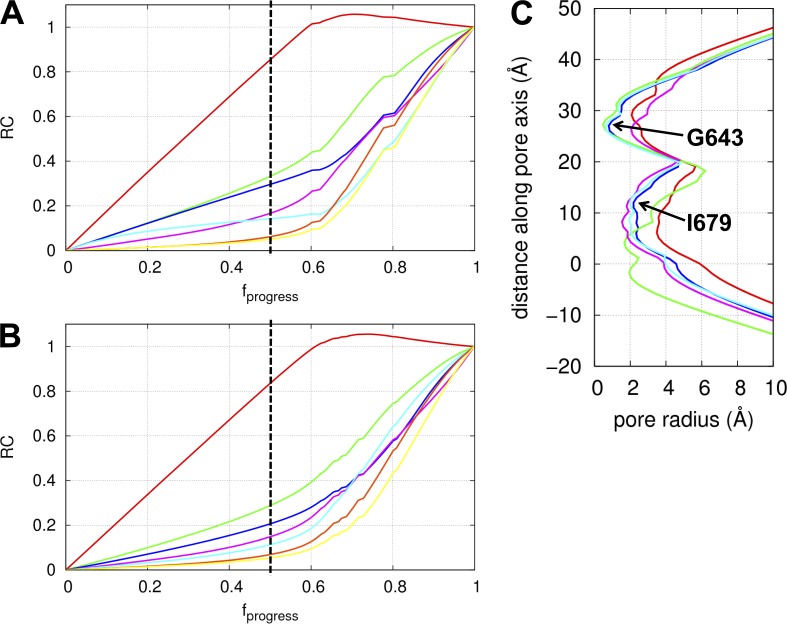
The transient receptor potential (TRP) channels act as key sensors of various chemical and physical stimuli in eukaryotic cells. Despite years of study, the molecular mechanisms of TRP channel activation remain unclear. To elucidate the structural, dynamic, and energetic basis of gating in TRPV1 (a founding member of the TRPV subfamily), we performed coarse-grained modeling and all-atom molecular dynamics (MD) simulation based on the recently solved high resolution structures of the open and closed form of TRPV1. Our coarse-grained normal mode analysis captures two key modes of collective motions involved in the TRPV1 gating transition, featuring a quaternary twist motion of the transmembrane domains (TMDs) relative to the intracellular domains (ICDs). Our transition pathway modeling predicts a sequence of structural movements that propagate from the ICDs to the TMDs via key interface domains (including the membrane proximal domain and the C-terminal domain), leading to sequential opening of the selectivity filter followed by the lower gate in the channel pore (confirmed by modeling conformational changes induced by the activation of ICDs). The above findings of coarse-grained modeling are robust to perturbation by lipids. Finally, our MD simulation of the ICD identifies key residues that contribute differently to the nonpolar energy of the open and closed state, and these residues are predicted to control the temperature sensitivity of TRPV1 gating. These computational predictions offer new insights to the mechanism for heat activation of TRPV1 gating, and will guide our future electrophysiology and mutagenesis studies.
瞬时受体电位(TRP)通道是真核细胞中各种化学和物理刺激的关键传感器。尽管经过多年研究,TRP通道激活的分子机制仍不清楚。为了阐明TRPV1(TRPV亚家族的创始成员)门控的结构、动力学和能量基础,我们基于最近解析的TRPV1开放和关闭形式的高分辨率结构进行了粗粒度建模和全原子分子动力学(MD)模拟。我们的粗粒度正常模式分析捕捉到了TRPV1门控转变中涉及的两种关键集体运动模式,其特征是跨膜结构域(TMDs)相对于细胞内结构域(ICDs)的四级扭曲运动。我们的转变途径建模预测了一系列结构运动,这些运动通过关键界面结构域(包括膜近端结构域和C末端结构域)从ICDs传播到TMDs,导致选择性过滤器依次打开,随后通道孔中的下门打开(通过对ICDs激活诱导的构象变化进行建模得到证实)。粗粒度建模的上述发现对脂质扰动具有鲁棒性。最后,我们对ICD的MD模拟确定了对开放和关闭状态的非极性能量有不同贡献的关键残基,预计这些残基会控制TRPV1门控的温度敏感性。这些计算预测为TRPV1门控热激活机制提供了新见解,并将指导我们未来的电生理学和诱变研究。