Department of Cellular Neurophysiology, Institute of Physiology Czech Academy of Sciences, 142 20 Prague, Czech Republic.
Department of Physiology, Faculty of Science, Charles University, 128 00 Prague, Czech Republic.
Int J Mol Sci. 2019 Aug 16;20(16):3990. doi: 10.3390/ijms20163990.
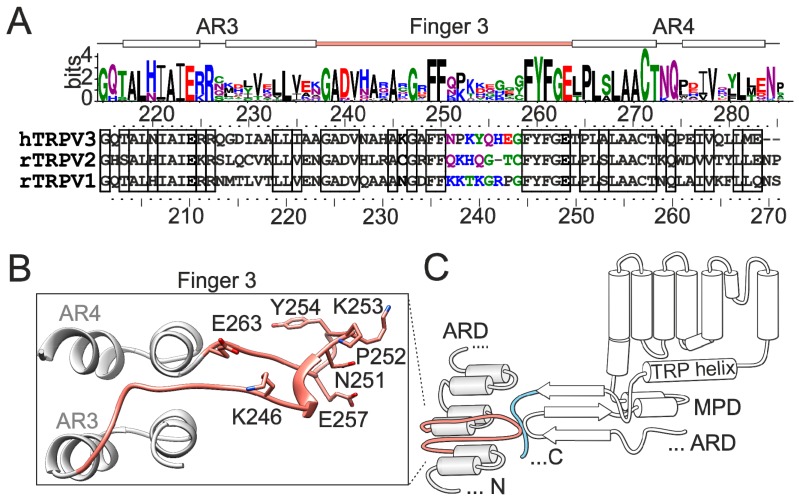
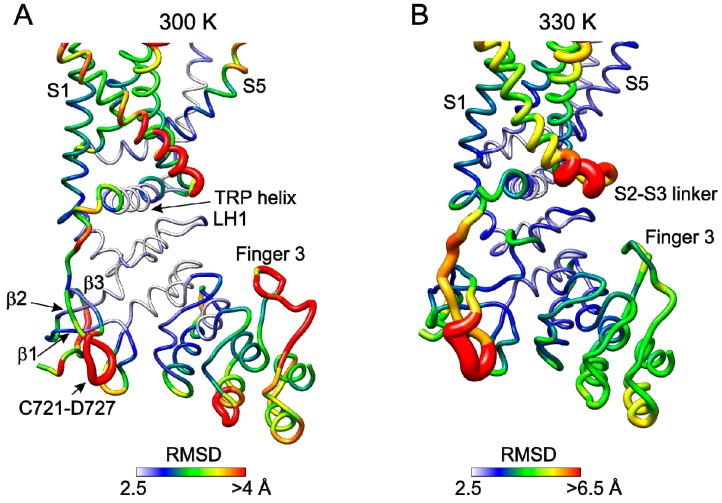
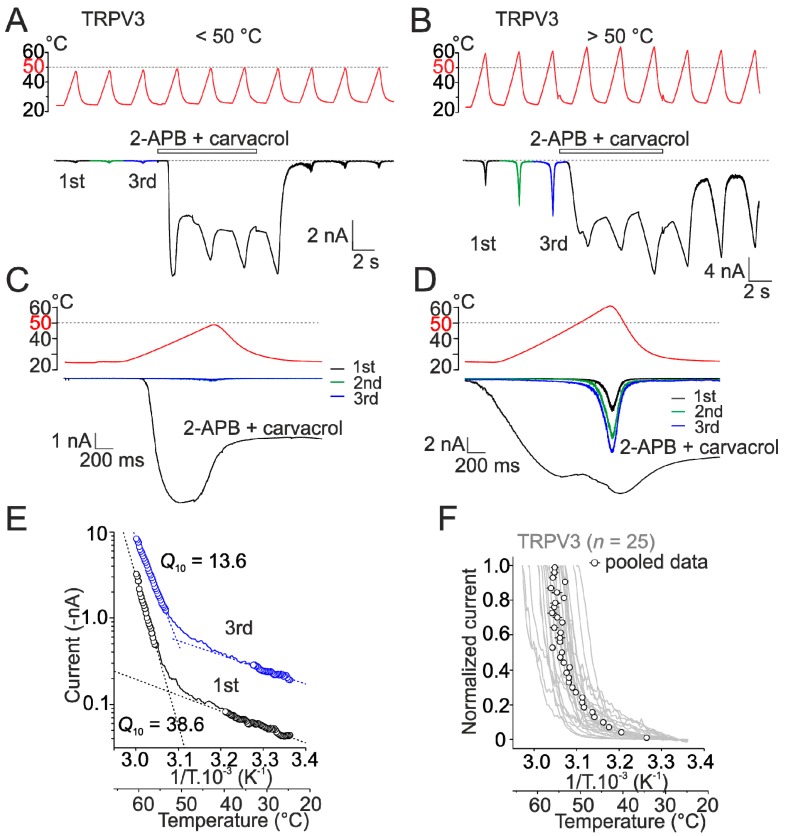
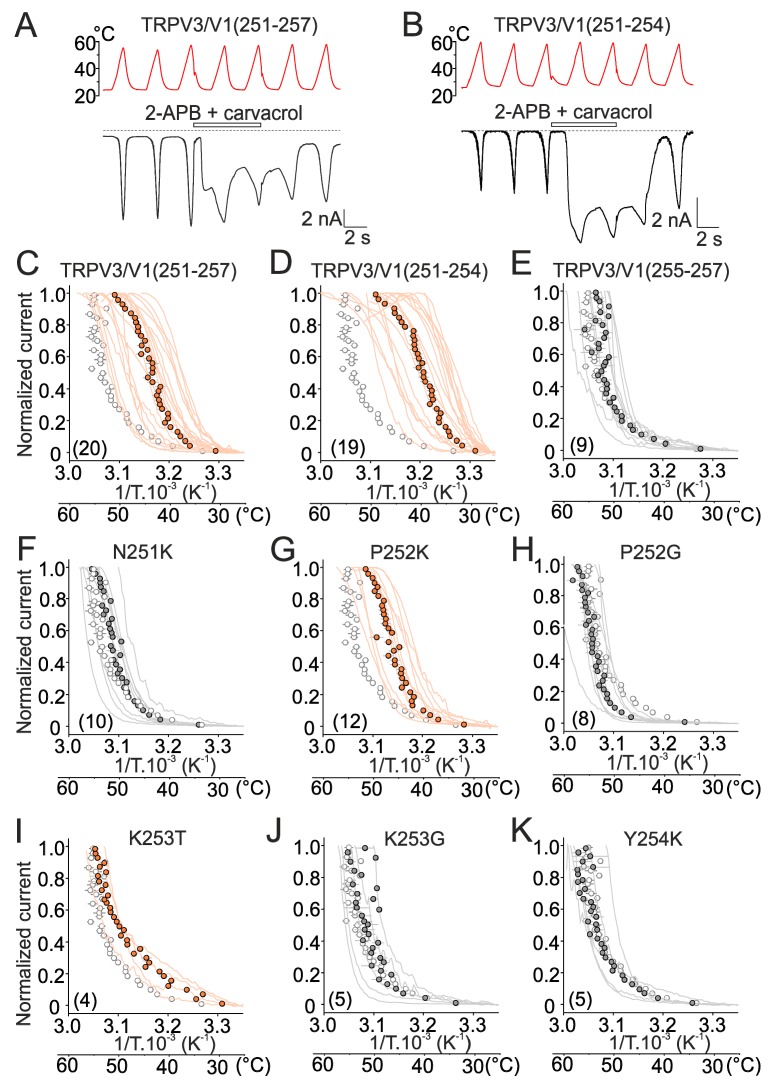
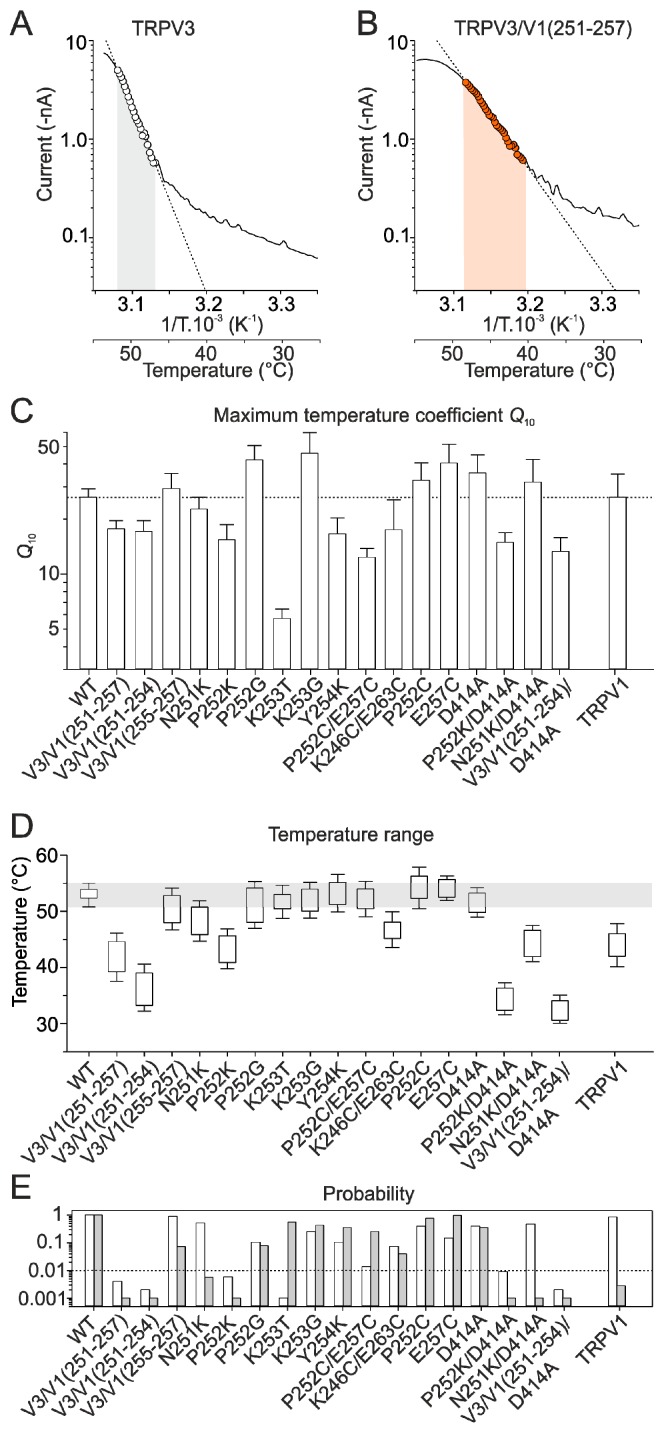
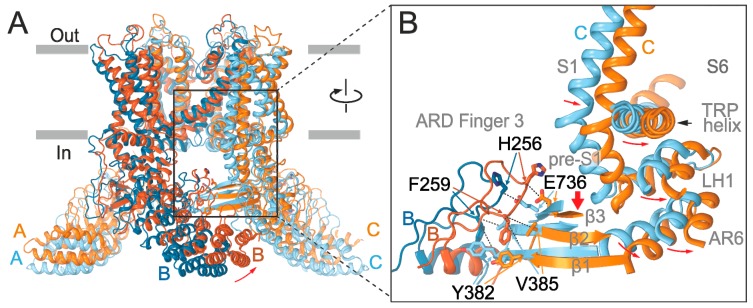
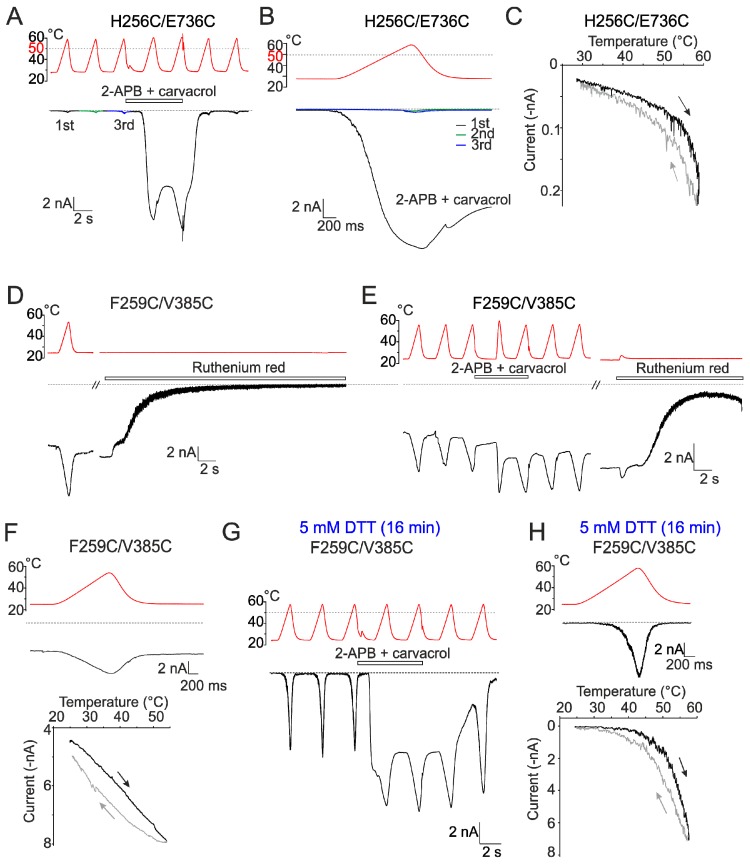
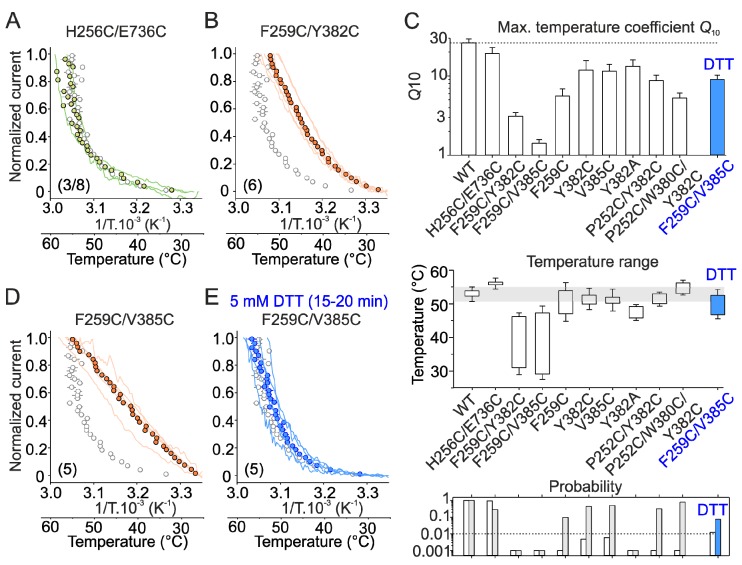
The vanilloid transient receptor potential channel TRPV3 is a putative molecular thermosensor widely considered to be involved in cutaneous sensation, skin homeostasis, nociception, and pruritus. Repeated stimulation of TRPV3 by high temperatures above 50 °C progressively increases its responses and shifts the activation threshold to physiological temperatures. This use-dependence does not occur in the related heat-sensitive TRPV1 channel in which responses decrease, and the activation threshold is retained above 40 °C during activations. By combining structure-based mutagenesis, electrophysiology, and molecular modeling, we showed that chimeric replacement of the residues from the TRPV3 cytoplasmic inter-subunit interface (N251-E257) with the homologous residues of TRPV1 resulted in channels that, similarly to TRPV1, exhibited a lowered thermal threshold, were sensitized, and failed to close completely after intense stimulation. Crosslinking of this interface by the engineered disulfide bridge between substituted cysteines F259C and V385C (or, to a lesser extent, Y382C) locked the channel in an open state. On the other hand, mutation of a single residue within this region (E736) resulted in heat resistant channels. We propose that alterations in the cytoplasmic inter-subunit interface produce shifts in the channel gating equilibrium and that this domain is critical for the use-dependence of the heat sensitivity of TRPV3.
辣椒素瞬时受体电位通道 TRPV3 是一种假定的分子温度传感器,广泛认为其参与皮肤感觉、皮肤稳态、伤害感受和瘙痒。50°C 以上的高温反复刺激 TRPV3 会逐渐增加其反应,并将激活阈值转移到生理温度。这种用途依赖性不会发生在相关的热敏 TRPV1 通道中,在 TRPV1 通道中,反应减少,并且在激活期间激活阈值保持在 40°C 以上。通过结合基于结构的诱变、电生理学和分子建模,我们表明,用 TRPV1 同源残基替换 TRPV3 细胞质亚基间界面(N251-E257)的残基的嵌合替换导致类似 TRPV1 的通道,其热阈值降低、敏化,并且在强烈刺激后不能完全关闭。通过工程化二硫键(F259C 和 V385C 之间(或在较小程度上,Y382C)之间的交联)将该界面交联将通道锁定在开放状态。另一方面,该区域内单个残基的突变(E736)导致耐热通道。我们提出,细胞质亚基间界面的改变会导致通道门控平衡的改变,并且该结构域对于 TRPV3 热敏感性的用途依赖性至关重要。