Cao Yu, Axup Jun Y, Ma Jennifer S Y, Wang Rongsheng E, Choi Seihyun, Tardif Virginie, Lim Reyna K V, Pugh Holly M, Lawson Brian R, Welzel Gus, Kazane Stephanie A, Sun Ying, Tian Feng, Srinagesh Shailaja, Javahishvili Tsotne, Schultz Peter G, Kim Chan Hyuk
Department of Chemistry and The Skaggs Institute for Chemical Biology, The Scripps Research Institute, 10550 N Torrey Pines Rd, La Jolla, CA 92037 (USA).
California Institute for Biomedical Research, 11119 N Torrey Pines Rd, La Jolla, CA 92037 (USA).
Angew Chem Int Ed Engl. 2015 Jun 8;54(24):7022-7. doi: 10.1002/anie.201500799. Epub 2015 Apr 27.
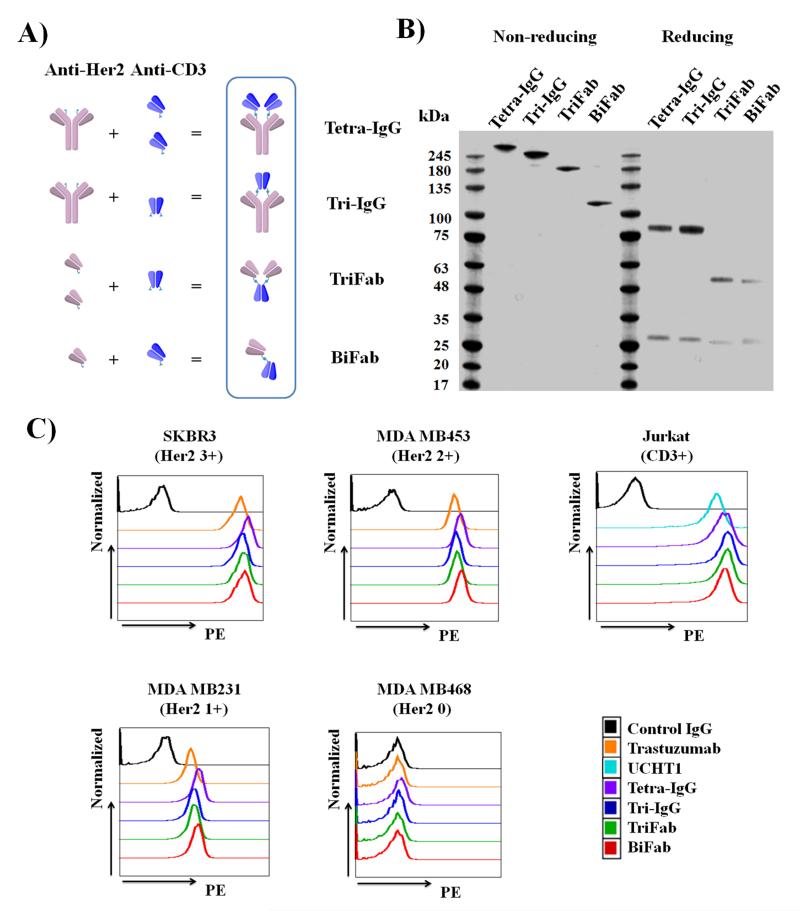
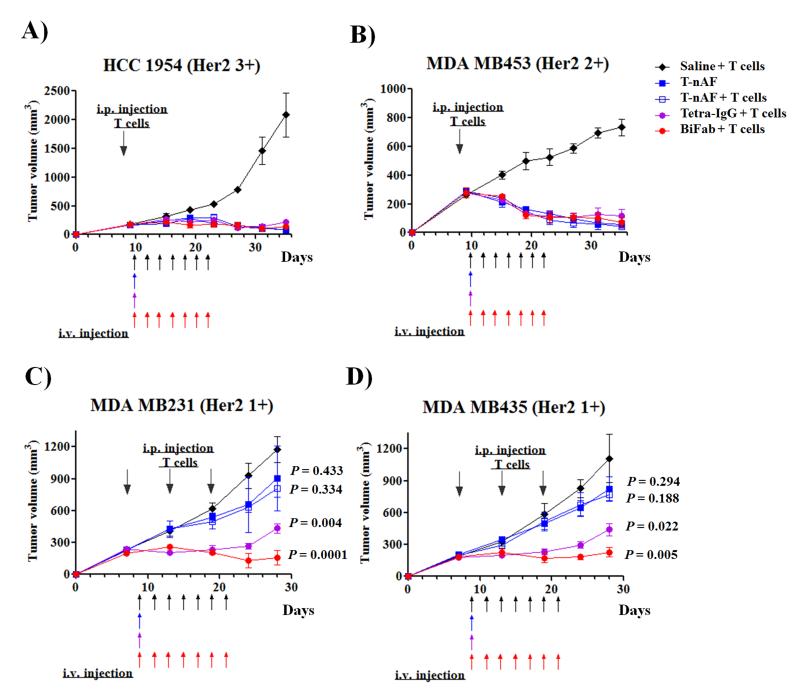
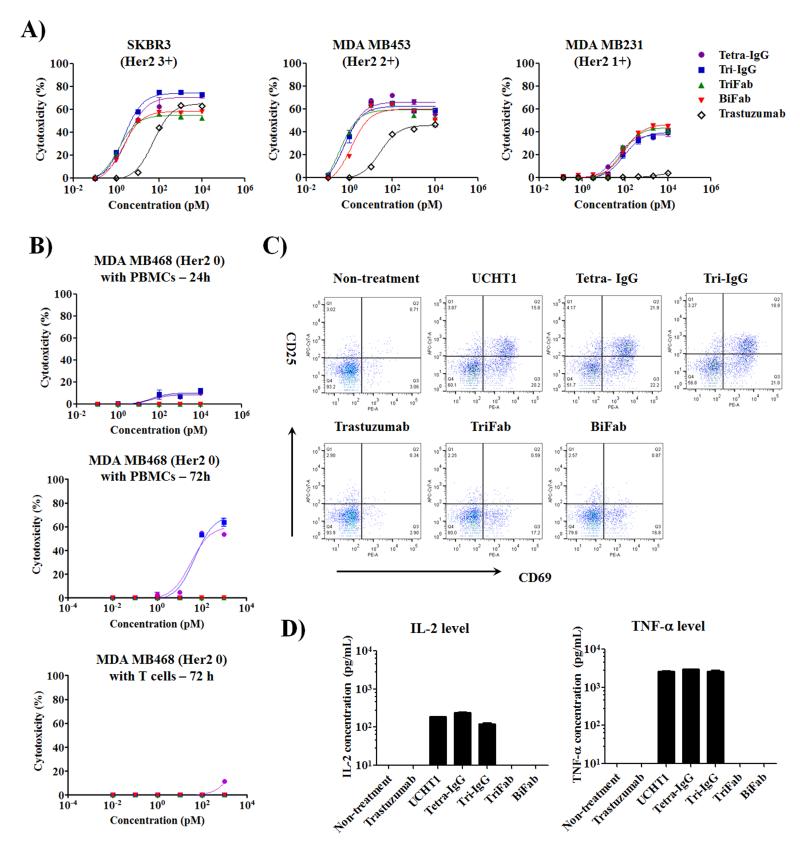
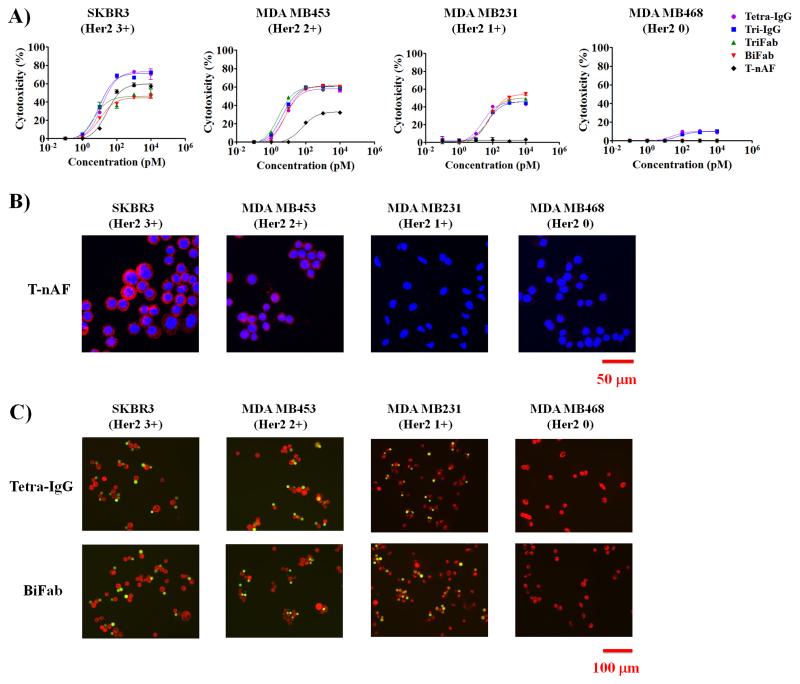
Four different formats of bispecific antibodies (bsAbs) were generated that consist of anti-Her2 IgG or Fab site-specifically conjugated to anti-CD3 Fab using the genetically encoded noncanonical amino acid. These bsAbs varied in valency or in the presence or absence of an Fc domain. Different valencies did not significantly affect antitumor efficacy, whereas the presence of an Fc domain enhanced cytotoxic activity, but triggered antigen-independent T-cell activation. We show that the bsAbs can efficiently redirect T cells to kill all Her2 expressing cancer cells, including Her2 1+ cancers, both in vitro and in rodent xenograft models. This work increases our understanding of the structural features that affect bsAb activity, and underscores the potential of bsAbs as a promising therapeutic option for breast cancer patients with low or heterogeneous Her2 expression.
通过使用基因编码的非标准氨基酸,生成了四种不同形式的双特异性抗体(bsAb),它们由抗Her2 IgG或Fab与抗CD3 Fab位点特异性缀合而成。这些bsAb在价态或是否存在Fc结构域方面有所不同。不同的价态对抗肿瘤疗效没有显著影响,而Fc结构域的存在增强了细胞毒性活性,但引发了抗原非依赖性T细胞活化。我们表明,bsAb能够有效地重定向T细胞以杀死所有表达Her2的癌细胞,包括Her2 1+癌症细胞,无论是在体外还是在啮齿动物异种移植模型中。这项工作增进了我们对影响bsAb活性的结构特征的理解,并强调了bsAb作为低或异质性Her2表达的乳腺癌患者有前景的治疗选择的潜力。