Ayaz Omar, Howlett Susan Ellen
Department of Pharmacology, Dalhousie University, 5850 College Street, Sir Charles Tupper Medical Building, PO Box 15000, Halifax, NS B3H 4R2 Canada.
Department of Pharmacology, Dalhousie University, 5850 College Street, Sir Charles Tupper Medical Building, PO Box 15000, Halifax, NS B3H 4R2 Canada ; Medicine (Geriatric Medicine), Dalhousie University, 5850 College Street, PO Box 15000, Halifax, NS B3H 4R2 Canada.
Biol Sex Differ. 2015 Apr 29;6:9. doi: 10.1186/s13293-015-0027-9. eCollection 2015.
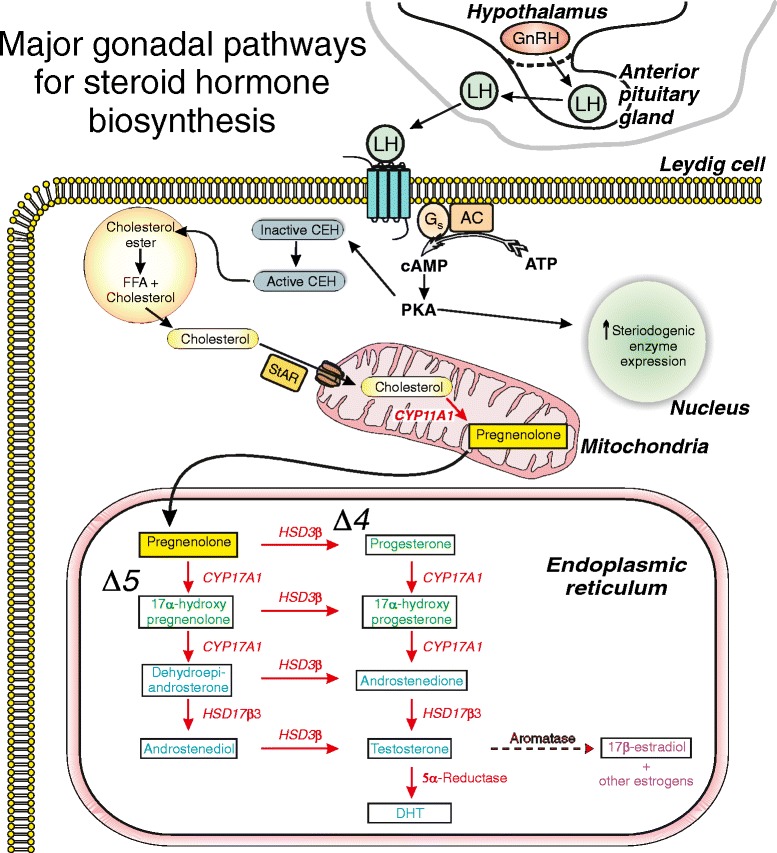
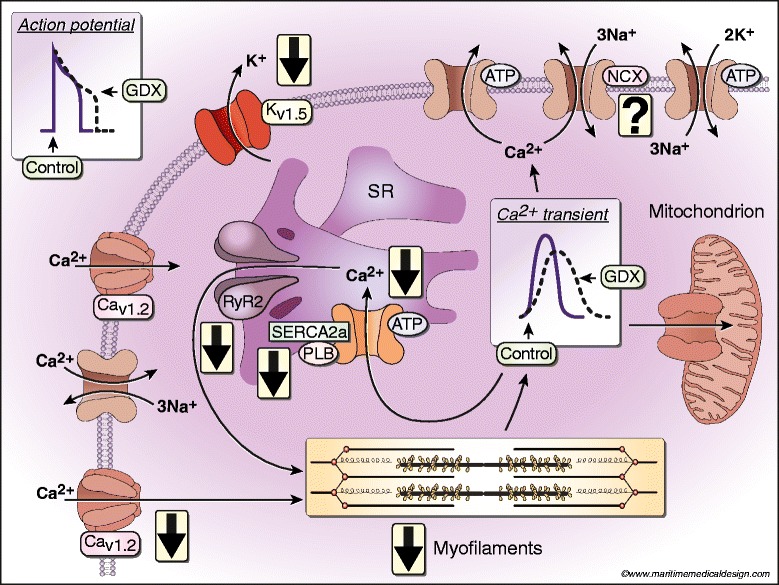
The incidence of cardiovascular disease rises dramatically with age in both men and women. Because a woman's risk of cardiovascular disease rises markedly after the onset of menopause, there has been growing interest in the effect of estrogen on the heart and its role in the pathophysiology of these diseases. Much less attention has been paid to the impact of testosterone on the heart, even though the levels of testosterone also decline with age and low-testosterone levels are linked to the development of cardiovascular diseases. The knowledge that receptors for all major sex steroid hormones, including testosterone, are present on individual cardiomyocytes suggests that these hormones may influence the heart at the cellular level. Indeed, it is well established that there are male-female differences in intracellular Ca(2+) release and contraction in isolated ventricular myocytes. Growing evidence suggests that these differences arise from effects of sex steroid hormones on processes involved in intracellular Ca(2+) homeostasis. This review considers how myocardial contractile function is modified by testosterone, with a focus on the impact of testosterone on processes that regulate Ca(2+) handling at the level of the ventricular myocyte. The idea that testosterone regulates Ca(2+) handling in the heart is important, as Ca(2+) dysregulation plays a key role in the pathogenesis of a variety of different cardiovascular diseases. A better understanding of sex hormone regulation of myocardial Ca(2+) homeostasis may reveal new targets for the treatment of cardiovascular diseases in all older adults.
心血管疾病的发病率在男性和女性中均会随着年龄的增长而急剧上升。由于女性在绝经后心血管疾病风险显著增加,因此人们对雌激素对心脏的影响及其在这些疾病病理生理学中的作用越来越感兴趣。尽管睾酮水平也会随着年龄的增长而下降,且低睾酮水平与心血管疾病的发生有关,但睾酮对心脏的影响却很少受到关注。所有主要性类固醇激素(包括睾酮)的受体都存在于单个心肌细胞上,这一事实表明这些激素可能在细胞水平上影响心脏。事实上,众所周知,在分离的心室肌细胞中,细胞内钙(Ca2+)释放和收缩存在性别差异。越来越多的证据表明,这些差异源于性类固醇激素对细胞内Ca2+稳态相关过程的影响。本综述探讨了睾酮如何改变心肌收缩功能,重点关注睾酮对心室肌细胞水平上调节Ca2+处理过程的影响。睾酮调节心脏中Ca2+处理这一观点很重要,因为Ca2+调节异常在多种不同心血管疾病的发病机制中起着关键作用。更好地了解性激素对心肌Ca2+稳态的调节可能会揭示治疗所有老年人心血管疾病的新靶点。