Haschka Manuel D, Soratroi Claudia, Kirschnek Susanne, Häcker Georg, Hilbe Richard, Geley Stephan, Villunger Andreas, Fava Luca L
Division of Developmental Immunology, Biocenter, Medical University Innsbruck, Innrain 80-82, A-6020 Innsbruck, Austria.
Institute for Medical Microbiology and Hygiene, University Medical Center Freiburg, 79106 Freiburg, Germany.
Nat Commun. 2015 Apr 29;6:6891. doi: 10.1038/ncomms7891.
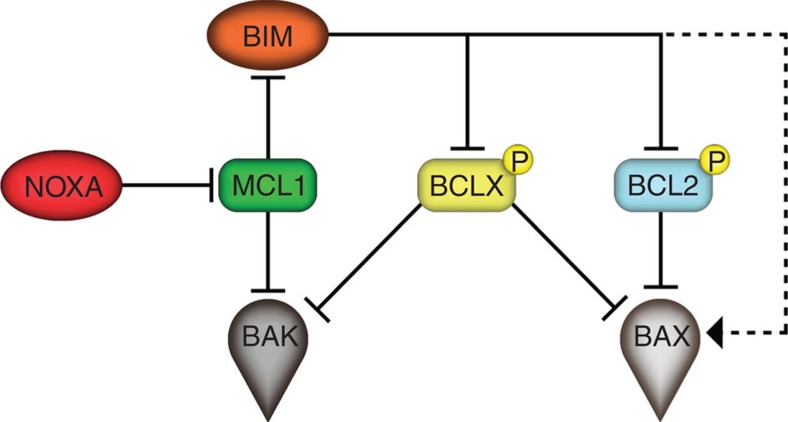
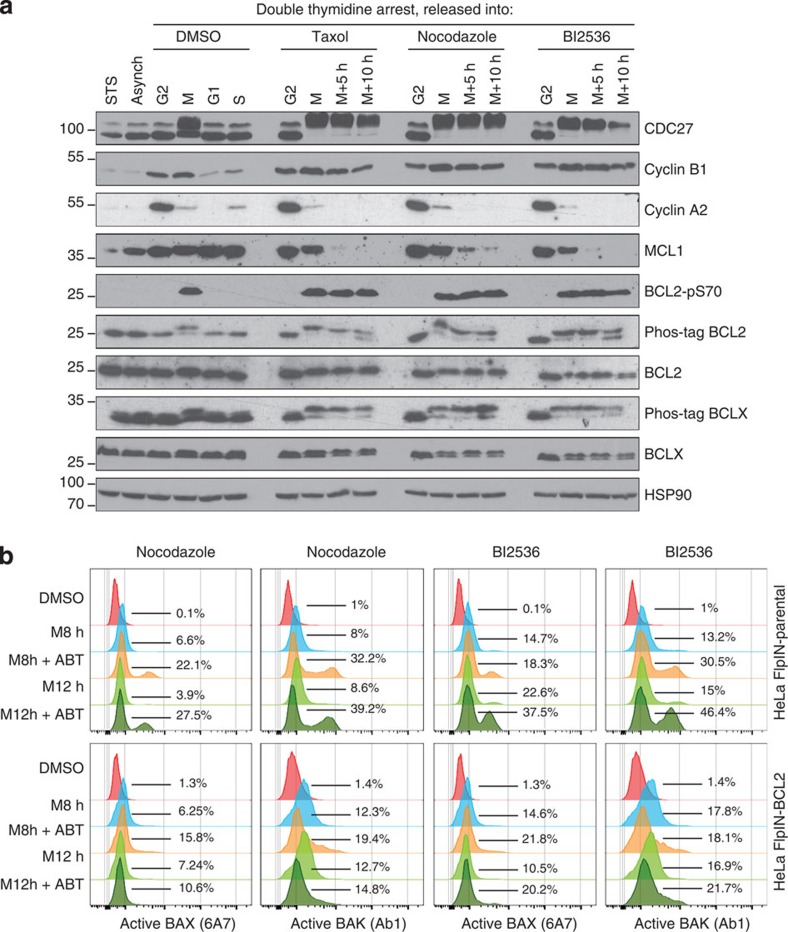
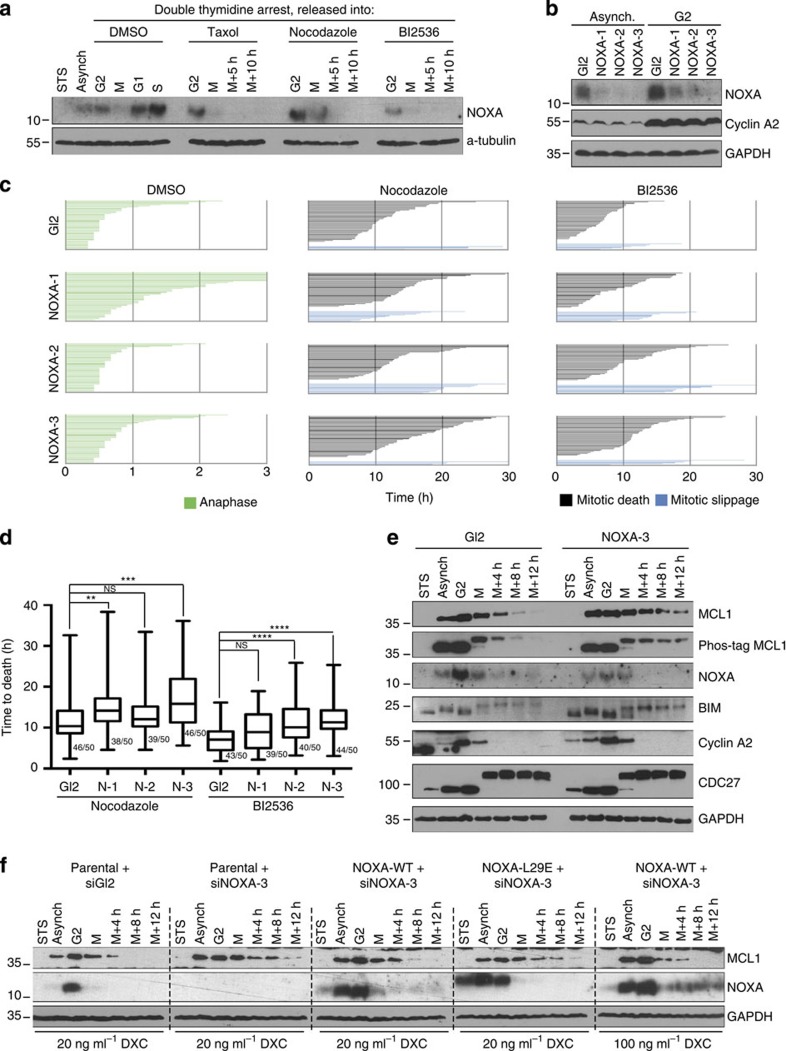
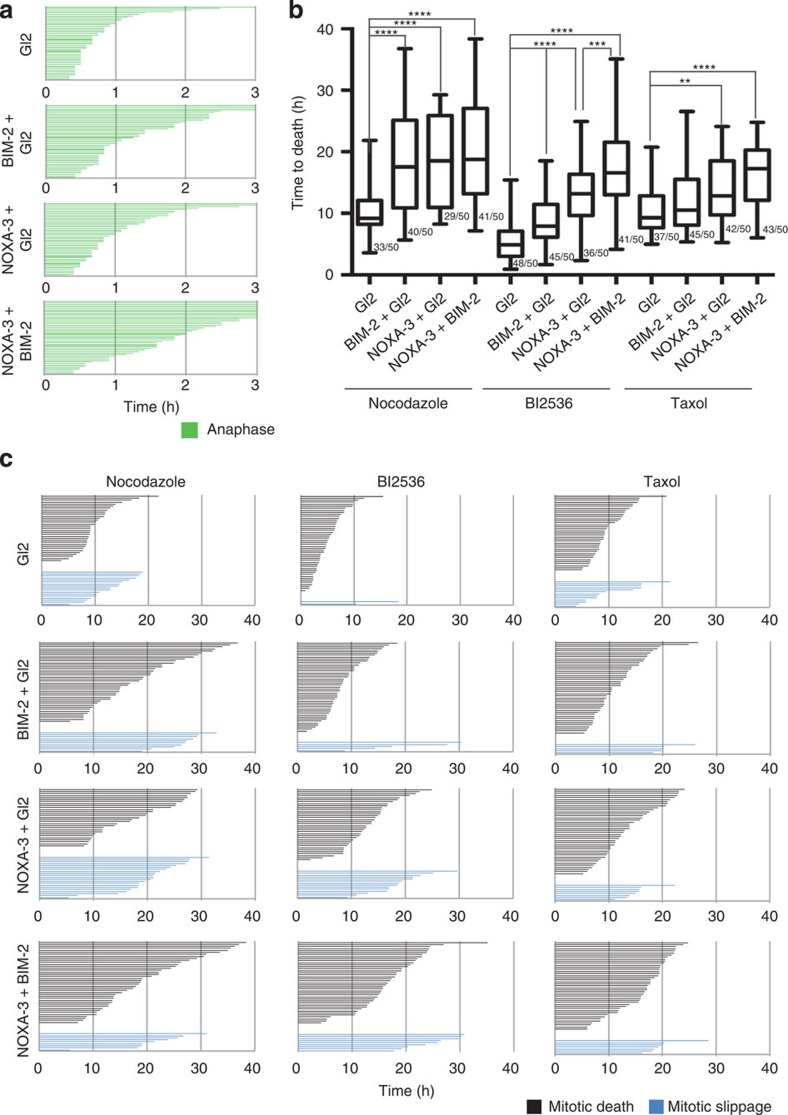
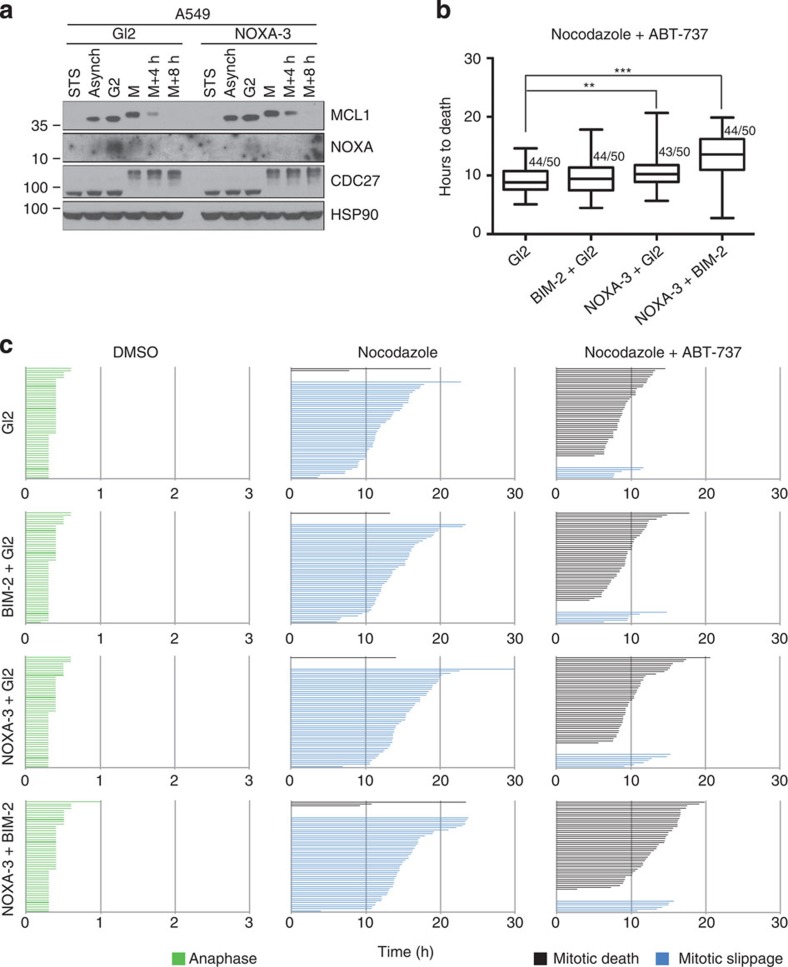
Cell death on extended mitotic arrest is considered arguably most critical for the efficacy of microtubule-targeting agents (MTAs) in anticancer therapy. While the molecular machinery controlling mitotic arrest on MTA treatment, the spindle assembly checkpoint (SAC), appears well defined, the molecular components executing cell death, as well as factors connecting both networks remain poorly understood. Here we conduct a mini screen exploring systematically the contribution of individual BCL2 family proteins at single cell resolution to death on extended mitotic arrest, and demonstrate that the mitotic phosphorylation of BCL2 and BCLX represent a priming event for apoptosis that is ultimately triggered by NOXA-dependent MCL1 degradation, enabling BIM-dependent cell death. Our findings provide a comprehensive model for the initiation of apoptosis in cells stalled in mitosis and provide a molecular basis for the increased efficacy of combinatorial treatment of cancer cells using MTAs and BH3 mimetics.
延长有丝分裂停滞时的细胞死亡被认为对于微管靶向药物(MTA)在抗癌治疗中的疗效至关重要。虽然控制MTA治疗时的有丝分裂停滞的分子机制,即纺锤体组装检查点(SAC),似乎已明确,但执行细胞死亡的分子成分以及连接这两个网络的因素仍知之甚少。在这里,我们进行了一项小型筛选,以单细胞分辨率系统地探索单个BCL2家族蛋白对延长有丝分裂停滞时细胞死亡的贡献,并证明BCL2和BCLX的有丝分裂磷酸化代表了凋亡的引发事件,最终由NOXA依赖的MCL1降解触发,从而导致BIM依赖的细胞死亡。我们的研究结果为有丝分裂停滞细胞中凋亡的启动提供了一个全面的模型,并为使用MTA和BH3模拟物联合治疗癌细胞提高疗效提供了分子基础。