Zhao Xing-guo, Sun Rui-jie, Yang Xiao-yan, Liu Da-yu, Lei Da-peng, Jin Tong, Pan Xin-liang
Department of Otolaryngology, Qilu Hospital, Shandong University, Jinan, Shandong Province, China.
Key Laboratory of Cardiovascular Remodeling and Function Research, Qilu Hospital, Shandong University, Jinan, Shandong Province, China.
PLoS One. 2015 Apr 29;10(4):e0126147. doi: 10.1371/journal.pone.0126147. eCollection 2015.
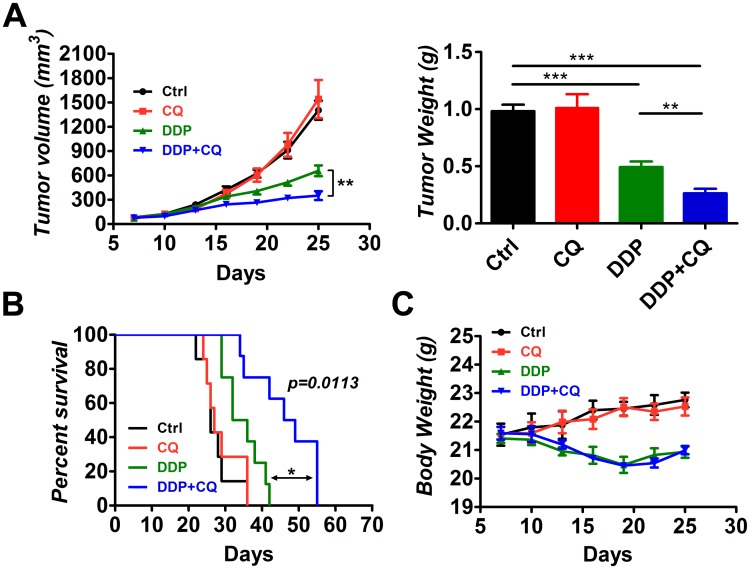
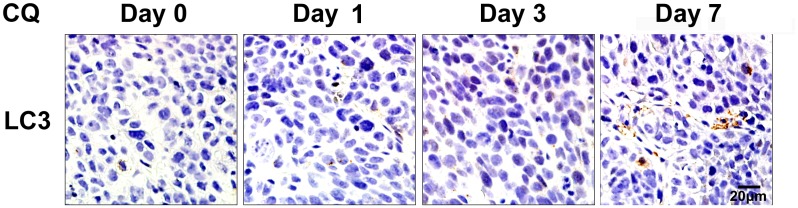
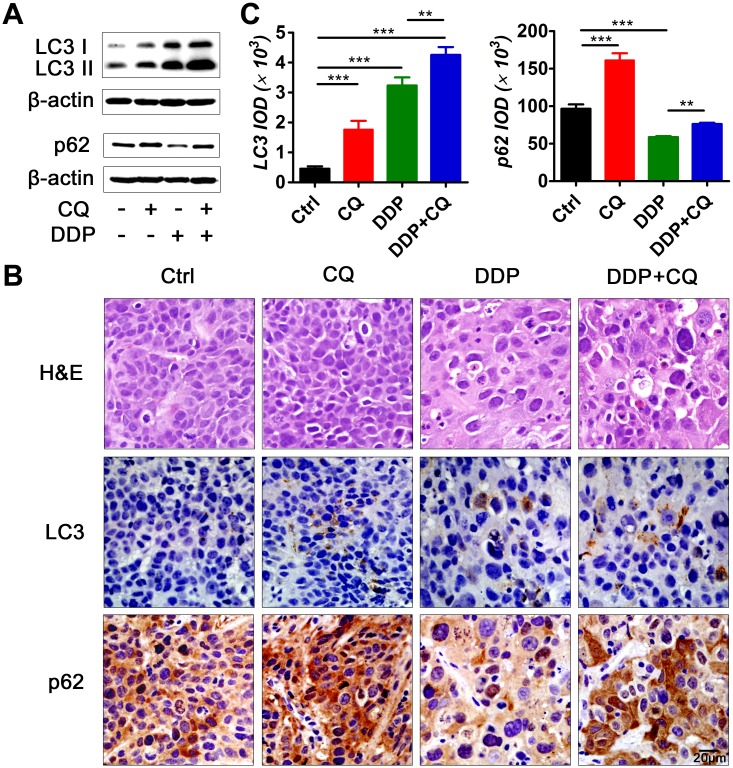
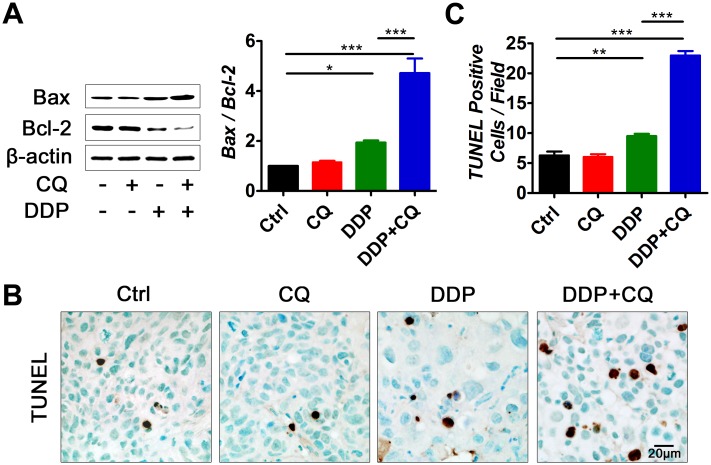
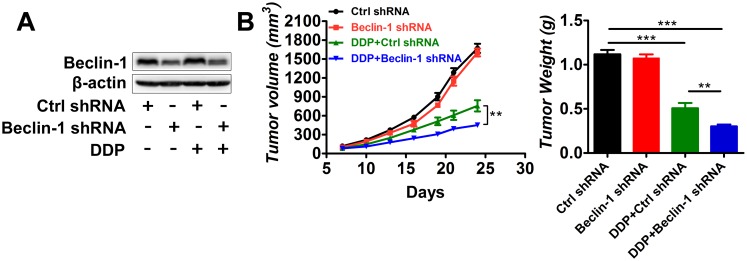
Hypopharyngeal squamous cell carcinoma (HSCC) has the worst prognosis among head and neck cancers. Cisplatin (DDP)-based chemotherapy is an important part of multimodal treatments. However, resistance to DDP severely impairs the effectiveness of chemotherapy for HSCC. Chloroquine (CQ) has been reported to enhance the effectiveness of chemotherapy and radiotherapy in liver, pancreas, breast, prostate and colon tumors, but it is unclear whether CQ could increase the efficacy of DDP for treating HSCC. We inoculated BALB/c nude mice with a subcutaneous injection of human hypopharyngeal FaDu cells to generate our animal model. Mice were randomly divided into 4 groups and treated with vehicle control, CQ (60 mg/kg/day), DDP (5 mg/kg/6 days), or a combination of DDP and CQ. Tumor growth and survival of the mice were monitored. We found that CQ inhibited autophagy and increased DDP-induced apoptosis in the xenograft mouse model. CQ enhanced the efficacy of DDP, resulting in decreased tumor growth and prolonged survival of the mice. To test whether blocking autophagy enhanced the efficacy of DDP, FaDu cells were infected with lentiviral shRNA to Beclin-1 and inoculated into the flanks of nude mice. Inhibition of autophagy markedly enhanced the DDP-induced antitumor effect. Our study suggests that the addition of CQ to DDP-based chemotherapy could be a potential therapeutic strategy for treating HSCC, and the inhibition of autophagy may contribute to chemotherapy sensitization in HSCC.
下咽鳞状细胞癌(HSCC)在头颈癌中预后最差。以顺铂(DDP)为基础的化疗是多模式治疗的重要组成部分。然而,对DDP的耐药性严重损害了HSCC化疗的有效性。据报道,氯喹(CQ)可提高肝脏、胰腺、乳腺、前列腺和结肠肿瘤化疗和放疗的有效性,但尚不清楚CQ是否能提高DDP治疗HSCC的疗效。我们通过皮下注射人下咽FaDu细胞接种BALB/c裸鼠以建立动物模型。将小鼠随机分为4组,分别用溶媒对照、CQ(60mg/kg/天)、DDP(5mg/kg/6天)或DDP与CQ联合治疗。监测小鼠的肿瘤生长和存活情况。我们发现,在异种移植小鼠模型中,CQ抑制自噬并增加DDP诱导的细胞凋亡。CQ增强了DDP的疗效,导致肿瘤生长减缓,小鼠存活期延长。为了测试阻断自噬是否增强DDP的疗效,用慢病毒shRNA感染FaDu细胞使其靶向Beclin-1,然后接种到裸鼠侧腹。自噬抑制显著增强了DDP诱导的抗肿瘤作用。我们的研究表明,在以DDP为基础的化疗中添加CQ可能是治疗HSCC的一种潜在治疗策略,自噬抑制可能有助于HSCC的化疗增敏。