Raghu Arvind, Praveen Devarsetty, Peiris David, Tarassenko Lionel, Clifford Gari
Institute of Biomedical Engineering, Department of Engineering Science, Old Road Campus Research Building, Headington, OX3 7DQ Oxford, UK.
The George Institute for Global Health, Inner Ring Rd Mada Manzil, Banjara Hills, Hyderabad, 500004, India.
BMC Med Inform Decis Mak. 2015 Apr 29;15:36. doi: 10.1186/s12911-015-0148-4.
The incidence of chronic diseases in low- and middle-income countries is rapidly increasing both in urban and rural regions. A major challenge for health systems globally is to develop innovative solutions for the prevention and control of these diseases. This paper discusses the development and pilot testing of SMARTHealth, a mobile-based, point-of-care Clinical Decision Support (CDS) tool to assess and manage cardiovascular disease (CVD) risk in resource-constrained settings. Through pilot testing, the preliminary acceptability, utility, and efficiency of the CDS tool was obtained.
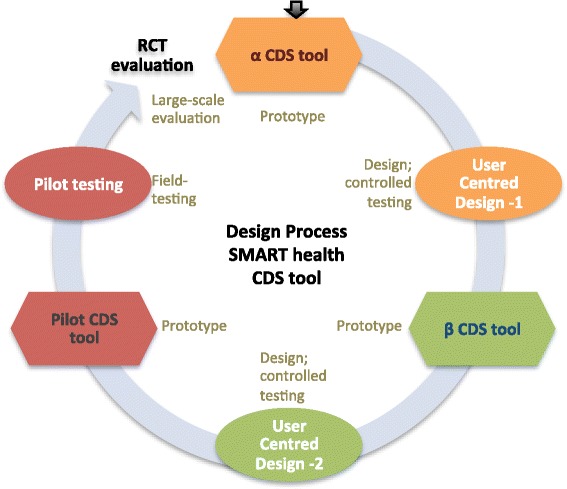
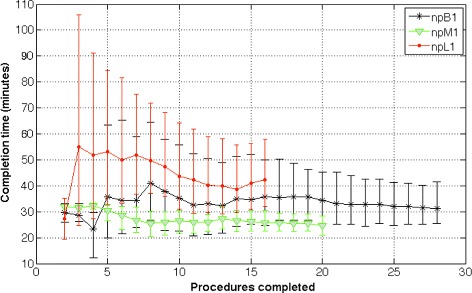
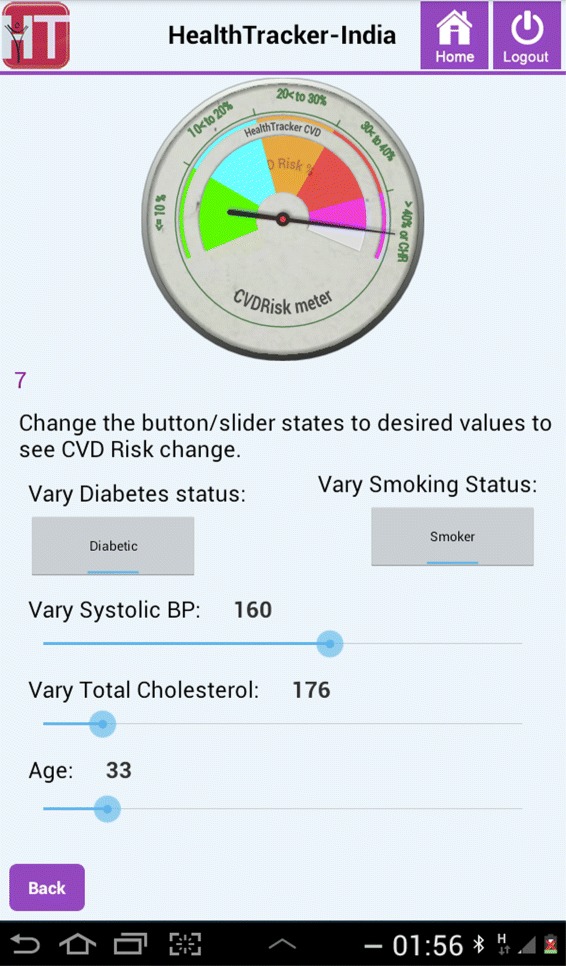
The CDS tool was part of an mHealth system comprising a mobile application that consisted of an evidence-based risk prediction and management algorithm, and a server-side electronic medical record system. Through an agile development process and user-centred design approach, key features of the mobile application that fitted the requirements of the end users and environment were obtained. A comprehensive analytics framework facilitated a data-driven approach to investigate four areas, namely, system efficiency, end-user variability, manual data entry errors, and usefulness of point-of-care management recommendations to the healthcare worker. A four-point Likert scale was used at the end of every risk assessment to gauge ease-of-use of the system.
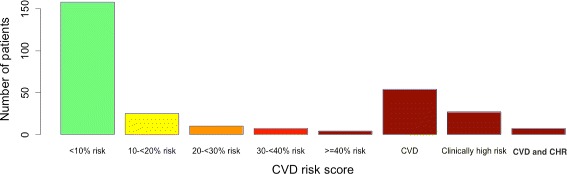
The system was field-tested with eleven village healthcare workers and three Primary Health Centre doctors, who screened a total of 292 adults aged 40 years and above. 34% of participants screened by health workers were identified by the CDS tool to be high CVD risk and referred to a doctor. In-depth analysis of user interactions found the CDS tool feasible for use and easily integrable into the workflow of healthcare workers. Following completion of the pilot, further technical enhancements were implemented to improve uptake of the mHealth platform. It will then be evaluated for effectiveness and cost-effectiveness in a cluster randomized controlled trial involving 54 southern Indian villages and over 16000 individuals at high CVD risk.
An evidence-based CVD risk prediction and management tool was used to develop an mHealth platform in rural India for CVD screening and management with proper engagement of health care providers and local communities. With over a third of screened participants being high risk, there is a need to demonstrate the clinical impact of the mHealth platform so that it could contribute to improved CVD detection in high risk low resource settings.
低收入和中等收入国家城乡地区慢性病的发病率正在迅速上升。全球卫生系统面临的一项重大挑战是开发预防和控制这些疾病的创新解决方案。本文讨论了SMARTHealth的开发和试点测试,这是一种基于移动设备的即时医疗临床决策支持(CDS)工具,用于在资源有限的环境中评估和管理心血管疾病(CVD)风险。通过试点测试,获得了CDS工具的初步可接受性、实用性和效率。
CDS工具是移动健康系统的一部分,该系统包括一个移动应用程序,该应用程序由基于证据的风险预测和管理算法以及服务器端电子病历系统组成。通过敏捷开发过程和以用户为中心的设计方法,获得了符合最终用户需求和环境的移动应用程序的关键特性。一个全面的分析框架促进了一种数据驱动的方法,以调查四个领域,即系统效率、最终用户变异性、手动数据输入错误以及即时医疗管理建议对医护人员的有用性。在每次风险评估结束时使用四点李克特量表来衡量系统的易用性。
该系统在11名乡村医护人员和3名初级卫生中心医生中进行了现场测试,他们共筛查了292名40岁及以上的成年人。CDS工具识别出由医护人员筛查的参与者中有34%为高心血管疾病风险,并将其转诊给医生。对用户交互的深入分析发现,CDS工具使用可行,并且易于整合到医护人员的工作流程中。试点完成后,实施了进一步的技术改进,以提高移动健康平台的使用率。然后,将在一项涉及印度南部54个村庄和16000多名高心血管疾病风险个体的整群随机对照试验中对其有效性和成本效益进行评估。
在印度农村地区,使用基于证据的心血管疾病风险预测和管理工具,在医护人员和当地社区的适当参与下,开发了一个用于心血管疾病筛查和管理的移动健康平台。由于超过三分之一的筛查参与者为高风险人群,因此有必要证明移动健康平台的临床影响,以便它能够在高风险低资源环境中有助于改善心血管疾病的检测。