Trinh Bon, Ko Song Yi, Haria Dhwani, Barengo Nicolas, Naora Honami
Department of Molecular and Cellular Oncology, University of Texas MD Anderson Cancer Center, Houston, TX, 77030, USA.
Mol Cancer. 2015 Apr 30;14:97. doi: 10.1186/s12943-015-0368-3.
Homeobox genes encode transcription factors that control patterning of virtually all organ systems including the vasculature. Tumor angiogenesis is stimulated by several homeobox genes that are overexpressed in tumor cells, but the mechanisms of these genes are poorly understood. In this study, we investigated the mechanisms by which DLX4, a homeobox gene that is associated with increased tumor microvessel density, stimulates ovarian tumor angiogenesis.
Expression of DLX4 and nitric oxide synthases was analyzed in publicly available transcriptional profiles of ovarian cancer clinical specimens. Levels of inducible nitric oxide synthase (iNOS) were evaluated by quantitative RT-PCR, flow cytometry and nitric oxide assays using ovarian cancer cell lines in which DLX4 was overexpressed or knocked down. Signal Transducer and Activator of Transcription 1 (STAT1) expression and activity were evaluated by luciferase reporter assays, immunofluorescence staining, Western blot and immunoprecipitation. Endothelial cell growth and tumor angiogenesis were evaluated in in vitro assays and xenograft models.
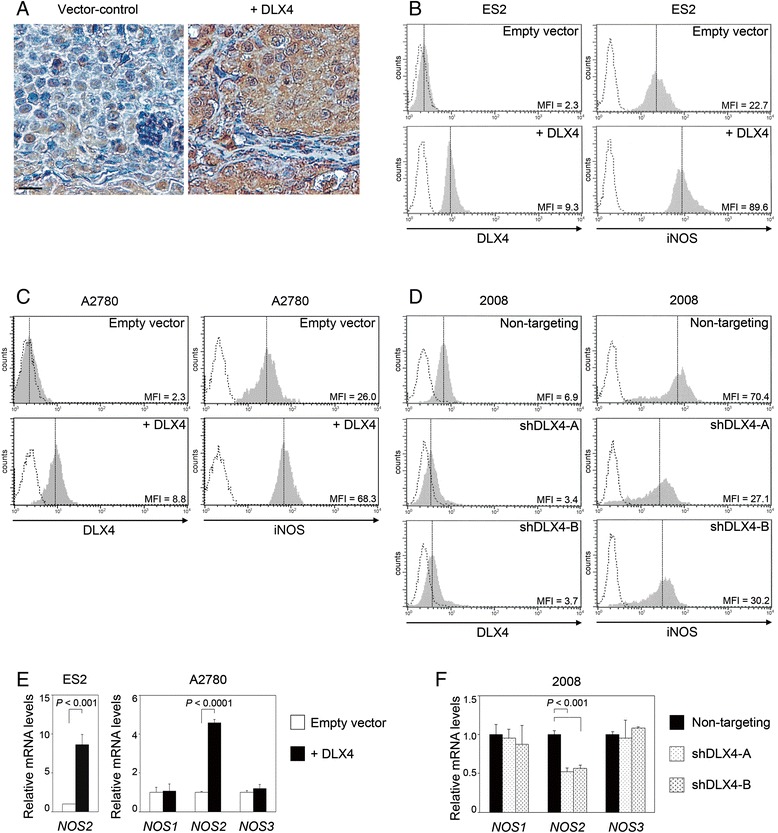
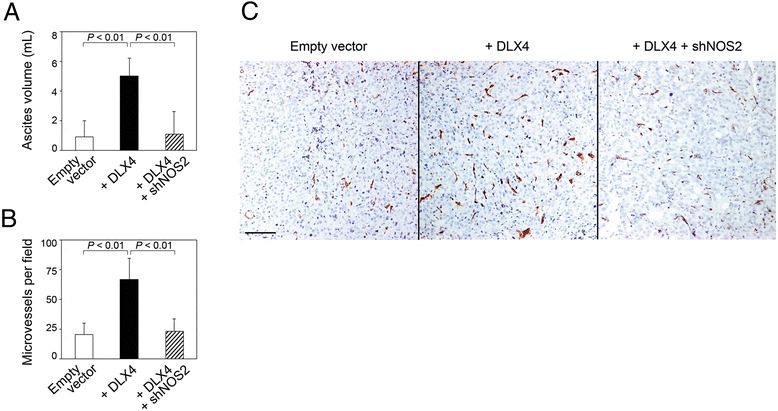
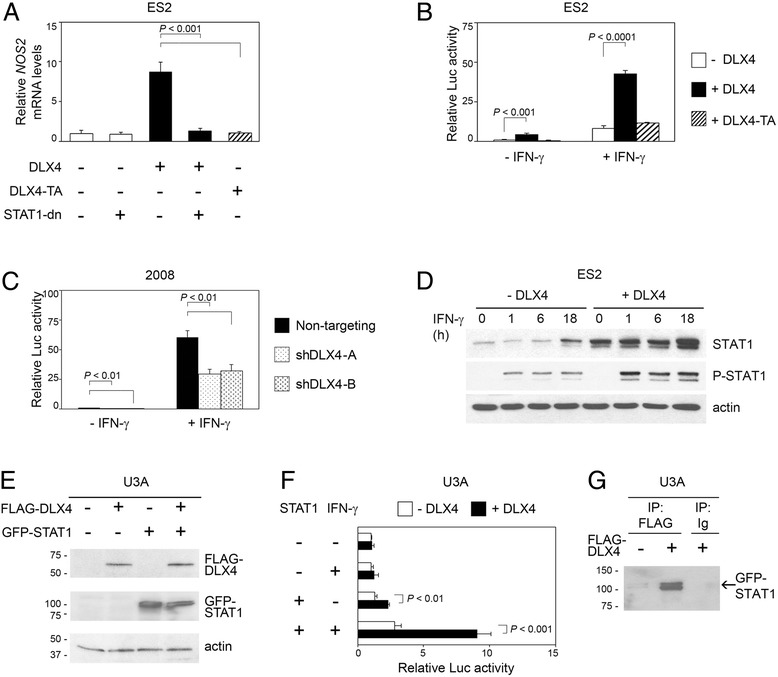
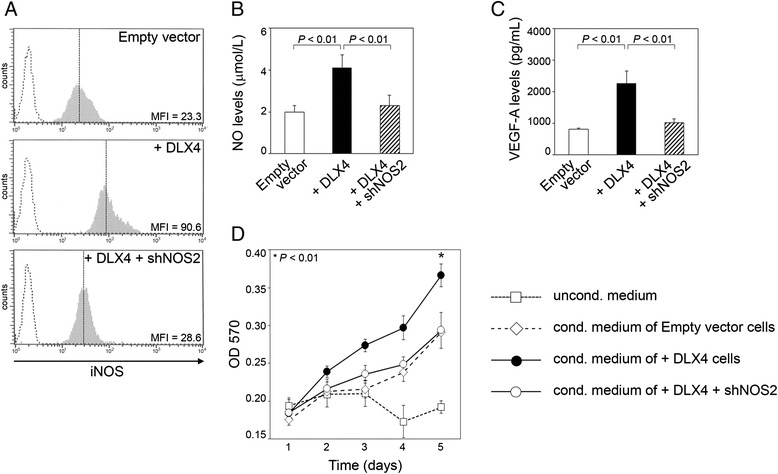
We identified that DLX4 induces expression of iNOS, an enzyme that stimulates angiogenesis by generating nitric oxide. Analysis of datasets of two independent patient cohorts revealed that high DLX4 expression in ovarian cancer is strongly associated with elevated expression of iNOS but not of other nitric oxide synthases. Studies using STAT1-expressing and STAT1-deficient cells revealed that DLX4 interacts with STAT1 and induces iNOS expression in part by stimulating STAT1 activity. Expression of DLX4 in ovarian cancer cells stimulated endothelial cell growth in vitro and increased microvessel density in xenograft models, and these stimulatory effects of DLX4 were abrogated when its induction of iNOS was inhibited.
These findings indicate that DLX4 promotes ovarian tumor angiogenesis in part by stimulating iNOS expression.
同源框基因编码转录因子,这些转录因子控制包括脉管系统在内的几乎所有器官系统的模式形成。几种在肿瘤细胞中过表达的同源框基因可刺激肿瘤血管生成,但其机制尚不清楚。在本研究中,我们调查了与肿瘤微血管密度增加相关的同源框基因DLX4刺激卵巢肿瘤血管生成的机制。
在公开的卵巢癌临床标本转录谱中分析DLX4和一氧化氮合酶的表达。使用过表达或敲低DLX4的卵巢癌细胞系,通过定量逆转录聚合酶链反应、流式细胞术和一氧化氮检测来评估诱导型一氧化氮合酶(iNOS)的水平。通过荧光素酶报告基因检测、免疫荧光染色、蛋白质印迹和免疫沉淀来评估信号转导子和转录激活子1(STAT1)的表达和活性。在体外实验和异种移植模型中评估内皮细胞生长和肿瘤血管生成。
我们发现DLX4可诱导iNOS的表达,iNOS是一种通过生成一氧化氮来刺激血管生成的酶。对两个独立患者队列数据集的分析显示,卵巢癌中DLX4的高表达与iNOS的高表达密切相关,而与其他一氧化氮合酶无关。使用表达STAT1和缺乏STAT1的细胞进行的研究表明,DLX4与STAT1相互作用,并部分通过刺激STAT1活性诱导iNOS表达。卵巢癌细胞中DLX4的表达在体外刺激内皮细胞生长,并增加异种移植模型中的微血管密度,当抑制其对iNOS的诱导时,DLX4的这些刺激作用被消除。
这些发现表明,DLX4部分通过刺激iNOS表达促进卵巢肿瘤血管生成。