Sekiya Ichiro, Muneta Takeshi, Horie Masafumi, Koga Hideyuki
Center for Stem Cell and Regenerative Medicine, Tokyo Medical and Dental University, 1-5-45 Yushima, Bunkyo-ku, Tokyo, 113-8519, Japan,
Clin Orthop Relat Res. 2015 Jul;473(7):2316-26. doi: 10.1007/s11999-015-4324-8. Epub 2015 Apr 30.
Transplantation of mesenchymal stem cells (MSCs) is one possible strategy to achieve articular cartilage repair. We previously reported that synovial MSCs were highly proliferative and able to undergo chondrogenesis. We also found that placing a suspension of synovial MSCs on a cartilage defect for 10 minutes promoted cartilage repair in rabbit and pig models. However, the in vivo efficacy of this approach has not been tested clinically.
QUESTIONS/PURPOSES: We asked whether transplantation of synovial MSCs improves (1) MRI features, (2) histologic features, and (3) clinical evaluation scores in patients with cartilage defects in the knee?
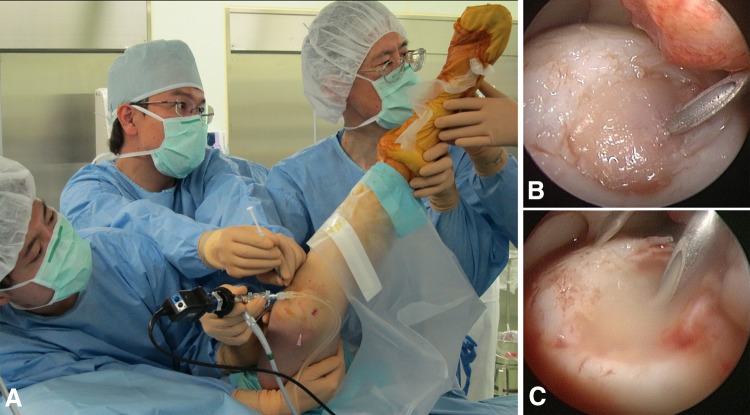
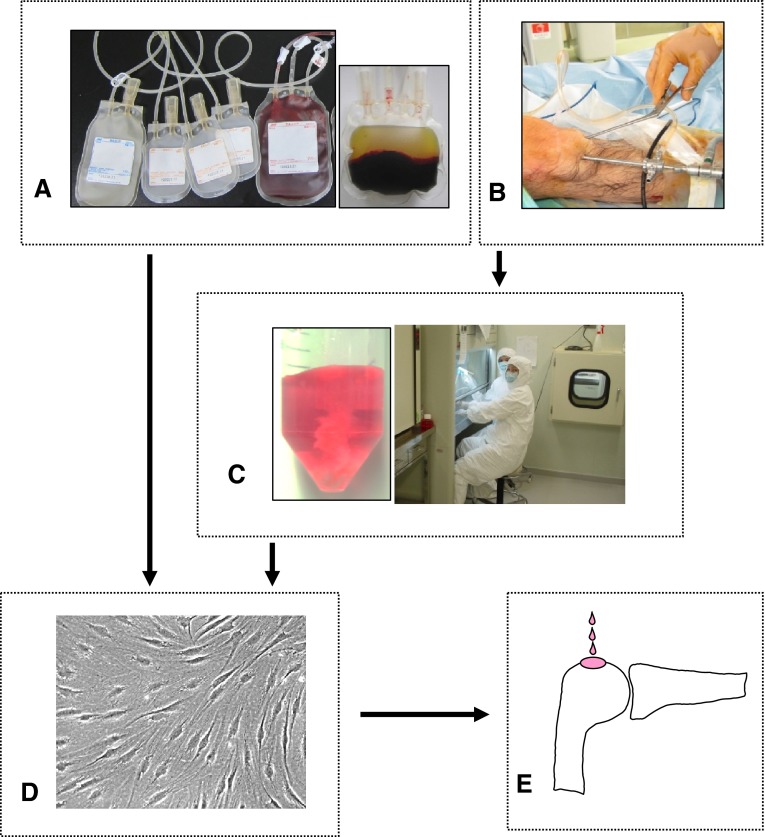
Patients with a symptomatic single cartilage lesion of the femoral condyle were indicated for inclusion in our study, and between April 2008 and April 2011, 10 patients were enrolled in this study. All patients completed followups of 3 years or more. The average followup period was 52 months (range, 37-80 months). Synovial MSCs were expanded with 10% autologous human serum for 14 days after digestion. For transplantation, the patient was positioned so that the cartilage defect was facing upward, and synovial MSC suspension was placed on the cartilage defect with a syringe under arthroscopic control. The defect with the applied suspension then was held in the upward position for 10 minutes. Five patients underwent concomitant ACL reconstructions, among whom two had meniscus suturing performed simultaneously. For MRI quantification, the cartilage defect was scored from 0 to 5. Second-look arthroscopy was performed for four patients and biopsy specimens were evaluated histologically. Clinical outcome was assessed using the Lysholm score and Tegner Activity Level Scale at final followup. Comparisons of MRI and Lysholm scores before and after treatment for each patient were analyzed using the Wilcoxon signed-rank test.
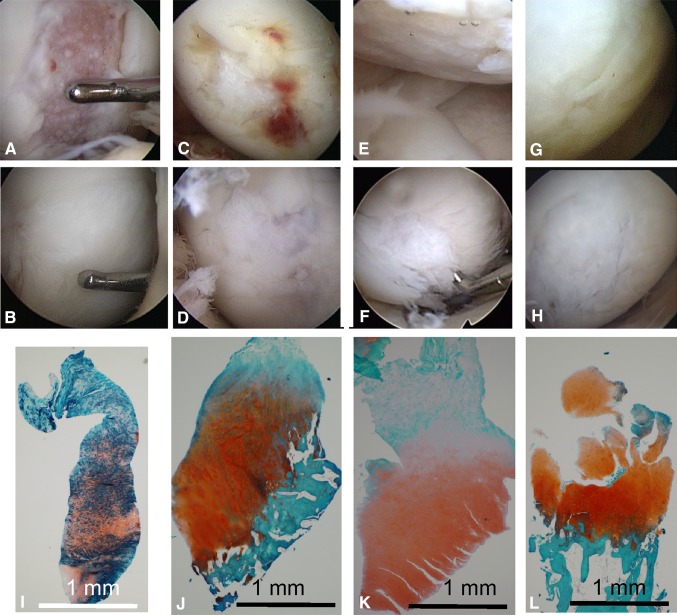
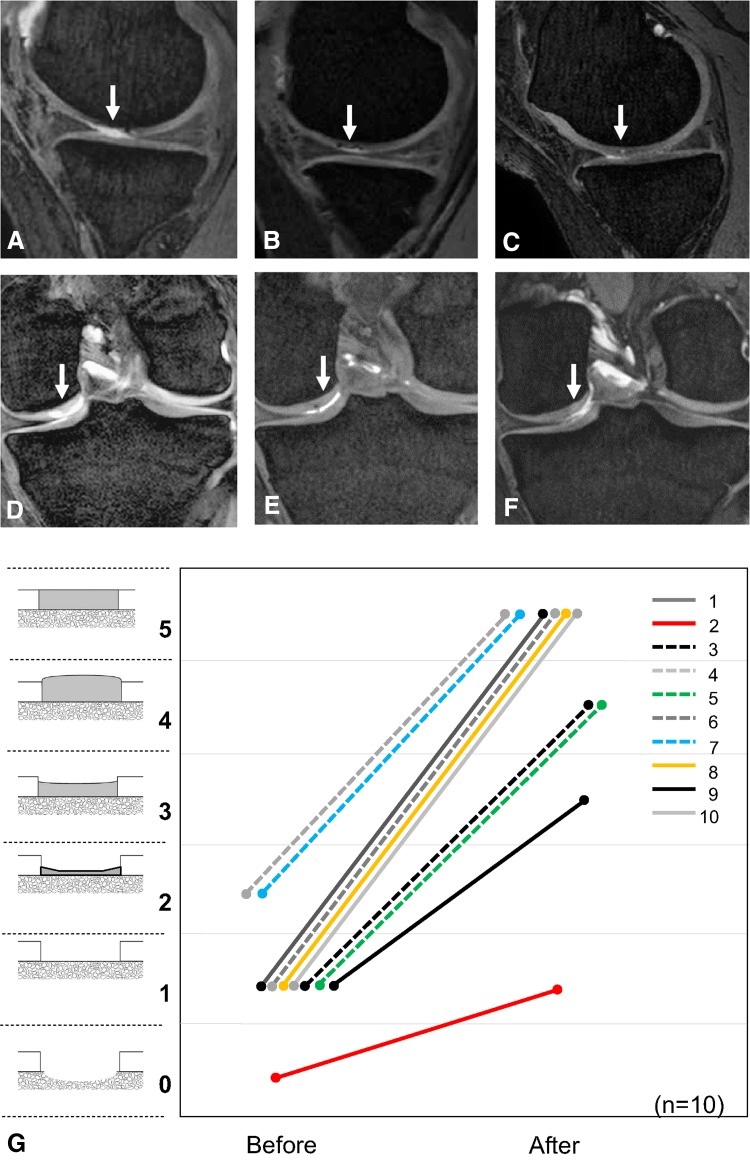
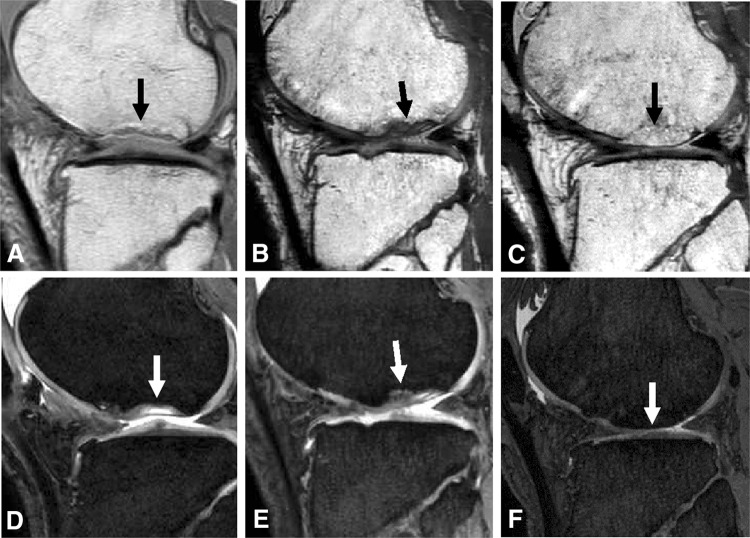
MRI score (median ± 95% CI) was 1.0 ± 0.3 before and 5.0 ± 0.7 after, and increased after treatment in each patient (p = 0.005). Second-look arthroscopy in four patients showed that the cartilage defect appeared to be qualitatively better in all cases. Histologic analyses showed hyaline cartilage in three patients and fibrous cartilage in one at the deep zone. The Lysholm score (median ± 95% CI) was 76 ± 7 before and 95 ± 3 after, and increased after treatment in each patient (p = 0.005). The Tegner Activity Level Scale did not decrease after treatment in each patient.
For this small initial case series, transplantation of synovial MSCs was effective in terms of MRI score, qualitative histology, and Lysholm score. The use of synovial MSCs has an advantage in that the cells can be prepared at passage 0 in only 14 days. Transplantation of synovial MSCs may be less invasive than mosaicplasty and autologous chondrocyte implantation. To conclusively show the effectiveness of this treatment requires comparative studies, especially with more established arthroscopic procedures, such as marrow stimulation techniques.
Level IV, therapeutic study.
间充质干细胞(MSCs)移植是实现关节软骨修复的一种可能策略。我们之前报道过滑膜间充质干细胞具有高度增殖能力且能够进行软骨形成。我们还发现,在兔和猪模型中,将滑膜间充质干细胞悬液置于软骨缺损处10分钟可促进软骨修复。然而,这种方法的体内疗效尚未进行临床测试。
问题/目的:我们想知道滑膜间充质干细胞移植是否能改善膝关节软骨缺损患者的(1)MRI特征、(2)组织学特征以及(3)临床评估评分?
有症状的股骨髁单一软骨损伤患者被纳入我们的研究,在2008年4月至2011年4月期间,10例患者入组本研究。所有患者均完成了3年或更长时间的随访。平均随访期为52个月(范围37 - 80个月)。滑膜间充质干细胞在消化后用10%自体人血清扩增14天。移植时,患者体位使软骨缺损面朝上,在关节镜控制下用注射器将滑膜间充质干细胞悬液置于软骨缺损处。然后将施加悬液的缺损面保持向上10分钟。5例患者同时进行了前交叉韧带重建,其中2例同时进行了半月板缝合。对于MRI定量分析,软骨缺损评分为0至5分。4例患者进行了二次关节镜检查,并对活检标本进行了组织学评估。在最终随访时使用Lysholm评分和Tegner活动水平量表评估临床结果。使用Wilcoxon符号秩检验分析每位患者治疗前后的MRI和Lysholm评分比较。
MRI评分(中位数±95%CI)治疗前为1.0±0.3,治疗后为5.0±0.7,每位患者治疗后评分均增加(p = 0.005)。4例患者的二次关节镜检查显示,所有病例中软骨缺损在质量上似乎都有所改善。组织学分析显示,3例患者为透明软骨,1例深部区域为纤维软骨。Lysholm评分(中位数±95%CI)治疗前为76±7,治疗后为95±3,每位患者治疗后评分均增加(p = 0.005)。每位患者治疗后Tegner活动水平量表评分未降低。
对于这个小型的初始病例系列,滑膜间充质干细胞移植在MRI评分、定性组织学和Lysholm评分方面是有效的。使用滑膜间充质干细胞的优势在于细胞可以在第0代仅用14天就制备好。滑膜间充质干细胞移植可能比镶嵌成形术和自体软骨细胞植入的侵入性更小。要确凿地证明这种治疗的有效性需要进行比较研究,特别是与更成熟的关节镜手术,如骨髓刺激技术进行比较。
IV级,治疗性研究。