Lee Wan, Son Yeonghoon, Jang Hyosun, Bae Min Ji, Kim Jungki, Kang Dongil, Kim Joong Sun
Department of Urology, Dongnam Institute of Radiological and Medical Sciences, Busan, Korea. ; Medstar Washington Hospital Center, Georgetown University School of Medicine, Washington, DC, USA.
Research Center, Dongnam Institute of Radiological and Medical Sciences, Busan, Korea.
World J Mens Health. 2015 Apr;33(1):20-9. doi: 10.5534/wjmh.2015.33.1.20. Epub 2015 Apr 23.
Pelvic irradiation for the treatment of cancer can affect normal cells, such as the rapidly proliferating spermatogenic cells of the testis, leading to infertility, a common post-irradiation problem. The present study investigated the radioprotective effect of rolipram, a specific phosphodiesterase type-IV inhibitor known to increase the expression and phosphorylation of the cyclic adenosine monophosphate response element-binding protein (CREB), a key factor for spermatogenesis, with the testicular system against pelvic irradiation.
Male C57BL/6 mice were treated with pelvic irradiation (2 Gy) and rolipram, alone or in combination, and were sacrificed at 12 hours and 35 days after irradiation.
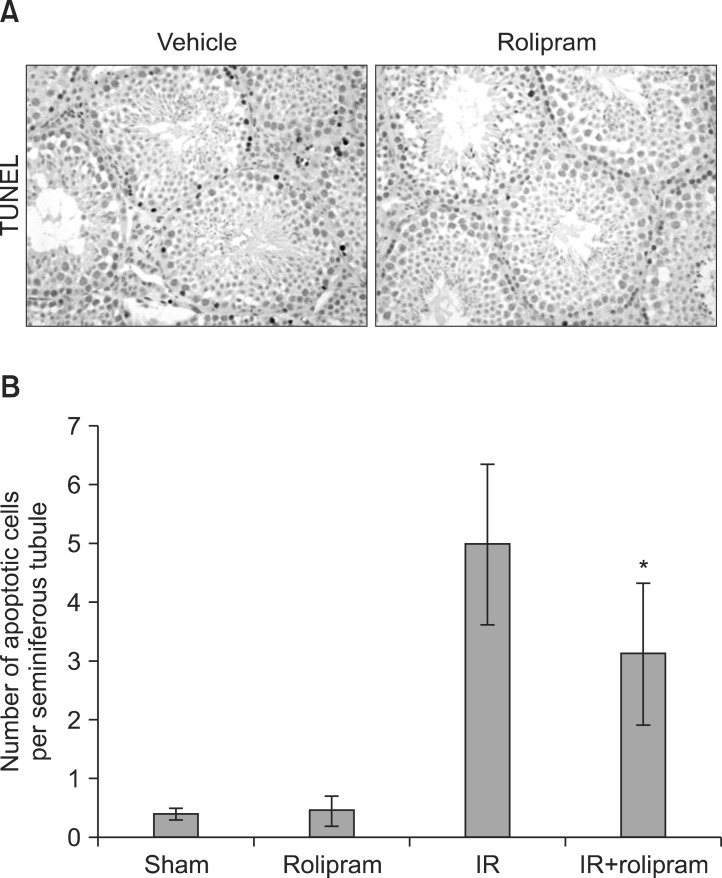
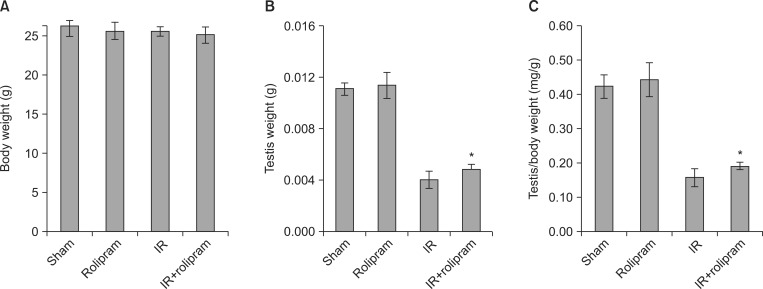
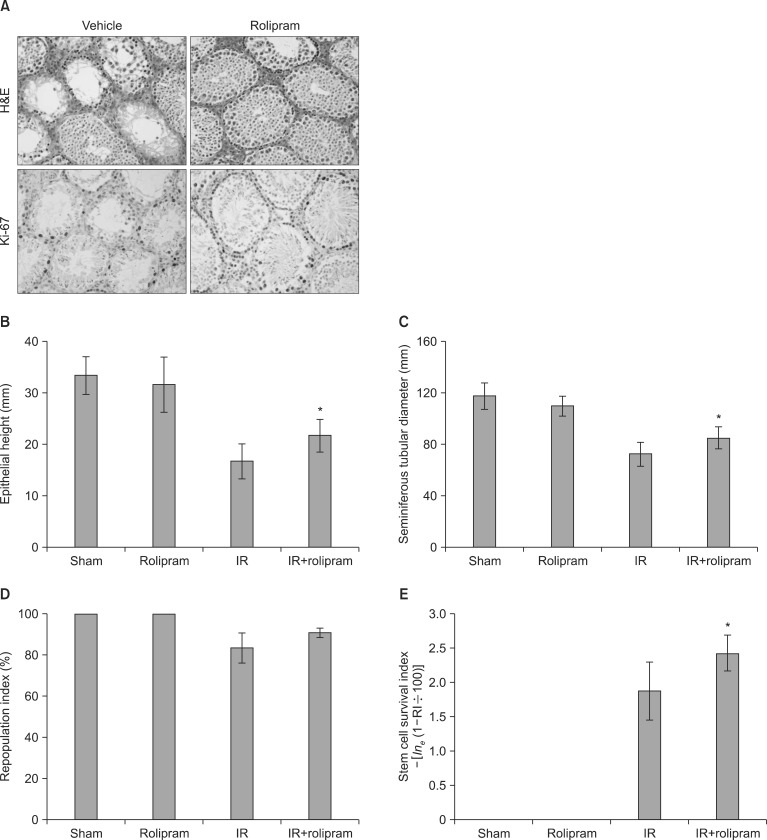
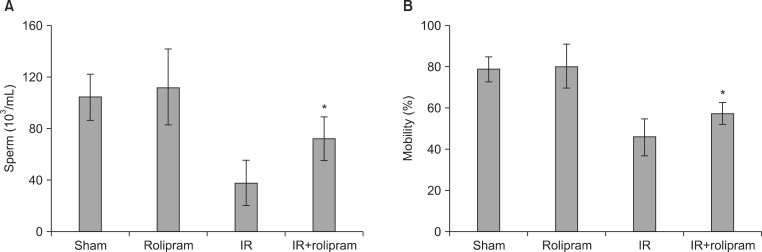
Rolipram protected germ cells from radiation-induced apoptosis at 12 hours after irradiation and significantly increased testis weight compared with irradiation controls at 35 days. Rolipram also ameliorated radiation-induced testicular morphological changes, such as changes in seminiferous tubular diameter and epithelial height. Additionally, seminiferous tubule repopulation and stem cell survival indices were higher in the rolipram-treated group than in the radiation group. Moreover, rolipram treatment counteracted the radiation-mediated decrease in the sperm count and mobility in the epididymis.
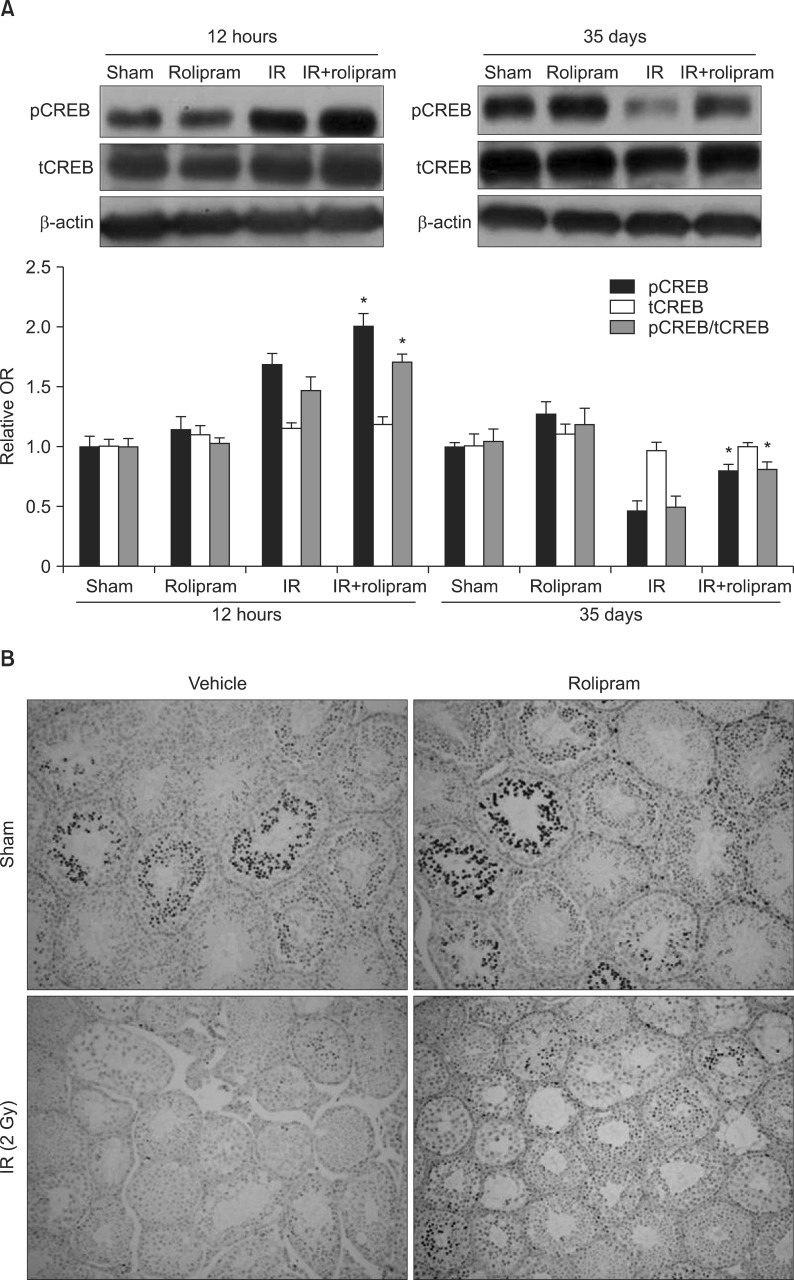
These protective effects of rolipram treatment prior to irradiation may be mediated by the increase in pCREB levels at 12 hours post-irradiation and the attenuated decrease in pCREB levels in the testis at 35 days post-irradiation in the rolipram-treated group. These findings suggest that activation of CREB signaling by rolipram treatment ameliorates the detrimental effects of acute irradiation on testicular dysfunction and the related male reproductive functions in mice.
盆腔放疗治疗癌症时会影响正常细胞,比如睾丸中快速增殖的生精细胞,从而导致不育,这是放疗后常见的问题。本研究利用睾丸系统,探究咯利普兰(一种特异性磷酸二酯酶-IV抑制剂,已知可增加环磷酸腺苷反应元件结合蛋白(CREB)的表达和磷酸化,CREB是精子发生的关键因子)对盆腔放疗的辐射防护作用。
雄性C57BL/6小鼠接受盆腔放疗(2 Gy),单独或联合使用咯利普兰,并在放疗后12小时和35天处死。
咯利普兰在放疗后12小时保护生殖细胞免受辐射诱导的凋亡,且在35天时与放疗对照组相比显著增加了睾丸重量。咯利普兰还改善了辐射诱导的睾丸形态变化,如曲细精管直径和上皮高度的变化。此外,咯利普兰治疗组的曲细精管再填充和干细胞存活指数高于辐射组。而且,咯利普兰治疗抵消了辐射介导的附睾中精子数量和活力的下降。
放疗前咯利普兰治疗的这些保护作用可能是由放疗后12小时pCREB水平的升高以及放疗后35天咯利普兰治疗组睾丸中pCREB水平下降的减弱介导的。这些发现表明,咯利普兰治疗激活CREB信号可改善急性辐射对小鼠睾丸功能障碍及相关雄性生殖功能的有害影响。