Division of Pediatric Critical Care, David Geffen School of Medicine, University of California Los Angeles, Los Angeles, CA 90095, USA.
J Immunol. 2010 Dec 1;185(11):6413-9. doi: 10.4049/jimmunol.1001829.
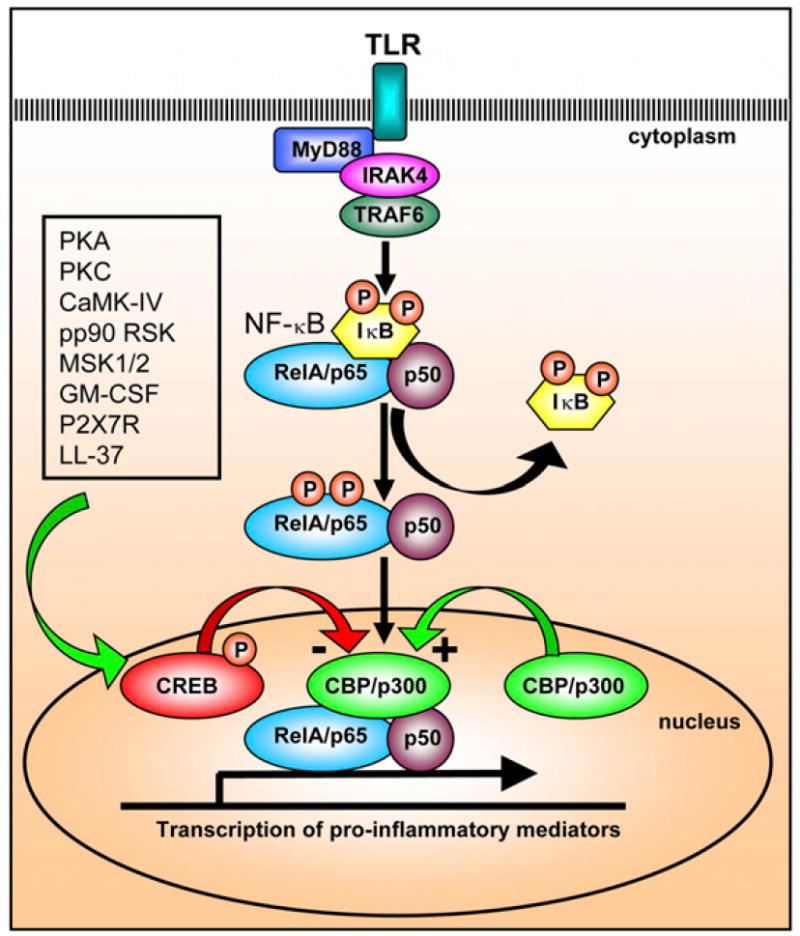
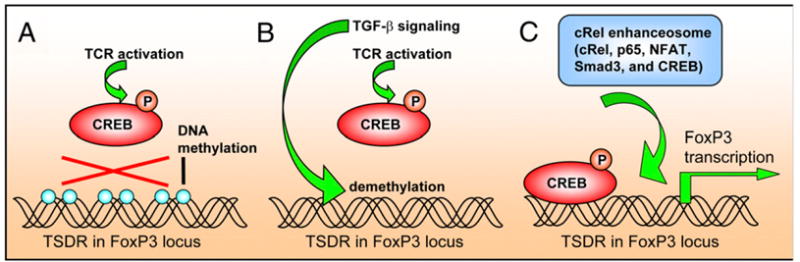
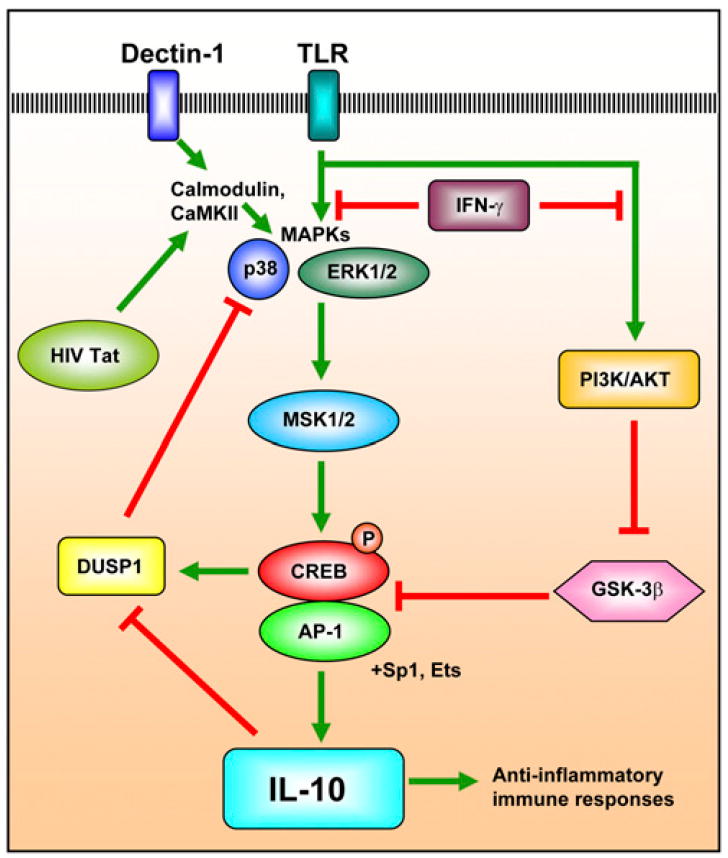
CREB is a transcription factor that regulates diverse cellular responses, including proliferation, survival, and differentiation. CREB is induced by a variety of growth factors and inflammatory signals and subsequently mediates the transcription of genes containing a cAMP-responsive element. Several immune-related genes possess this cAMP-responsive element, including IL-2, IL-6, IL-10, and TNF-α. In addition, phosphorylated CREB has been proposed to directly inhibit NF-κB activation by blocking the binding of CREB binding protein to the NF-κB complex, thereby limiting proinflammatory responses. CREB also induces an antiapoptotic survival signal in monocytes and macrophages. In T and B cells, CREB activation promotes proliferation and survival and differentially regulates Th1, Th2, and Th17 responses. Finally, CREB activation is required for the generation and maintenance of regulatory T cells. This review summarizes current advances involving CREB in immune function--a role that is continually being defined.
CREB 是一种转录因子,可调节多种细胞反应,包括增殖、存活和分化。CREB 可被多种生长因子和炎症信号诱导,随后介导含有 cAMP 反应元件的基因的转录。一些与免疫相关的基因具有此 cAMP 反应元件,包括 IL-2、IL-6、IL-10 和 TNF-α。此外,磷酸化 CREB 已被提出通过阻止 CREB 结合蛋白与 NF-κB 复合物的结合来直接抑制 NF-κB 激活,从而限制促炎反应。CREB 还在单核细胞和巨噬细胞中诱导抗凋亡存活信号。在 T 和 B 细胞中,CREB 激活促进增殖和存活,并差异调节 Th1、Th2 和 Th17 反应。最后,CREB 激活是生成和维持调节性 T 细胞所必需的。这篇综述总结了 CREB 在免疫功能中的最新进展——这一作用仍在不断被定义。