Wen Wei, Wu Jun, Liu Lucy, Tian Yan, Buettner Ralf, Hsieh Meng-Yin, Horne David, Dellinger Thanh H, Han Ernest S, Jove Richard, Yim John H
Department of Molecular Medicine, Beckman Research Institute, City of Hope Comprehensive Cancer Center, 1500 East Duarte Rd., Duarte, CA, 91010, USA.
Department of Surgery, Beckman Research Institute, City of Hope Comprehensive Cancer Center, 1500 East Duarte Rd., Duarte, CA, 91010, USA.
Mol Cancer. 2015 May 1;14:100. doi: 10.1186/s12943-015-0366-5.
The EGFR signaling pathway is frequently activated in human ovarian cancer and associated with poor prognosis. However, inhibition of EGFR signaling in patients with recurrent ovarian cancer has been disappointing. It remains to be addressed whether ovarian cancer patients could benefit from targeting EGFR signaling. Here we investigated the mechanisms underlying the resistance to EGFR inhibition in ovarian cancer and developed a strategy to overcome it.
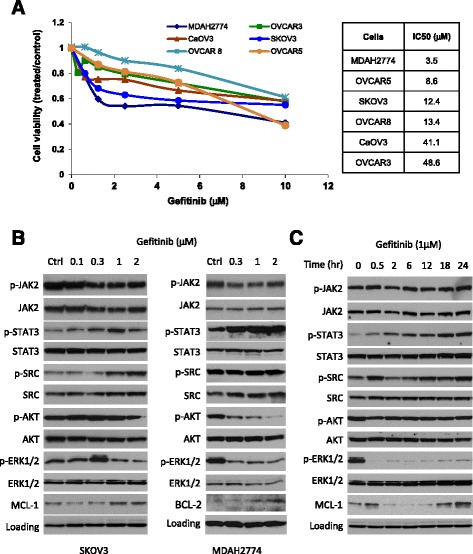
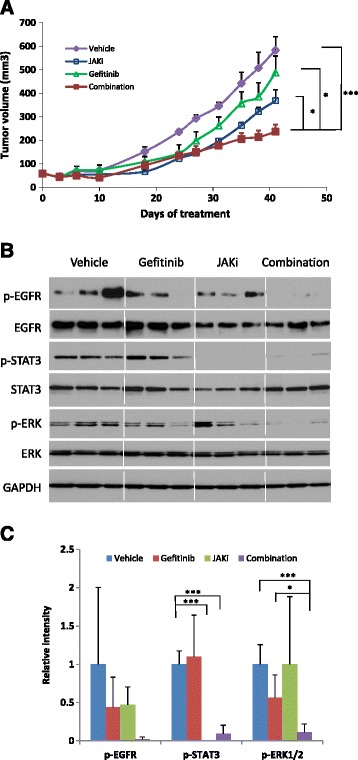
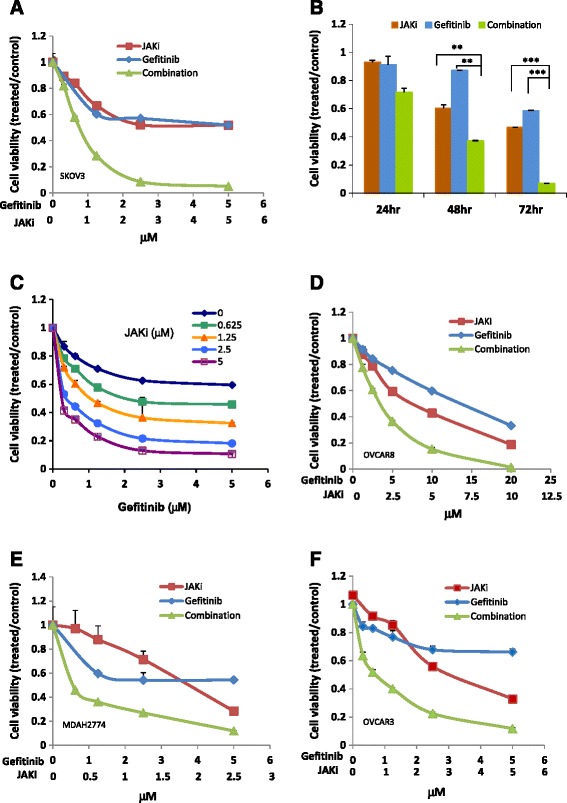
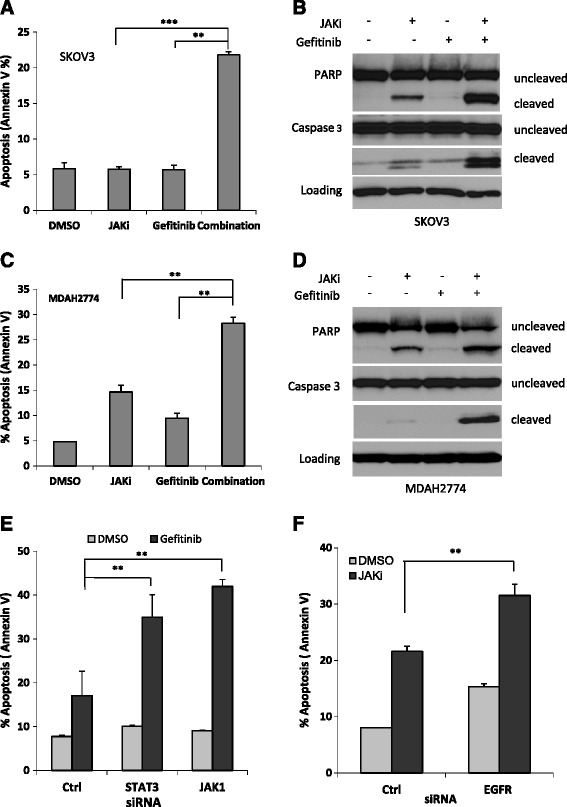
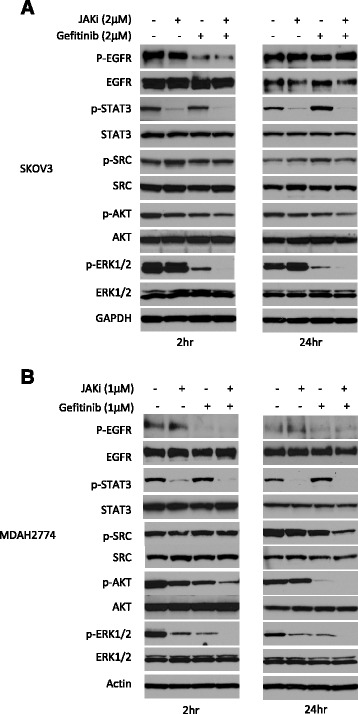
We found that treatment of human ovarian cancer cells with an EGFR inhibitor, gefitinib, resulted in increased STAT3 phosphorylation in a dose- and time-dependent manner. Inhibiting STAT3 activation with a small molecule inhibitor of JAK, an upstream kinase that phosphorylates and activates STAT3, synergistically increased the anti-tumor activity of gefitinib in vitro. Similar results were obtained when STAT3 or JAK1 expression was knocked down. In contrast, inhibiting other signaling pathways, such as AKT/mTOR, MEK or SRC, was relatively less effective. The combined treatment resulted in simultaneous attenuation of multiple survival pathways and increased inhibition of ERK pathway. In addition, the dual inhibition showed a stronger suppression of xenograft tumor growth than either single inhibition.
Our findings demonstrate that feedback activation of STAT3 pathway might contribute to the resistance to EGFR inhibition. Combined blockade of both pathways appears to be more effective against human ovarian cancer than inhibition of each pathway alone both in vitro and in vivo. This study may provide a strategy to improve clinical benefit of targeting EGFR pathway in ovarian cancer patients.
表皮生长因子受体(EGFR)信号通路在人类卵巢癌中经常被激活,并与不良预后相关。然而,在复发性卵巢癌患者中抑制EGFR信号通路的效果一直不尽人意。卵巢癌患者是否能从靶向EGFR信号通路中获益仍有待探讨。在此,我们研究了卵巢癌对EGFR抑制产生耐药性的潜在机制,并制定了克服耐药性的策略。
我们发现,用EGFR抑制剂吉非替尼处理人卵巢癌细胞后,信号转导和转录激活因子3(STAT3)的磷酸化呈剂量和时间依赖性增加。用JAK(一种磷酸化并激活STAT3的上游激酶)的小分子抑制剂抑制STAT3激活,可在体外协同增强吉非替尼的抗肿瘤活性。当敲低STAT3或JAK1表达时,也获得了类似的结果。相比之下,抑制其他信号通路,如AKT/mTOR、MEK或SRC,效果相对较差。联合治疗导致多种生存通路同时减弱,并增强了对细胞外调节蛋白激酶(ERK)通路的抑制。此外,双重抑制对异种移植瘤生长的抑制作用比单一抑制更强。
我们的研究结果表明,STAT3通路的反馈激活可能导致对EGFR抑制产生耐药性。在体外和体内,联合阻断这两条通路似乎比单独抑制每条通路对人类卵巢癌更有效。本研究可能为提高卵巢癌患者靶向EGFR通路的临床获益提供一种策略。