Nielsen Anette Søgaard, Nielsen Bent
Department of Psychiatry, Odense University Hospital, DK-5000, Odense C, Denmark.
Unit of Clinical Alcohol Research, Clinical Institute, University of Southern Denmark, DK-5000, Odense C, Denmark.
Addict Sci Clin Pract. 2015 Mar 7;10(1):7. doi: 10.1186/s13722-015-0031-8.
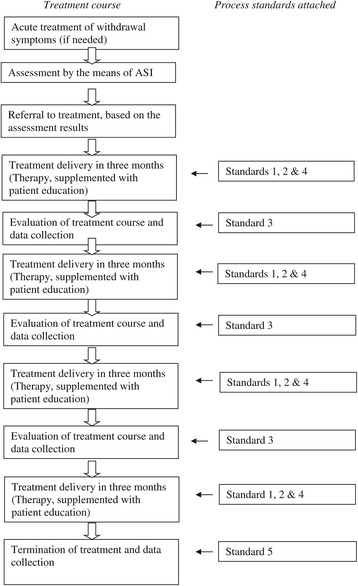
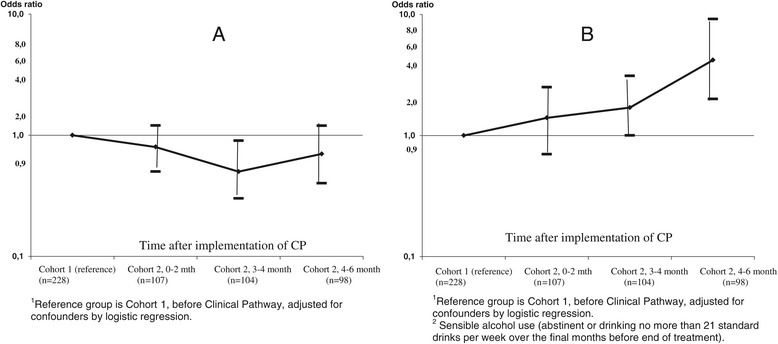
This article describes the design, implementation, and evaluation of a clinical pathway system in a two-cohort quasi-experimental study before and after implementation, controlling for confounders. The main outcome measures were retention in care and sensible alcohol use (defined as abstinent or drinking no more than 21 standard drinks per week). Patients with harmful alcohol use or dependence as their primary problem who were seeking psychosocial treatment at one of four alcohol clinics in Denmark participated in the study. After implementation of the clinical pathway system, which incorporated a structured intake, a referral and independent follow-up system, checklists, audit, and feedback, there was no change in length of stay, but significantly more patients had a good clinical outcome (stopped or moderated their consumption) at the end of treatment (OR = 1.9; 1.2-3.1). The study documents the feasibility of using a clinical pathway framework, incorporating a local monitoring system, checklists, audit, and feedback to enhance treatment quality and improve outcomes for alcohol use disorders.
本文描述了在实施前后进行的一项两队列准实验研究中临床路径系统的设计、实施和评估,并对混杂因素进行了控制。主要结局指标是持续接受治疗和合理饮酒(定义为戒酒或每周饮酒不超过21个标准饮酒单位)。以有害饮酒或酒精依赖为主要问题、在丹麦四家酒精诊所之一寻求心理社会治疗的患者参与了该研究。在实施临床路径系统后,该系统纳入了结构化的接诊、转诊和独立随访系统、检查表、审计及反馈,住院时间没有变化,但在治疗结束时,有更多患者获得了良好的临床结局(停止或减少了饮酒量)(比值比=1.9;1.2 - 3.1)。该研究证明了使用临床路径框架的可行性,该框架纳入了本地监测系统、检查表、审计及反馈,以提高酒精使用障碍的治疗质量并改善治疗效果。