Maddison Ben C, Spiropoulos John, Vickery Christopher M, Lockey Richard, Owen Jonathan P, Bishop Keith, Baker Claire A, Gough Kevin C
ADAS UK, School of Veterinary Medicine and Science, The University of Nottingham, Sutton Bonington Campus, College Road, Sutton Bonington, Leicestershire, UK.
Animal and Plant Health Agency, Woodham Lane, New Haw, Addlestone, Surrey, UK.
Vet Res. 2015 May 1;46(1):46. doi: 10.1186/s13567-015-0179-y.
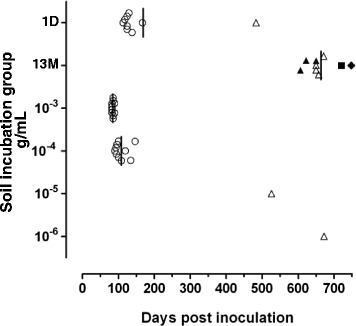
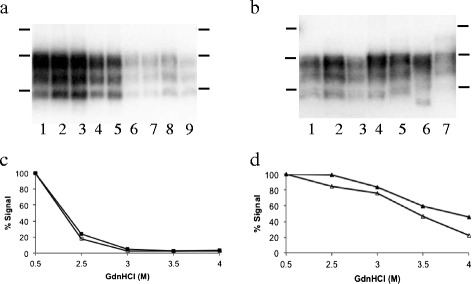
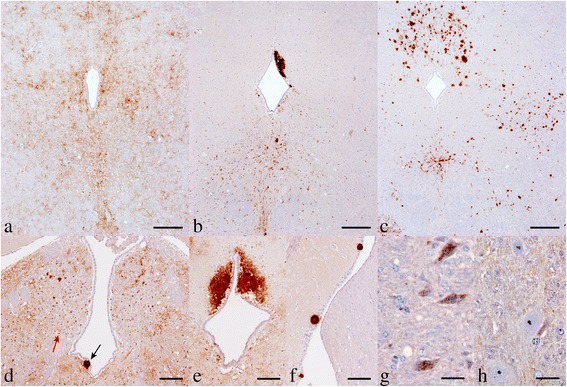
Ovine scrapie can be transmitted via environmental reservoirs. A pool of ovine scrapie isolates were incubated on soil for one day or thirteen months and eluted prion was used to challenge tg338 mice transgenic for ovine PrP. After one-day incubation on soil, two PrP(Sc) phenotypes were present: G338 or Apl338ii. Thirteen months later some divergent PrP(Sc) phenotypes were seen: a mixture of Apl338ii with either G338 or P338, and a completely novel PrP(Sc) deposition, designated Cag338. The data show that prolonged ageing of scrapie prions within an environmental matrix may result in changes in the dominant PrP(Sc) biological/biochemical properties.
绵羊瘙痒病可通过环境储库传播。将一组绵羊瘙痒病分离株在土壤中孵育一天或十三个月,然后用洗脱的朊病毒攻击转绵羊PrP基因的tg338小鼠。在土壤中孵育一天后,出现了两种PrP(Sc)表型:G338或Apl338ii。十三个月后,观察到一些不同的PrP(Sc)表型:Apl338ii与G338或P338的混合物,以及一种全新的PrP(Sc)沉积,命名为Cag338。数据表明,瘙痒病朊病毒在环境基质中长时间老化可能导致主要PrP(Sc)生物学/生化特性发生变化。