Animal Health and Veterinary Laboratories Agency (AHVLA) Weybridge, Addlestone, UK.
Int J Exp Pathol. 2013 Oct;94(5):320-8. doi: 10.1111/iep.12036.
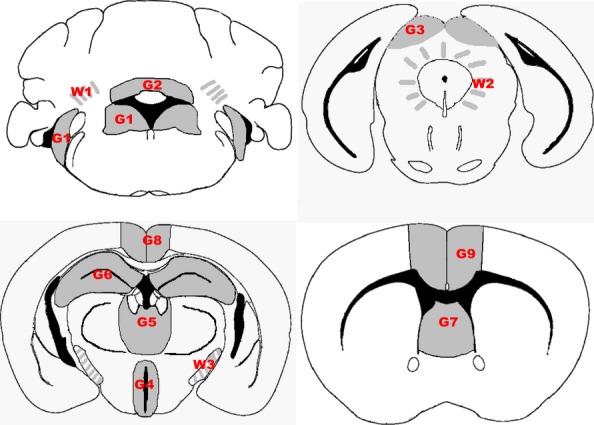
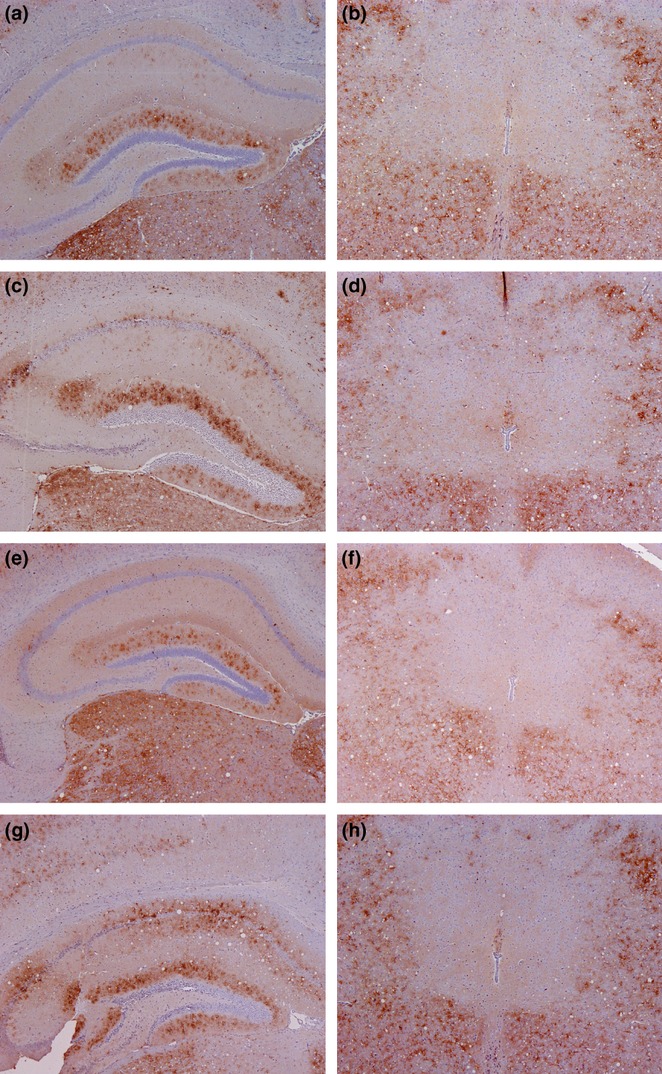
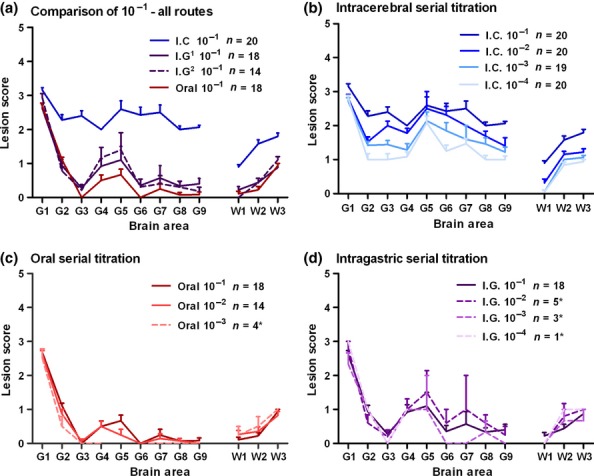
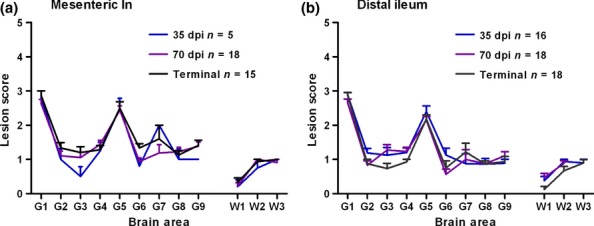
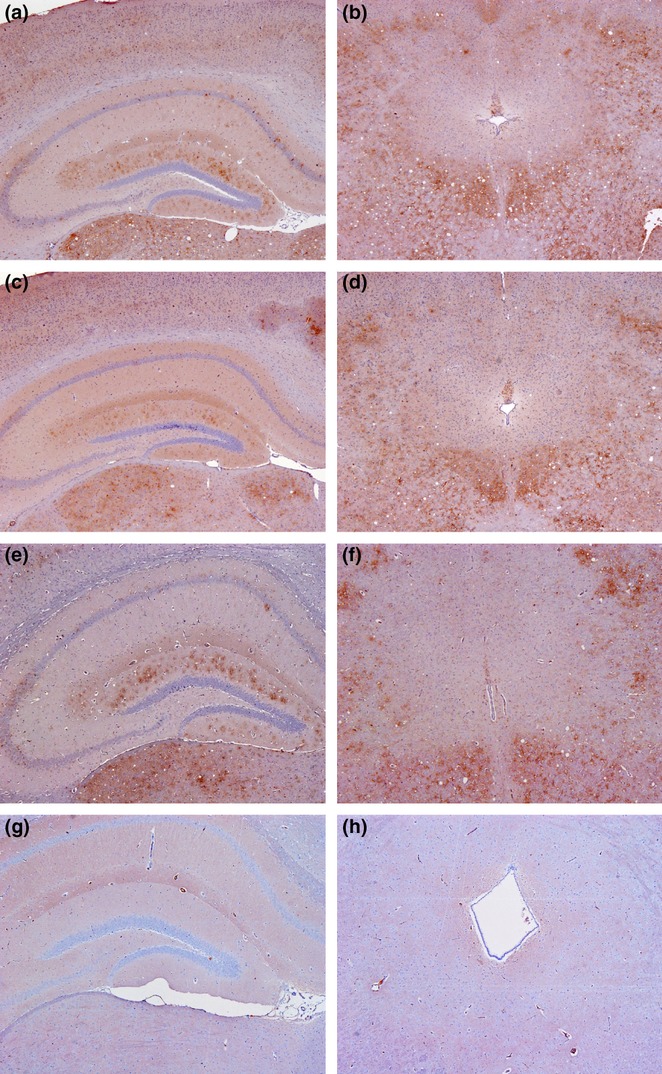
Mouse-adapted transmissible spongiform encephalopathy (TSE) strains are routinely distinguished based on reproducible disease characteristics in a given mouse line following inoculation via a consistent route. We investigated whether different administration routes (oral, intragastric (i.g.) and intracerebral (i.c.)) can alter the disease characteristics in IM mice after serial dilution of a stabilized mouse-adapted bovine spongiform encephalopathy (BSE) strain (301V). In addition, the infectivity of distal ileum and mesenteric lymph nodes (ln) sampled at three time points (35 days postinoculation (dpi), 70 dpi and terminal disease) after i.g. inoculation of 301V strain was assessed in mice by i.c. challenge. Strain characteristics were assessed according to standard methodology and PrP(Sc) immunohistochemistry deposition patterns. Mean incubation periods were prolonged following oral or i.g. inoculations compared to the i.c. route. Lesion profiles following i.c. challenges were elevated compared to i.g. and oral routes although vacuolation in the dorsal medulla was consistently high irrespective of the route of administration. Nevertheless, the same PrP(Sc) deposition pattern was associated with each route of administration. Distal and mesenteric ln infectivity was detected as early as 35 dpi and displayed consistent lesion profiles and PrP(Sc) deposition patterns. Our data suggest that although 301V retained its properties, some phenotypic parameters were affected by the route of inoculation. We conclude that bioassay data should be interpreted carefully and should be standardized for route of inoculation.
鼠源可传播海绵状脑病(TSE)株通常根据接种途径一致的情况下,在特定的小鼠品系中产生可重现的疾病特征来区分。我们研究了在通过稳定的鼠源牛海绵状脑病(BSE)株(301V)连续稀释后,不同的给药途径(口服、胃内(i.g.)和脑内(i.c.))是否会改变 IM 小鼠的疾病特征。此外,我们还评估了在 i.g.接种 301V 株后三个时间点(接种后 35 天(dpi)、70 dpi 和疾病末期)采集的回肠远端和肠系膜淋巴结(ln)的感染性,通过脑内挑战来评估。根据标准方法和 PrP(Sc)免疫组织化学沉积模式评估株特征。与脑内途径相比,口服或胃内接种后的平均潜伏期延长。脑内挑战后的病变谱与胃内和口服途径相比升高,尽管无论给药途径如何,背髓的空泡化始终很高。然而,相同的 PrP(Sc)沉积模式与每种给药途径相关。远端和肠系膜 ln 的感染性早在 35 dpi 时就被检测到,并且显示出一致的病变谱和 PrP(Sc)沉积模式。我们的数据表明,尽管 301V 保留了其特性,但一些表型参数受到接种途径的影响。我们得出结论,生物测定数据应谨慎解释,并应针对接种途径进行标准化。