Tapia G Pullas, Zhu Xiaohua, Xu Jing, Liang Pan, Su Gang, Liu Hai, Liu Yang, Shu Liliang, Liu Shuiqi, Huang Chen
From the Department of Cardiovascular Surgery, First Hospital Affiliated of Zhengzhou University, China.
Medicine (Baltimore). 2015 May;94(17):e795. doi: 10.1097/MD.0000000000000795.
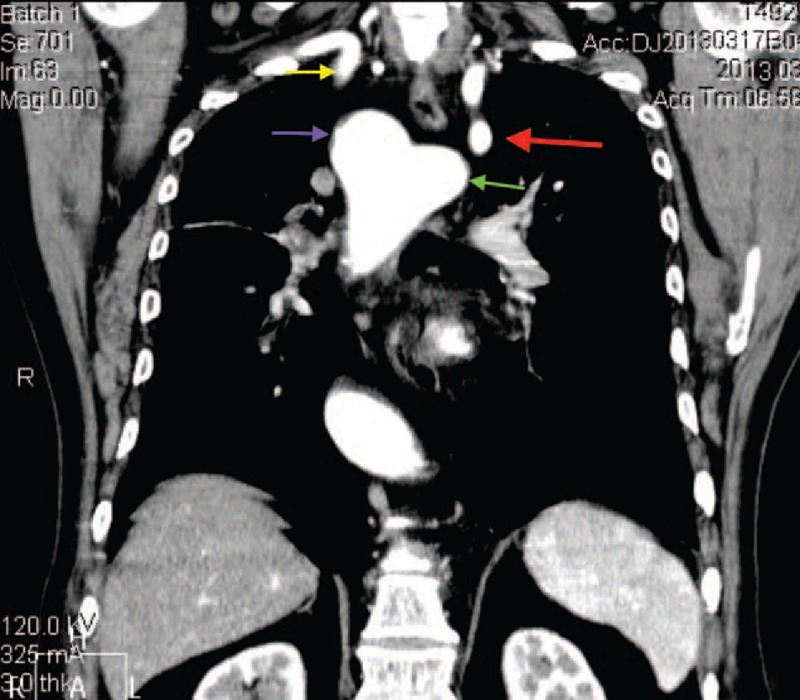
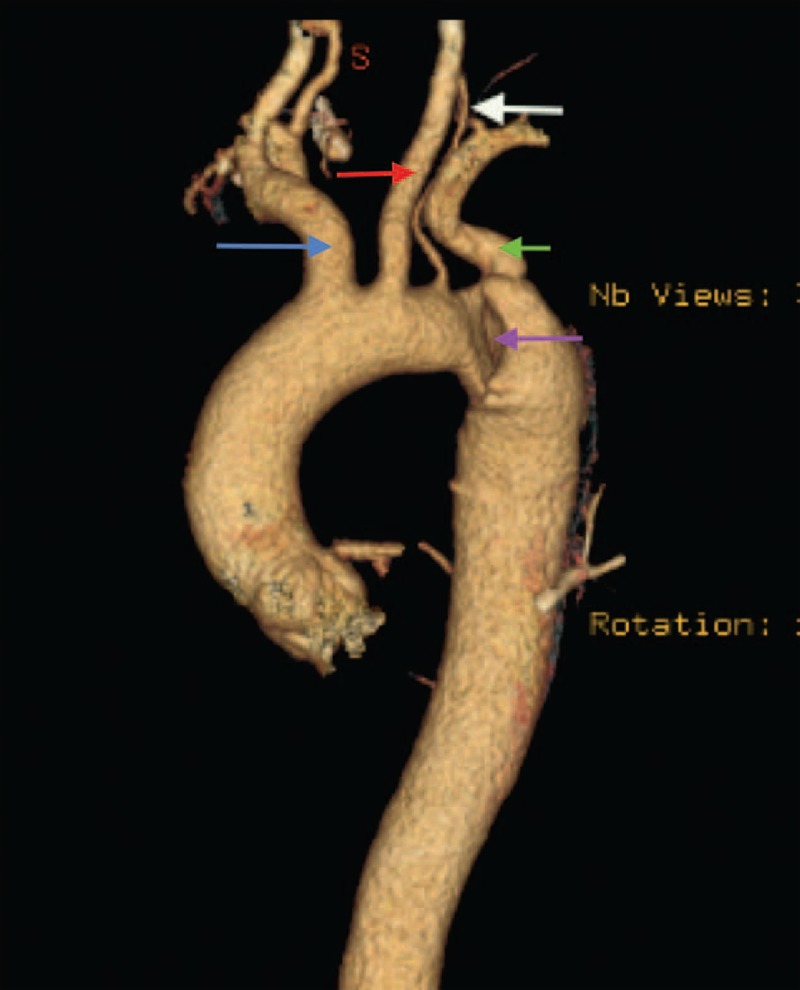
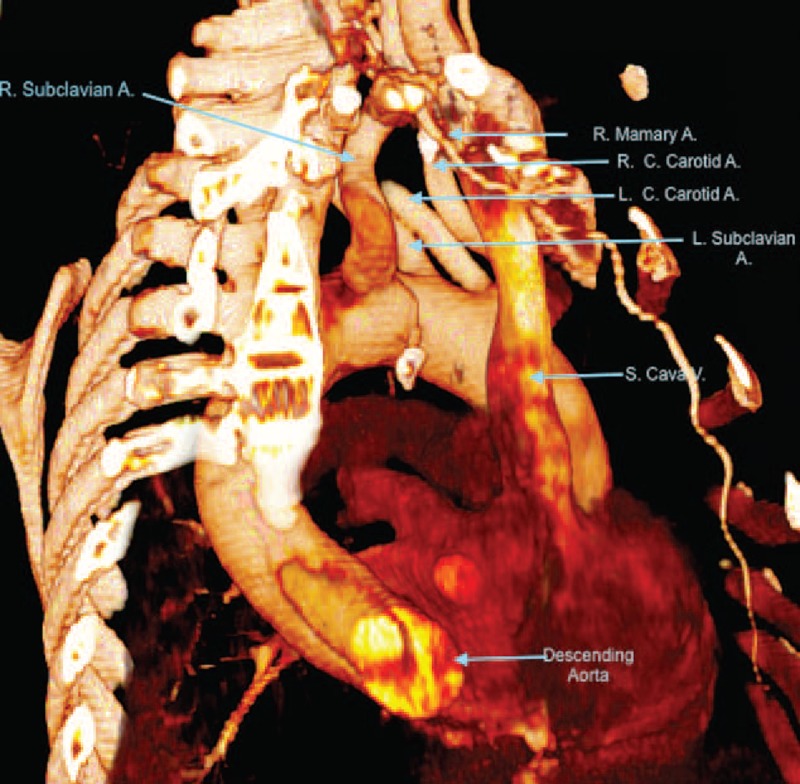
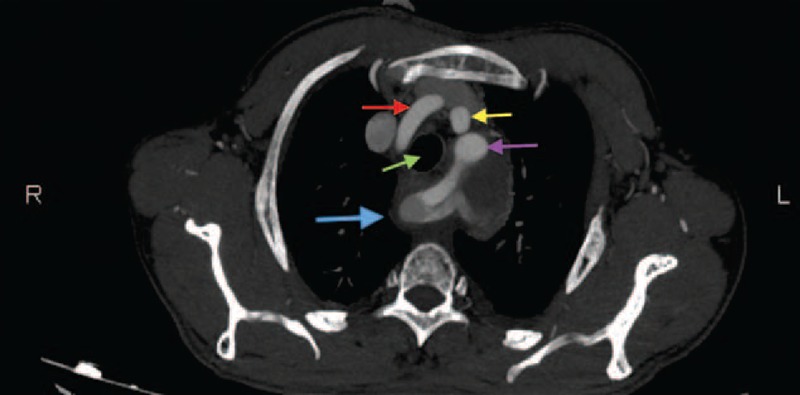
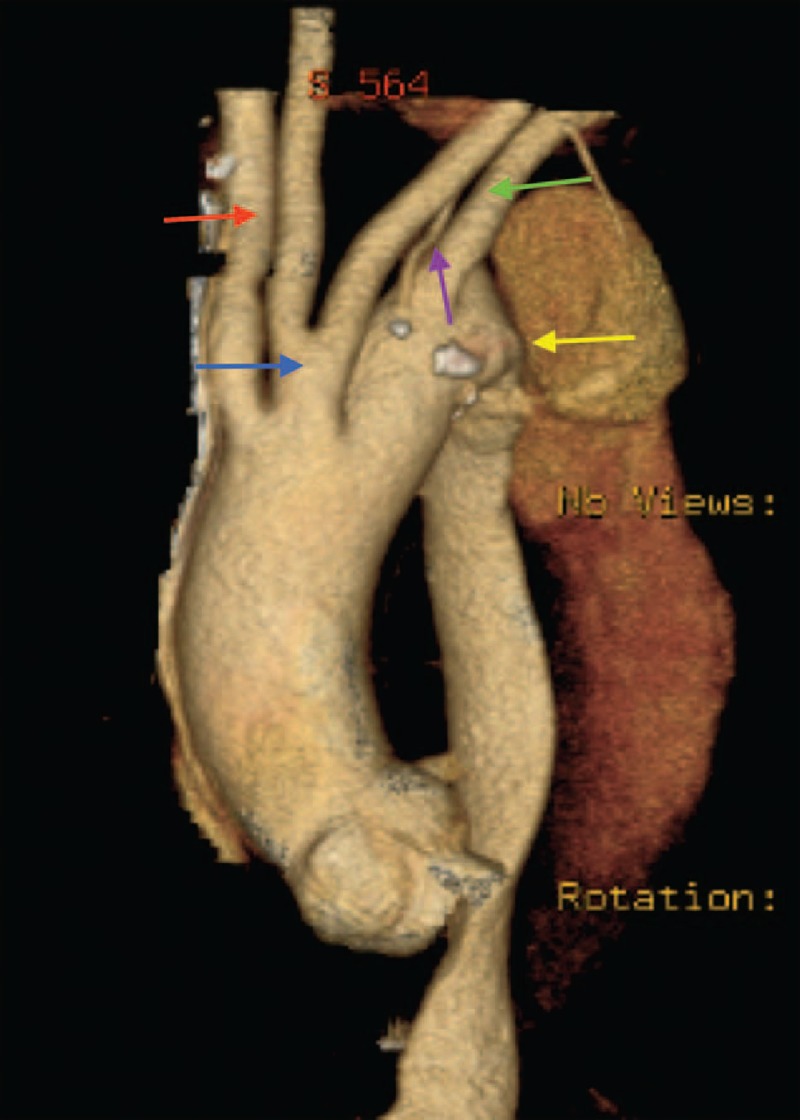
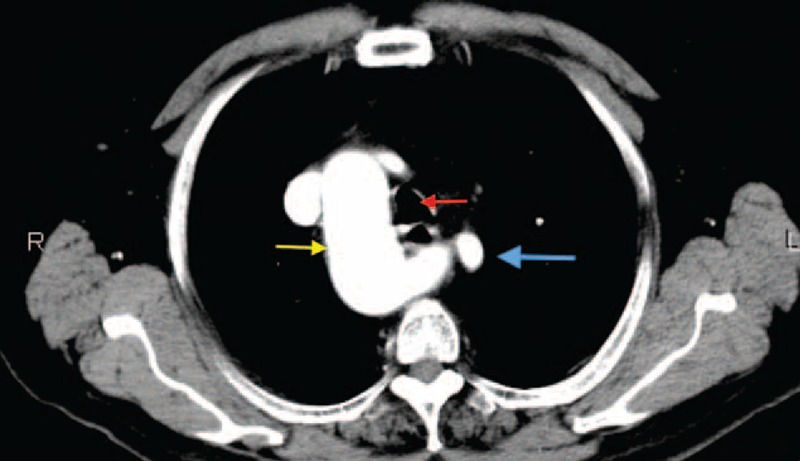
Several authors have described anatomic variations of the aortic arch in 13% to 20% of the patients who do not have aortic disease. However, few studies have evaluated these patterns in the thoracic aortic dissection (TAD). In the authors' knowledge, this is the first survey that specifically investigates the frequency of these variations in a broad, nonselected group of Chinese patients with aortic dissection. Furthermore, it compares this group with a group of patients without aortic disease.The objective of this study was to define the variation frequency of the aortic arch branches pattern using the tomographic studies of 525 Chinese patients with a diagnosis of TAD. The Stanford classification was used to set the site of the initial tear of the dissection. In addition, we performed an epidemiological analysis of the aortic arch anatomic variations in TAD, and its possible implications for surgical or endovascular treatment. The general hypothesis proposal asserted that Chinese patients with dissection of the aorta have a similar incidence of variations of the aortic arch to the patients without aortic disease.A retrospective study of cases and controls was carried out using the tomographic studies (CT) of all patients admitted to the First Affiliated Hospital of Zhengzhou University, located at Henan-China, with a confirmed diagnosis of aortic dissection from January 2012 until December 2014. The group of cases consisted of 525 patients: 374 men and 151 women, with a mean age of 52.27 years (range, 20-89). The average age of the patients with Stanford A and B aortic dissection was 49.46 and 53.67, respectively. The control group consisted of 525 unselected patients without TAD who underwent a CT scan of the chest due to other indications. This group consisted of 286 men and 239 women, with a mean age of 53.60 years (range, 18-89). All the patients with aneurysm or dissection were excluded from the control group. We performed a statistical analysis of demographic data.The study found 7 different patterns of the aortic arch on both groups of cases and controls. Within the 525 patients with TAD were observed 85 (16.19%) anatomical variations, while the control group showed 112 variations (21.33%); P = 0.033. The most common anatomical variant was the bovine arch, found in 62 (11.80%) cases of TAD compared with 77 (14.66%) in the control group; P = 0.172. Anatomical variations were observed in 14.32% of the patients with Stanford A dissection and 17.09% of the patients with Stanford B dissection; P = 0.425. Patients with Stanford A dissection showed the pattern of bovine arch in 23 (13.21%) of 174 cases. In contrast, the patients with Stanford B dissection showed it in 39 (11.11%) of 351 cases; P = 0.481. The anatomical variant defined as vertebral artery of direct origin of the aortic arch was more frequent in the patients with Stanford B dissection (5.12%). The patients with Stanford A dissection presented this pattern in 1.14% of the cases; P = 0.025. This study observed an increased frequency of aortic dissection in the subgroup from 41 to 60 years old. In the subgroup from 41 to 60 years old without TAD, a greater frequency of anatomical variations were found than in the patients with TAD (20.81% vs 14.23%; P = 0.050). The same fashion was seen in patients older than 80 years (27.27% vs 0%; P = 0.030). The anatomical variations of the aortic arch with TAD occurred in 14.97% of the male patients and 19.20% of the female patients compared to 21.67% to 20.92% in the control group; P = 0.026 and P = 0.681, respectively.The aortic arch variations were found less frequently in the TAD group than in the control group in the present Chinese series. The bovine arch was considered the variant pattern of the major frequency in the patients with TAD and the control group. The anatomical variant of 4 branches, defined as vertebral artery of direct origin of the aortic arch, was more frequent in patients with Stanford B aortic dissection than in the patients with Stanford A.This finding might show an association between the geometry of the aortic arch and the site of onset of first intimal tear of dissection.
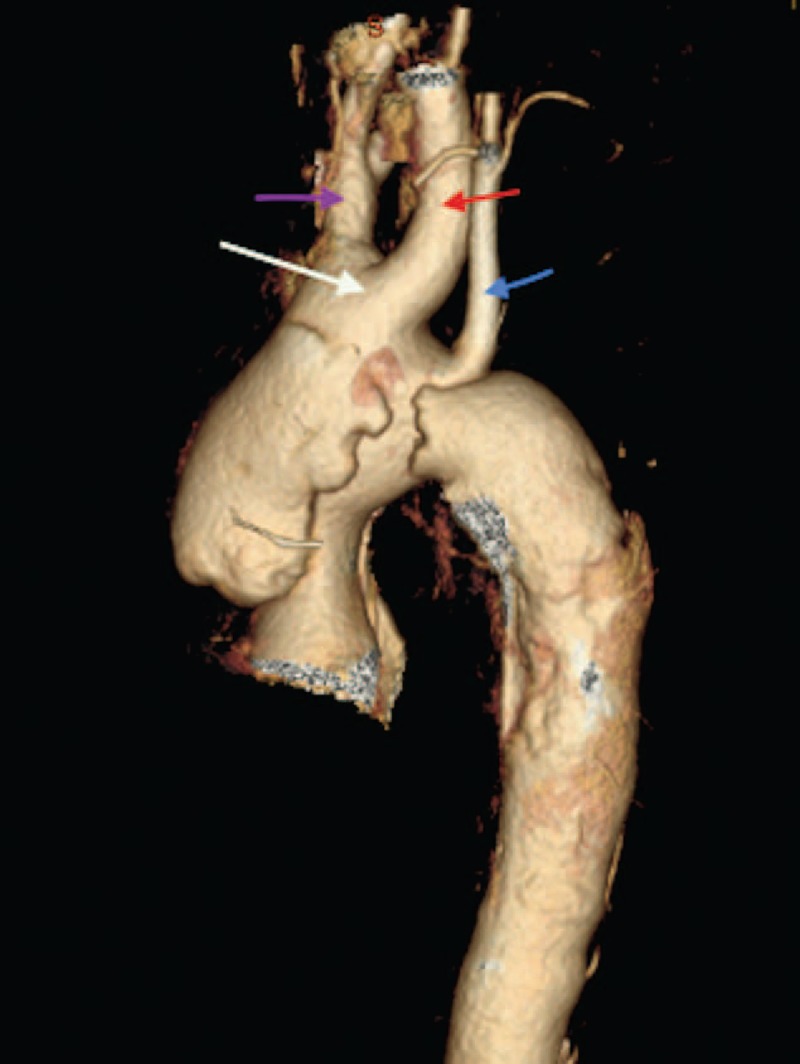
几位作者描述了在无主动脉疾病的患者中,13%至20%存在主动脉弓解剖变异。然而,很少有研究评估胸主动脉夹层(TAD)中的这些模式。据作者所知,这是第一项专门调查广大非特定中国主动脉夹层患者中这些变异频率的研究。此外,它还将该组患者与无主动脉疾病的患者组进行了比较。本研究的目的是通过对525例诊断为TAD的中国患者进行断层扫描研究,确定主动脉弓分支模式的变异频率。采用斯坦福分类法确定夹层初始撕裂的部位。此外,我们对TAD中主动脉弓解剖变异进行了流行病学分析,及其对手术或血管内治疗的可能影响。一般假设认为,中国主动脉夹层患者的主动脉弓变异发生率与无主动脉疾病的患者相似。
对郑州大学第一附属医院2012年1月至2014年12月确诊为主动脉夹层的所有患者的断层扫描研究(CT)进行了病例对照回顾性研究。病例组由525例患者组成:374例男性和151例女性,平均年龄52.27岁(范围20 - 89岁)。斯坦福A型和B型主动脉夹层患者的平均年龄分别为49.46岁和53.67岁。对照组由525例因其他指征接受胸部CT扫描的未选择的无TAD患者组成。该组由286例男性和239例女性组成,平均年龄53.60岁(范围18 - 89岁)。对照组排除了所有动脉瘤或夹层患者。我们对人口统计学数据进行了统计分析。
该研究在病例组和对照组中均发现了7种不同的主动脉弓模式。在525例TAD患者中观察到85例(16.19%)解剖变异,而对照组显示112例变异(21.33%);P = 0.033。最常见的解剖变异是牛型主动脉弓,在62例(11.80%)TAD病例中发现,而对照组为77例(14.66%);P = 0.172。斯坦福A型夹层患者中14.32%出现解剖变异,斯坦福B型夹层患者中17.09%出现;P = 0.425。174例斯坦福A型夹层患者中有23例(13.21%)表现为牛型主动脉弓模式。相比之下,351例斯坦福B型夹层患者中有39例(11.11%)表现为此模式;P = 0.481。定义为主动脉弓直接起源椎动脉的解剖变异在斯坦福B型夹层患者中更常见(5.12%)。斯坦福A型夹层患者中1.14%出现此模式;P = 0.025。本研究观察到41至60岁亚组中主动脉夹层频率增加。在41至60岁无TAD的亚组中,发现解剖变异频率高于TAD患者(20.81%对14.23%;P = 0.050)。80岁以上患者也出现同样情况(27.27%对0%;P = 0.030)。与对照组的21.67%至20.92%相比,TAD男性患者中主动脉弓解剖变异发生率为14.97%,女性患者为19.20%;P分别为0.026和0.681。
在本中国系列研究中,TAD组中主动脉弓变异的发现频率低于对照组。牛型主动脉弓被认为是TAD患者和对照组中最常见的变异模式。定义为主动脉弓直接起源椎动脉的4分支解剖变异在斯坦福B型主动脉夹层患者中比在斯坦福A型患者中更常见。这一发现可能表明主动脉弓的几何形状与夹层首次内膜撕裂的起始部位之间存在关联。