Bawa Pushpinder, Zackaria Sajna, Verma Mohit, Gupta Saurabh, Srivatsan R, Chaudhary Bibha, Srinivasan Subhashini
IBAB, Institute of Bioinformatics and Applied Biotechnology, Bangalore, Karnataka, India; Manipal University, Manipal, Karnataka, India.
IBAB, Institute of Bioinformatics and Applied Biotechnology, Bangalore, Karnataka, India.
PLoS One. 2015 May 1;10(5):e0122143. doi: 10.1371/journal.pone.0122143. eCollection 2015.
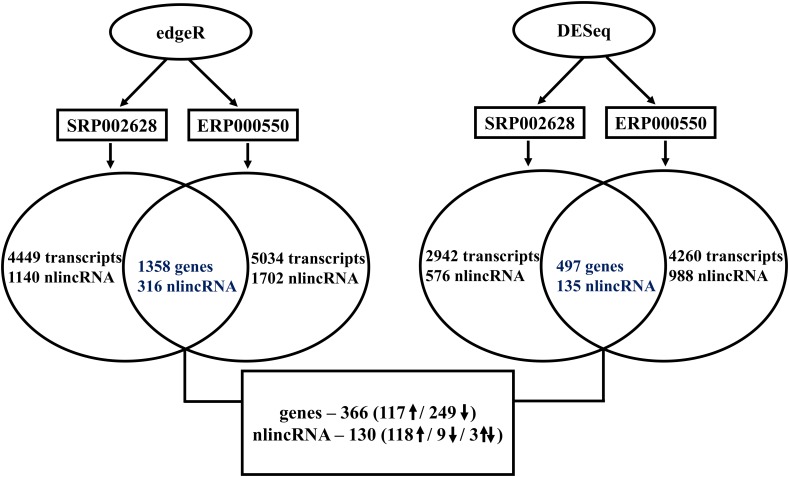
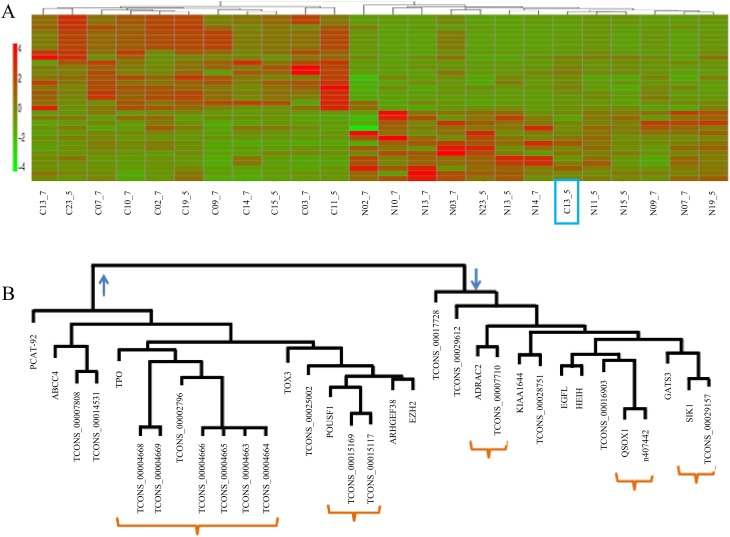
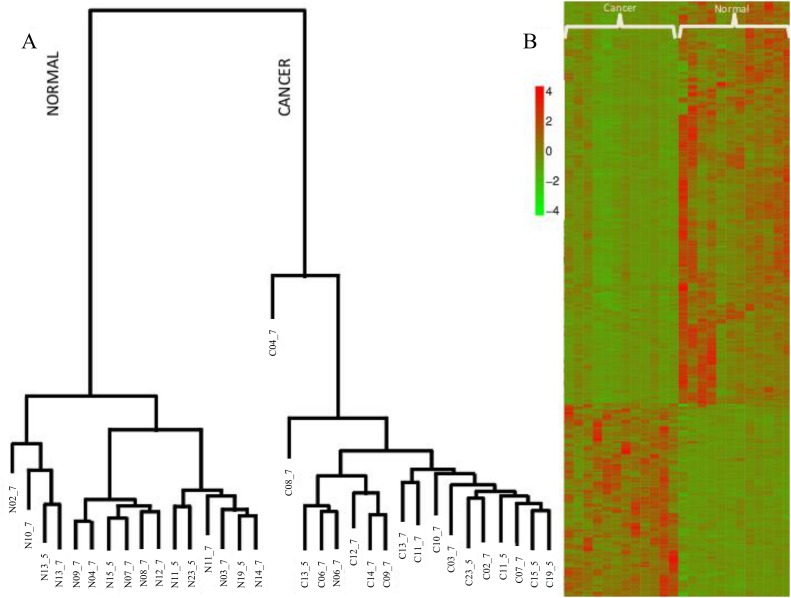
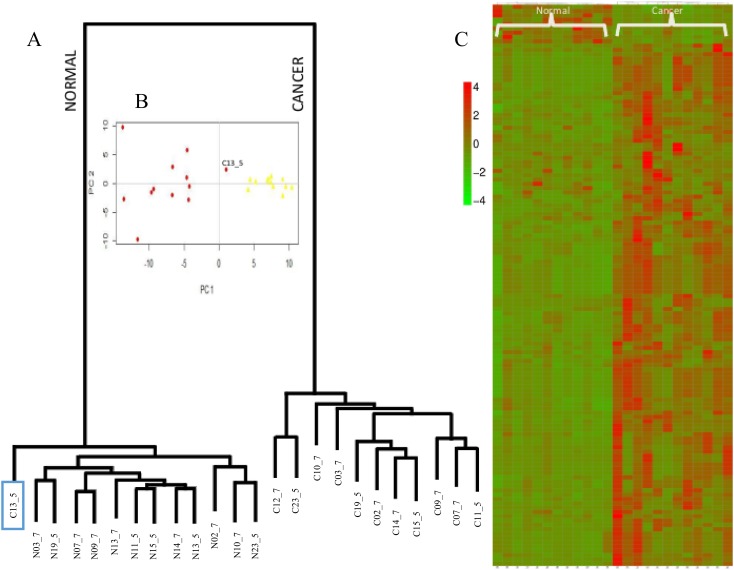
Recently, large numbers of normal human tissues have been profiled for non-coding RNAs and more than fourteen thousand long intergenic non-coding RNAs (lincRNAs) are found expressed in normal human tissues. The functional roles of these normal lincRNAs (nlincRNAs) in the regulation of protein coding genes in normal and disease biology are yet to be established. Here, we have profiled two RNA-seq datasets including cancer and matched non-neoplastic tissues from 12 individuals from diverse demography for both coding genes and nlincRNAs. We find 130 nlincRNAs significantly regulated in cancer, with 127 regulated in the same direction in the two datasets. Interestingly, according to Illumina Body Map, significant numbers of these nlincRNAs display baseline null expression in normal prostate tissues but are specific to other tissues such as thyroid, kidney, liver and testis. A number of the regulated nlincRNAs share loci with coding genes, which are either co-regulated or oppositely regulated in all cancer samples studied here. For example, in all cancer samples i) the nlincRNA, TCONS_00029157, and a neighboring tumor suppressor factor, SIK1, are both down regulated; ii) several thyroid-specific nlincRNAs in the neighborhood of the thyroid-specific gene TPO, are both up-regulated; and iii) the TCONS_00010581, an isoform of HEIH, is down-regulated while the neighboring EZH2 gene is up-regulated in cancer. Several nlincRNAs from a prostate cancer associated chromosomal locus, 8q24, are up-regulated in cancer along with other known prostate cancer associated genes including PCAT-1, PVT1, and PCAT-92. We observe that there is significant bias towards up-regulation of nlincRNAs with as high as 118 out of 127 up-regulated in cancer, even though regulation of coding genes is skewed towards down-regulation. Considering that all reported cancer associated lincRNAs (clincRNAs) are biased towards up-regulation, we conclude that this bias may be functionally relevant.
最近,大量正常人体组织已被分析非编码RNA,并且发现超过一万四千种长链基因间非编码RNA(lincRNA)在正常人体组织中表达。这些正常lincRNA(nlincRNA)在正常和疾病生物学中对蛋白质编码基因调控的功能作用尚未确定。在此,我们分析了两个RNA测序数据集,包括来自12名不同人口统计学个体的癌症及匹配的非肿瘤组织中的编码基因和nlincRNA。我们发现130种nlincRNA在癌症中受到显著调控,其中127种在两个数据集中的调控方向相同。有趣的是,根据Illumina人体图谱,这些nlincRNA中有相当数量在正常前列腺组织中显示基线零表达,但在甲状腺、肾脏、肝脏和睾丸等其他组织中具有特异性。许多受调控的nlincRNA与编码基因共享基因座,在此研究的所有癌症样本中,它们要么共同调控,要么反向调控。例如,在所有癌症样本中:i)nlincRNA TCONS_00029157和邻近的肿瘤抑制因子SIK1均下调;ii)甲状腺特异性基因TPO附近的几种甲状腺特异性nlincRNA均上调;iii)HEIH的一种异构体TCONS_00010581下调,而邻近的EZH2基因在癌症中上调。来自前列腺癌相关染色体位点8q24的几种nlincRNA在癌症中上调,同时还有其他已知的前列腺癌相关基因,包括PCAT-1、PVT1和PCAT-92。我们观察到nlincRNA存在显著的上调偏向,在癌症中上调的127种中有118种如此,尽管编码基因的调控偏向于下调。鉴于所有报道的癌症相关lincRNA(clincRNA)都偏向于上调,我们得出结论,这种偏向可能具有功能相关性。