Rittchen Sonja, Boyd Amanda, Burns Alasdair, Park Jason, Fahmy Tarek M, Metcalfe Su, Williams Anna
Centre for Regenerative Medicine, University of Edinburgh, 5, Little France Drive, Edinburgh, EH16 4UU, UK.
Department of Biomedical Engineering, Department of Immunobiology, Yale School of Engineering and Applied Science and Yale School of Medicine, 55 Prospect Street, New Haven, CT, 06511, USA.
Biomaterials. 2015 Jul;56:78-85. doi: 10.1016/j.biomaterials.2015.03.044. Epub 2015 Apr 15.
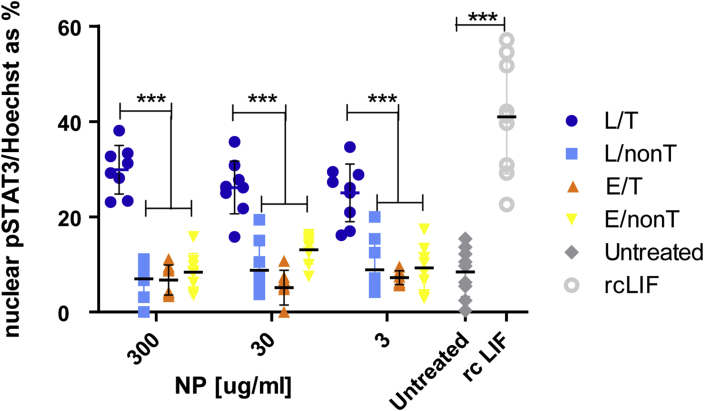
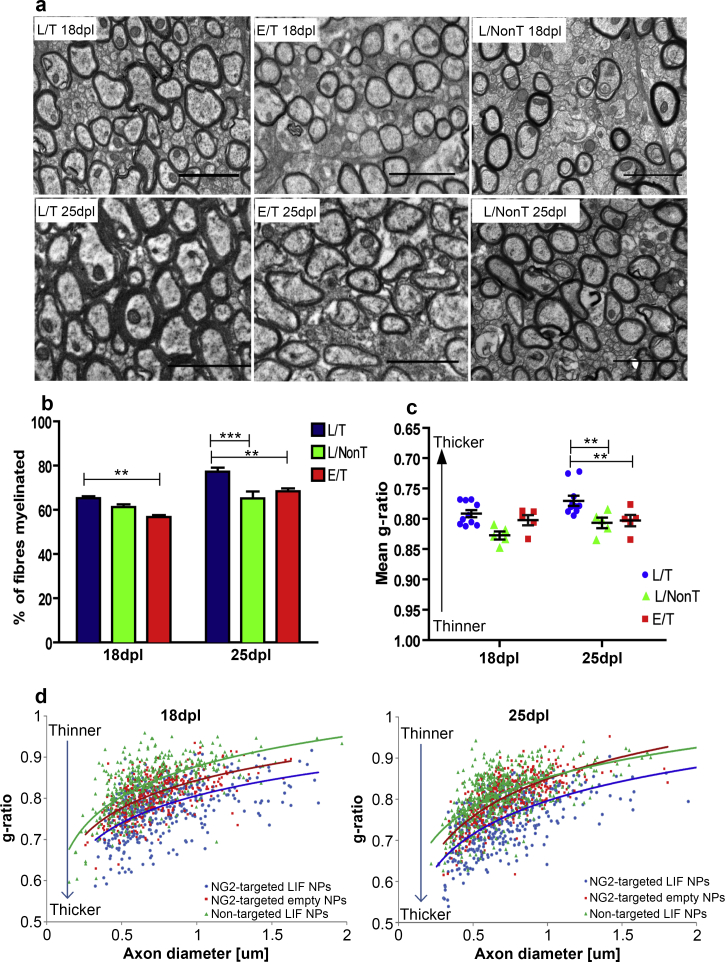
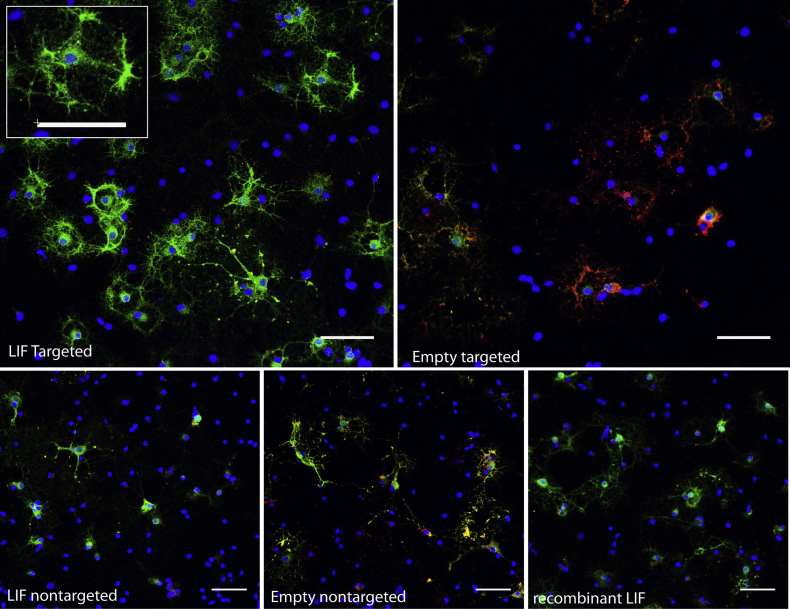
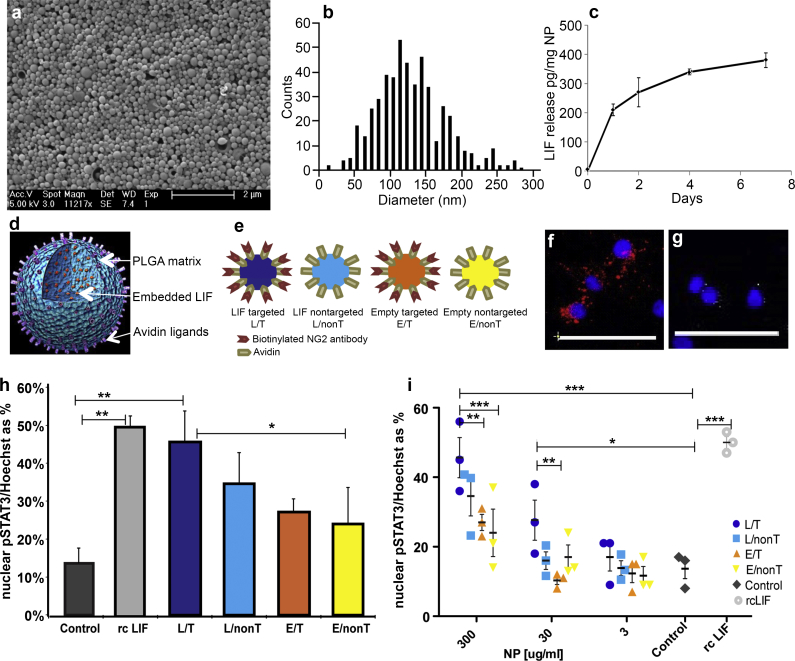
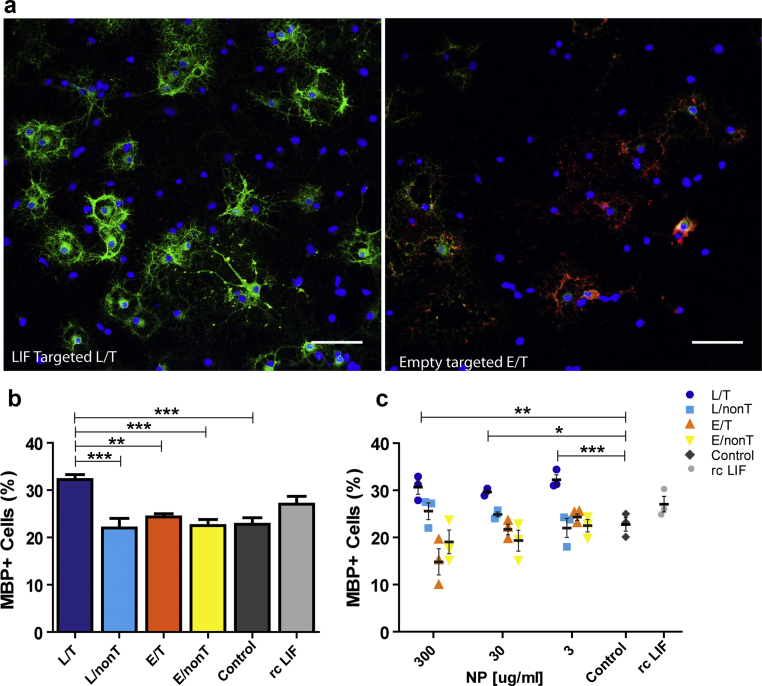
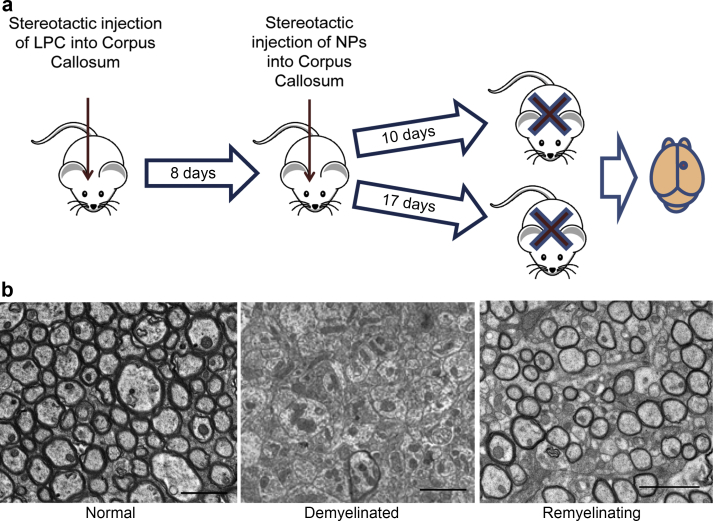
Multiple sclerosis (MS) is a progressive demyelinating disease of the central nervous system (CNS). Many nerve axons are insulated by a myelin sheath and their demyelination not only prevents saltatory electrical signal conduction along the axons but also removes their metabolic support leading to irreversible neurodegeneration, which currently is untreatable. There is much interest in potential therapeutics that promote remyelination and here we explore use of leukaemia inhibitory factor (LIF), a cytokine known to play a key regulatory role in self-tolerant immunity and recently identified as a pro-myelination factor. In this study, we tested a nanoparticle-based strategy for targeted delivery of LIF to oligodendrocyte precursor cells (OPC) to promote their differentiation into mature oligodendrocytes able to repair myelin. Poly(lactic-co-glycolic acid)-based nanoparticles of ∼120 nm diameter were constructed with LIF as cargo (LIF-NP) with surface antibodies against NG-2 chondroitin sulfate proteoglycan, expressed on OPC. In vitro, NG2-targeted LIF-NP bound to OPCs, activated pSTAT-3 signalling and induced OPC differentiation into mature oligodendrocytes. In vivo, using a model of focal CNS demyelination, we show that NG2-targeted LIF-NP increased myelin repair, both at the level of increased number of myelinated axons, and increased thickness of myelin per axon. Potency was high: a single NP dose delivering picomolar quantities of LIF is sufficient to increase remyelination. Impact statement Nanotherapy-based delivery of leukaemia inhibitory factor (LIF) directly to OPCs proved to be highly potent in promoting myelin repair in vivo: this delivery strategy introduces a novel approach to delivering drugs or biologics targeted to myelin repair in diseases such as MS.
多发性硬化症(MS)是一种中枢神经系统(CNS)的进行性脱髓鞘疾病。许多神经轴突由髓鞘包裹,髓鞘脱失不仅会阻止电信号沿轴突跳跃式传导,还会消除对轴突的代谢支持,导致不可逆的神经退行性变,目前尚无有效治疗方法。人们对促进髓鞘再生的潜在治疗方法兴趣浓厚,在此我们探索使用白血病抑制因子(LIF),一种已知在自身耐受免疫中起关键调节作用且最近被鉴定为促髓鞘化因子的细胞因子。在本研究中,我们测试了一种基于纳米颗粒的策略,将LIF靶向递送至少突胶质前体细胞(OPC),以促进其分化为能够修复髓鞘的成熟少突胶质细胞。构建了直径约120 nm的聚乳酸-乙醇酸共聚物纳米颗粒,将LIF作为 cargo(LIF-NP),其表面带有针对在OPC上表达的NG-2硫酸软骨素蛋白聚糖的抗体。在体外,靶向NG2的LIF-NP与OPC结合,激活pSTAT-3信号并诱导OPC分化为成熟少突胶质细胞。在体内,使用局灶性CNS脱髓鞘模型,我们发现靶向NG2的LIF-NP增加了髓鞘修复,这体现在有髓轴突数量增加以及每个轴突的髓鞘厚度增加两方面。效力很高:单次纳米颗粒剂量递送皮摩尔量的LIF就足以增加髓鞘再生。影响声明基于纳米疗法将白血病抑制因子(LIF)直接递送至OPC在体内促进髓鞘修复方面被证明具有高效力:这种递送策略为在诸如MS等疾病中递送靶向髓鞘修复的药物或生物制剂引入了一种新方法。