Wang Xiaodan, Boevink Petra, McLellan Hazel, Armstrong Miles, Bukharova Tatyana, Qin Zhiwei, Birch Paul R J
Horticultural College, Northeast Agricultural University, No. 59 Mucai Road, Harbin 150030, China; Cell and Molecular Sciences, James Hutton Institute, Errol Road, Invergowrie, Dundee DD2 5DA, UK; Division of Plant Sciences, College of Life Sciences, University of Dundee (at JHI), Errol Road, Invergowrie, Dundee DD2 5DA, UK; Virus-free Seedling Research Institute of Heilongjiang Academy of Agricultural Sciences, No. 368 Xuefu Road, Harbin 150086, China.
Cell and Molecular Sciences, James Hutton Institute, Errol Road, Invergowrie, Dundee DD2 5DA, UK.
Mol Plant. 2015 Sep;8(9):1385-95. doi: 10.1016/j.molp.2015.04.012. Epub 2015 Apr 30.
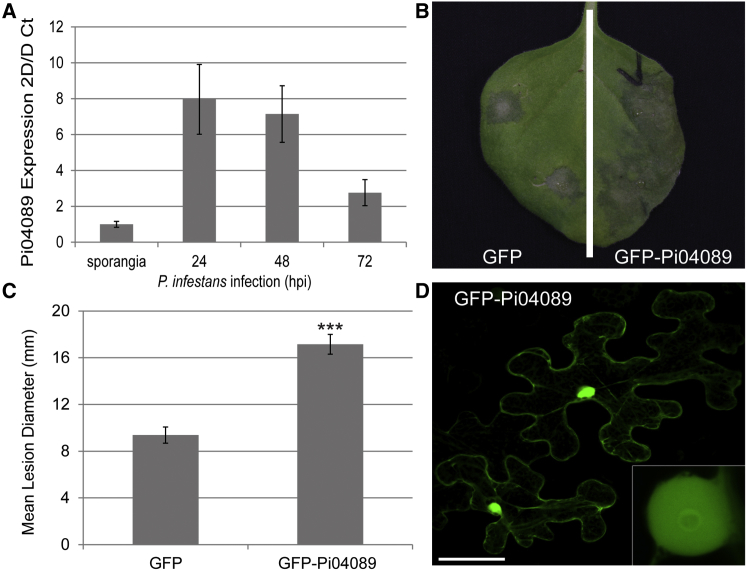
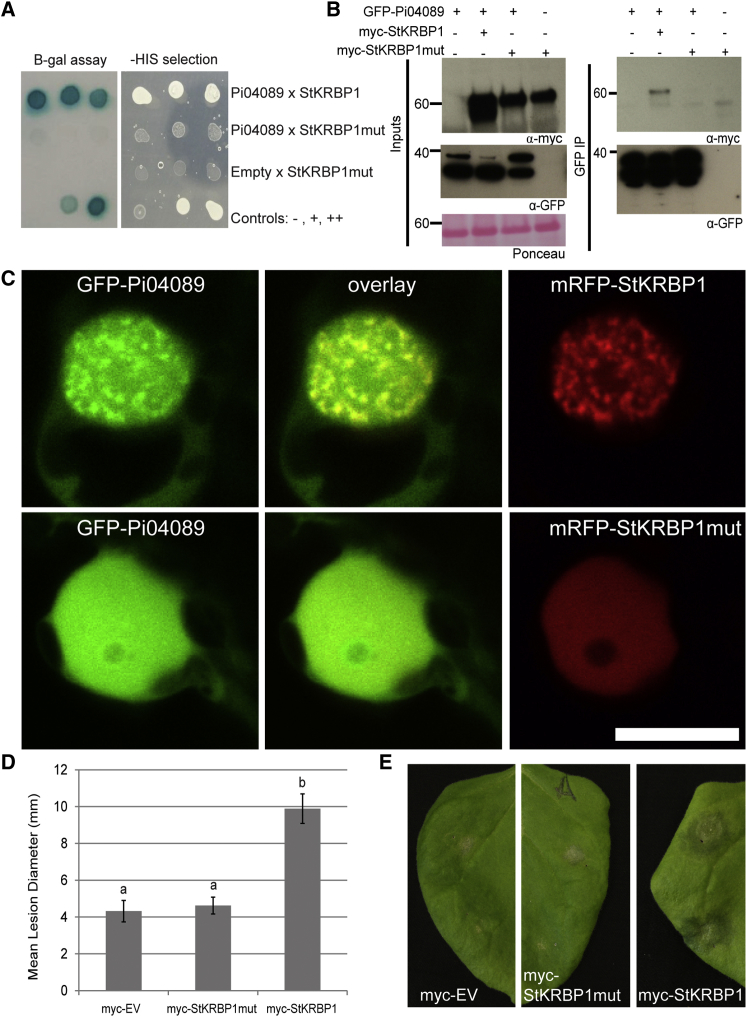
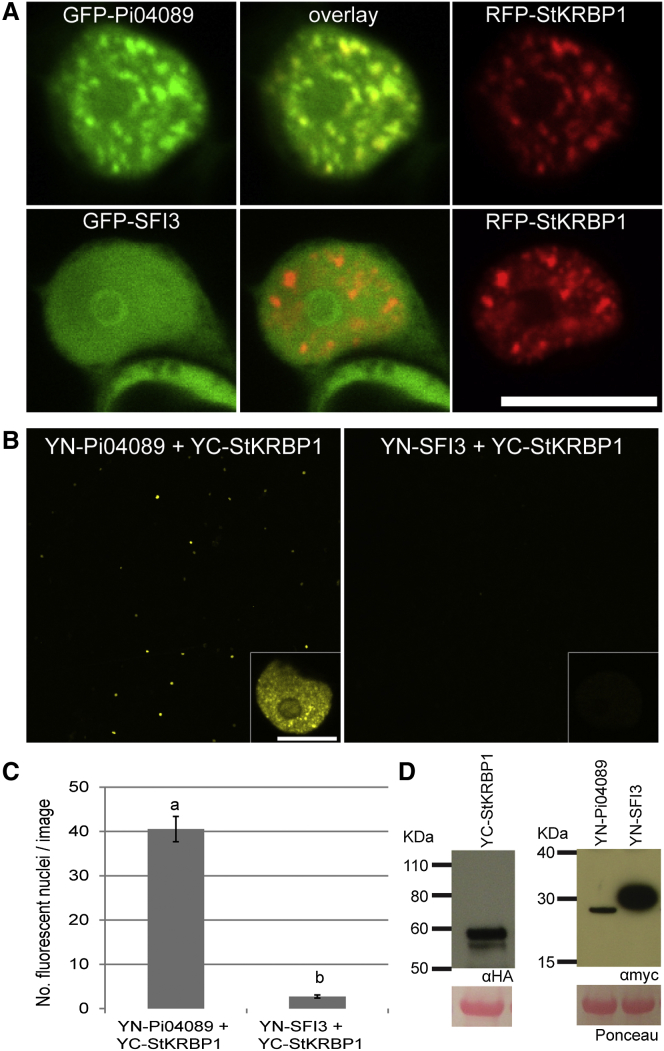
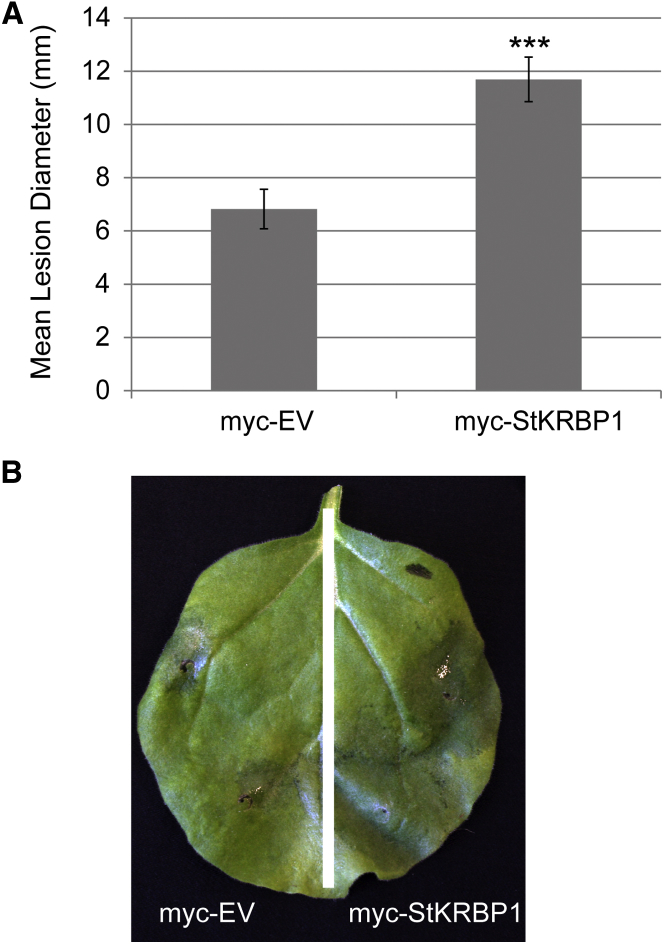
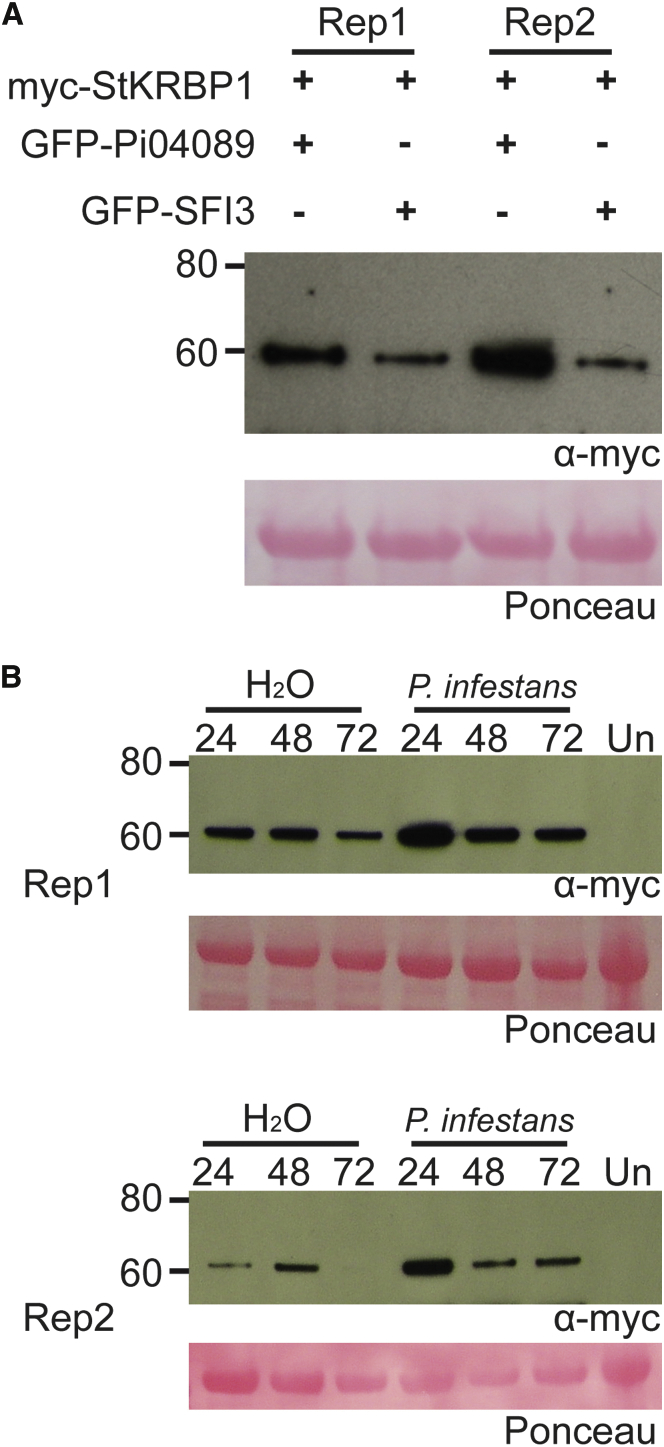
Plant pathogens deliver effector proteins that alter host processes to create an environment conducive to colonization. Attention has focused on identifying the targets of effectors and how their manipulation facilitates disease. RXLR effector Pi04089 from the potato blight pathogen Phytophthora infestans accumulates in the host nucleus and enhances colonization when transiently expressed in planta. Its nuclear localization is required for enhanced P. infestans colonization. Pi04089 interacts in yeast and in planta with a putative potato K-homology (KH) RNA-binding protein, StKRBP1. Co-localization of Pi04089 and StKRBP1, and bimolecular fluorescence complementation between them, indicate they associate at nuclear speckles. StKRBP1 protein levels increased when it was co-expressed with Pi04089. Indeed, such accumulation of StKRBP1 was observed also on the first day of leaf colonization by the pathogen. Remarkably, overexpression of StKRBP1 significantly enhances P. infestans infection. Mutation of the nucleotide-binding motif GxxG to GDDG in all three KH domains of StKRBP1 abolishes its interaction with Pi04089, its localization to nuclear speckles, and its increased accumulation when co-expressed with the effector. Moreover, the mutant StKRBP1 protein no longer enhances leaf colonization by P. infestans, implying that nucleotide binding is likely required for this activity. We thus argue that StKRBP1 can be regarded as a susceptibility factor, as its activity is beneficial to the pathogen.
植物病原体分泌效应蛋白,这些蛋白会改变宿主细胞进程,从而创造有利于病原体定殖的环境。目前的研究重点是确定效应蛋白的作用靶点以及它们如何通过操控这些靶点来引发病害。来自马铃薯晚疫病病原体致病疫霉的RXLR效应蛋白Pi04089在宿主细胞核中积累,并且当在植物中瞬时表达时会增强定殖能力。其核定位对于致病疫霉增强定殖是必需的。Pi04089在酵母和植物中与一种假定的马铃薯K-同源(KH)RNA结合蛋白StKRBP1相互作用。Pi04089和StKRBP1的共定位以及它们之间的双分子荧光互补表明它们在核斑点处相互关联。当StKRBP1与Pi04089共表达时,其蛋白水平会升高。事实上,在病原体侵染叶片的第一天也观察到了StKRBP1的这种积累。值得注意的是,StKRBP1的过表达显著增强了致病疫霉的感染能力。将StKRBP1所有三个KH结构域中的核苷酸结合基序GxxG突变为GDDG后,消除了它与Pi04089的相互作用、其在核斑点处的定位以及与效应蛋白共表达时的积累增加。此外,突变后的StKRBP1蛋白不再增强致病疫霉对叶片的定殖能力,这意味着这种活性可能需要核苷酸结合。因此,我们认为StKRBP1可被视为一种感病因子,因为它的活性对病原体有益。