• 文献检索
  • 文档翻译
  • 深度研究
  • 学术资讯
  • Suppr Zotero 插件Zotero 插件
  • 邀请有礼
  • 套餐&价格
  • 历史记录
应用&插件
Suppr Zotero 插件Zotero 插件浏览器插件Mac 客户端Windows 客户端微信小程序
定价
高级版会员购买积分包购买API积分包
服务
文献检索文档翻译深度研究API 文档MCP 服务
关于我们
关于 Suppr公司介绍联系我们用户协议隐私条款
关注我们

Suppr 超能文献

核心技术专利:CN118964589B侵权必究
粤ICP备2023148730 号-1Suppr @ 2026

文献检索

告别复杂PubMed语法,用中文像聊天一样搜索,搜遍4000万医学文献。AI智能推荐,让科研检索更轻松。

立即免费搜索

文件翻译

保留排版,准确专业,支持PDF/Word/PPT等文件格式,支持 12+语言互译。

免费翻译文档

深度研究

AI帮你快速写综述,25分钟生成高质量综述,智能提取关键信息,辅助科研写作。

立即免费体验

多孔硅微粒通过增强交叉呈递和诱导I型干扰素反应来增强抗肿瘤免疫力。

Porous silicon microparticle potentiates anti-tumor immunity by enhancing cross-presentation and inducing type I interferon response.

作者信息

Xia Xiaojun, Mai Junhua, Xu Rong, Perez Jorge Enrique Tovar, Guevara Maria L, Shen Qi, Mu Chaofeng, Tung Hui-Ying, Corry David B, Evans Scott E, Liu Xuewu, Ferrari Mauro, Zhang Zhiqiang, Li Xian Chang, Wang Rong-Fu, Shen Haifa

机构信息

Department of Nanomedicine, Houston Methodist Research Institute, Houston, TX 77030, USA.

Department of Pathology & Immunology, Baylor College of Medicine, Houston, TX 77030, USA.

出版信息

Cell Rep. 2015 May 12;11(6):957-966. doi: 10.1016/j.celrep.2015.04.009. Epub 2015 Apr 30.

DOI:10.1016/j.celrep.2015.04.009
PMID:25937283
原文链接:https://pmc.ncbi.nlm.nih.gov/articles/PMC4431902/
Abstract

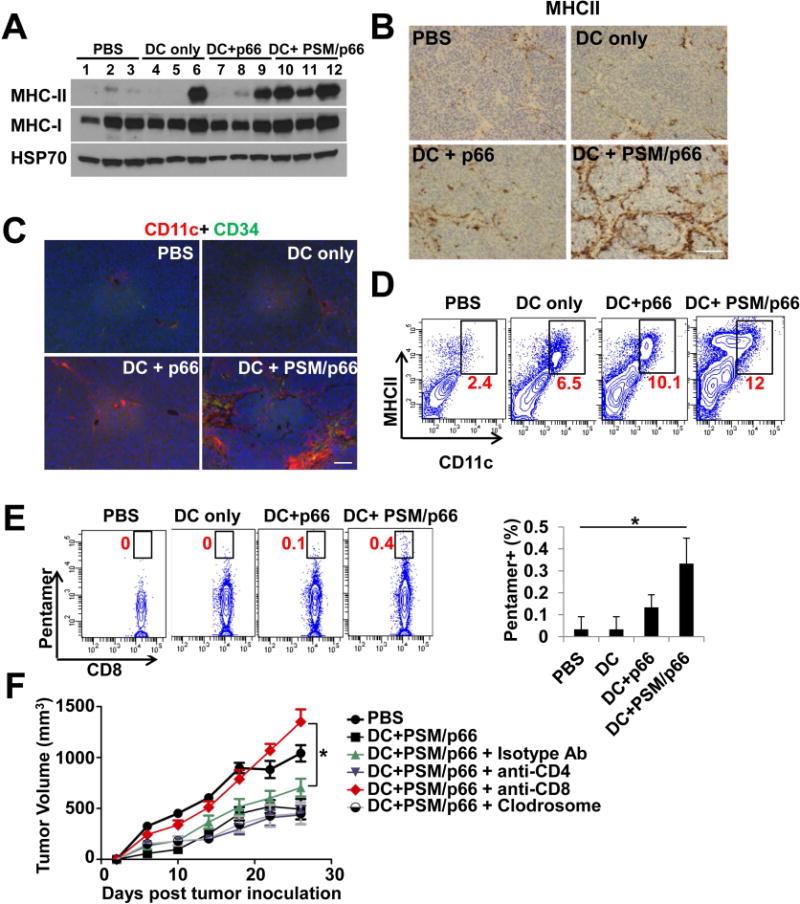
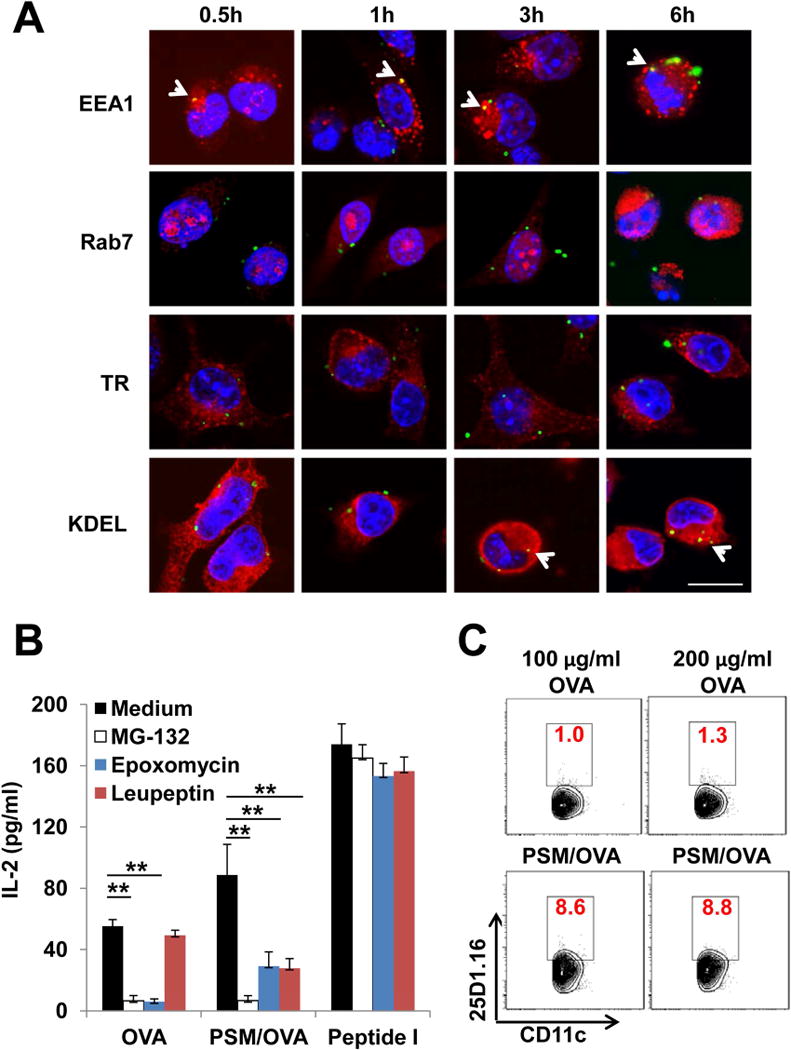
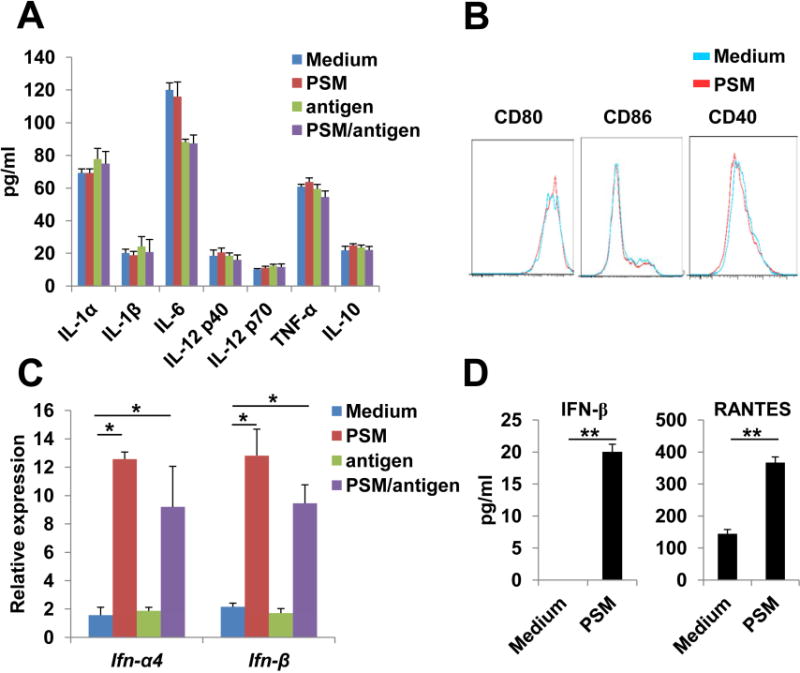
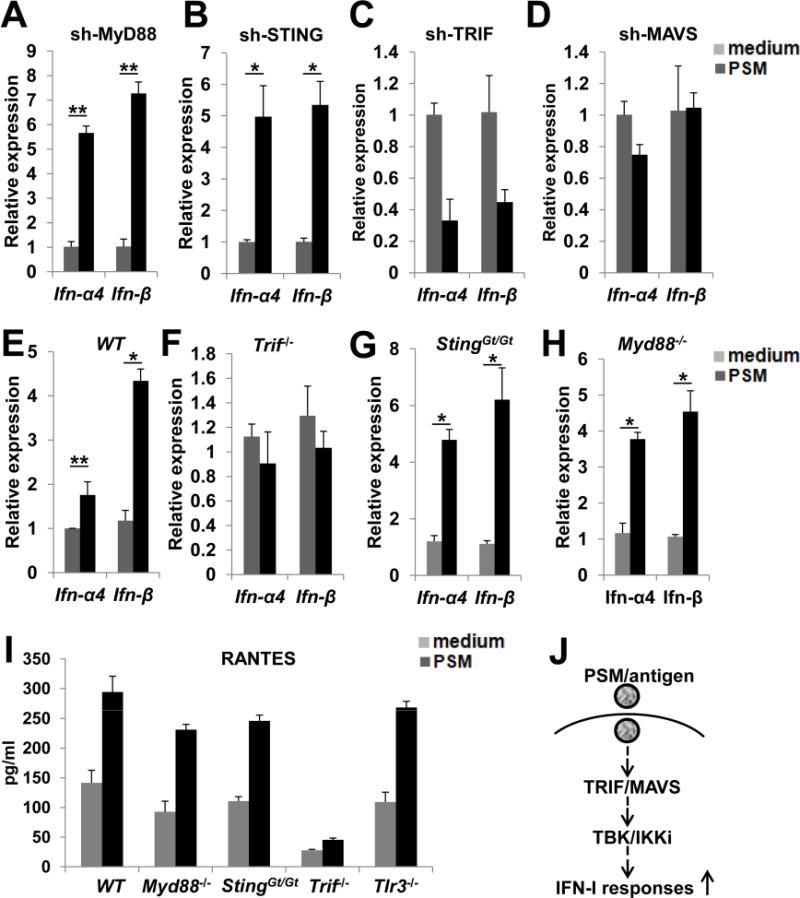
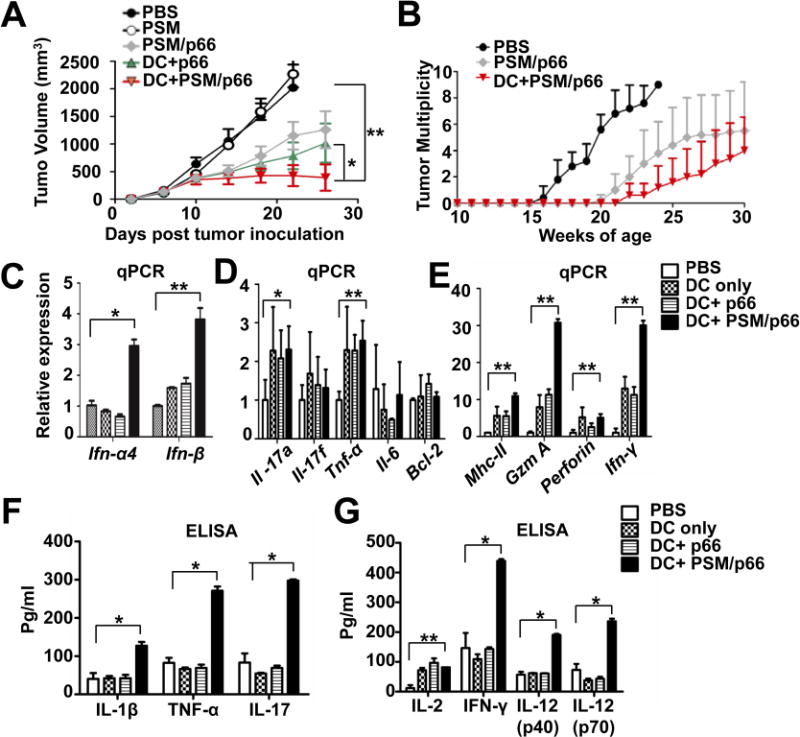
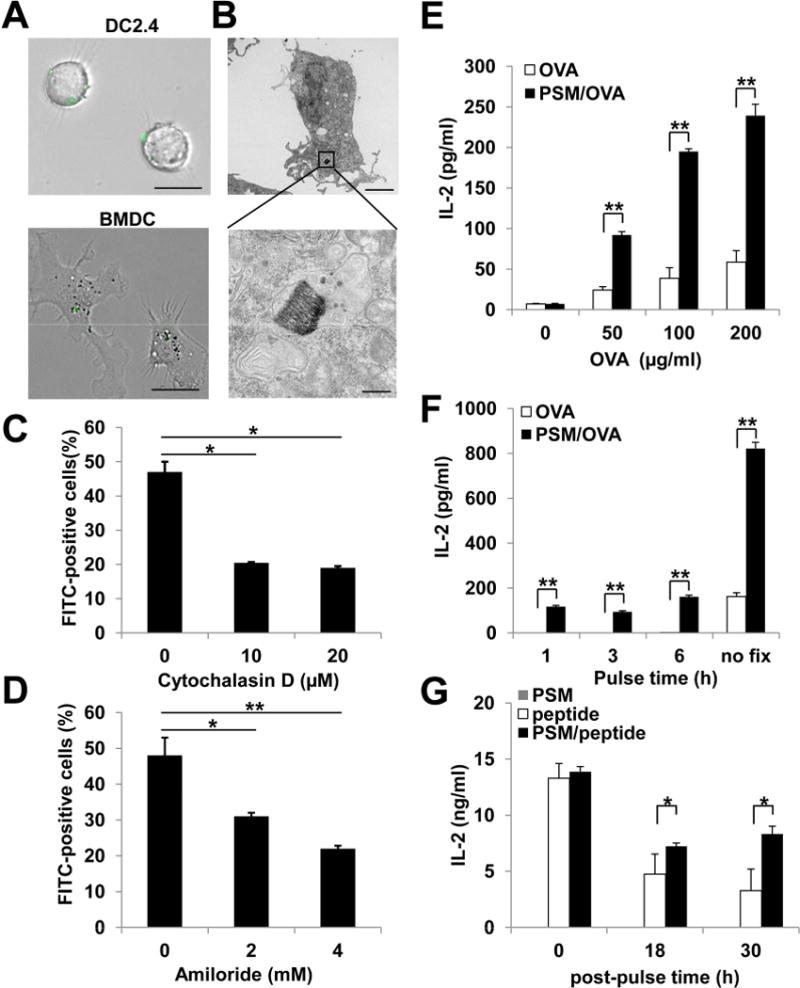
Micro- and nanometer-size particles have become popular candidates for cancer vaccine adjuvants. However, the mechanism by which such particles enhance immune responses remains unclear. Here, we report a porous silicon microparticle (PSM)-based cancer vaccine that greatly enhances cross-presentation and activates type I interferon (IFN-I) response in dendritic cells (DCs). PSM-loaded antigen exhibited prolonged early endosome localization and enhanced cross-presentation through both proteasome- and lysosome-dependent pathways. Phagocytosis of PSM by DCs induced IFN-I responses through a TRIF- and MAVS-dependent pathway. DCs primed with PSM-loaded HER2 antigen produced robust CD8 T cell-dependent anti-tumor immunity in mice bearing HER2+ mammary gland tumors. Importantly, this vaccination activated the tumor immune microenvironment with elevated levels of intra-tumor IFN-I and MHCII expression, abundant CD11c+ DC infiltration, and tumor-specific cytotoxic T cell responses. These findings highlight the potential of PSM as an immune adjuvant to potentiate DC-based cancer immunotherapy.

摘要

微米级和纳米级颗粒已成为癌症疫苗佐剂的热门候选物。然而,此类颗粒增强免疫反应的机制仍不清楚。在此,我们报告了一种基于多孔硅微粒(PSM)的癌症疫苗,该疫苗可极大地增强交叉呈递并激活树突状细胞(DC)中的I型干扰素(IFN-I)反应。负载PSM的抗原表现出早期内体定位延长,并通过蛋白酶体和溶酶体依赖性途径增强交叉呈递。DC对PSM的吞噬作用通过TRIF和MAVS依赖性途径诱导IFN-I反应。用负载PSM的HER2抗原致敏的DC在携带HER2+乳腺肿瘤的小鼠中产生了强大的CD8 T细胞依赖性抗肿瘤免疫力。重要的是,这种疫苗接种激活了肿瘤免疫微环境,肿瘤内IFN-I水平升高,MHCII表达增加,CD11c+ DC浸润丰富,以及肿瘤特异性细胞毒性T细胞反应。这些发现突出了PSM作为免疫佐剂增强基于DC的癌症免疫治疗的潜力。
https://cdn.ncbi.nlm.nih.gov/pmc/blobs/f171/4431902/103ed240df15/nihms679560f6.jpg
https://cdn.ncbi.nlm.nih.gov/pmc/blobs/f171/4431902/66748690aa71/nihms679560f1.jpg
https://cdn.ncbi.nlm.nih.gov/pmc/blobs/f171/4431902/096506881259/nihms679560f2.jpg
https://cdn.ncbi.nlm.nih.gov/pmc/blobs/f171/4431902/366451be8548/nihms679560f3.jpg
https://cdn.ncbi.nlm.nih.gov/pmc/blobs/f171/4431902/5923c630cd20/nihms679560f4.jpg
https://cdn.ncbi.nlm.nih.gov/pmc/blobs/f171/4431902/501e1ee1668f/nihms679560f5.jpg
https://cdn.ncbi.nlm.nih.gov/pmc/blobs/f171/4431902/103ed240df15/nihms679560f6.jpg
https://cdn.ncbi.nlm.nih.gov/pmc/blobs/f171/4431902/66748690aa71/nihms679560f1.jpg
https://cdn.ncbi.nlm.nih.gov/pmc/blobs/f171/4431902/096506881259/nihms679560f2.jpg
https://cdn.ncbi.nlm.nih.gov/pmc/blobs/f171/4431902/366451be8548/nihms679560f3.jpg
https://cdn.ncbi.nlm.nih.gov/pmc/blobs/f171/4431902/5923c630cd20/nihms679560f4.jpg
https://cdn.ncbi.nlm.nih.gov/pmc/blobs/f171/4431902/501e1ee1668f/nihms679560f5.jpg
https://cdn.ncbi.nlm.nih.gov/pmc/blobs/f171/4431902/103ed240df15/nihms679560f6.jpg

相似文献

1
Porous silicon microparticle potentiates anti-tumor immunity by enhancing cross-presentation and inducing type I interferon response.多孔硅微粒通过增强交叉呈递和诱导I型干扰素反应来增强抗肿瘤免疫力。
Cell Rep. 2015 May 12;11(6):957-966. doi: 10.1016/j.celrep.2015.04.009. Epub 2015 Apr 30.
2
A TLR3-Specific Adjuvant Relieves Innate Resistance to PD-L1 Blockade without Cytokine Toxicity in Tumor Vaccine Immunotherapy.一种TLR3特异性佐剂可缓解肿瘤疫苗免疫治疗中对PD-L1阻断的固有抗性,且无细胞因子毒性。
Cell Rep. 2017 May 30;19(9):1874-1887. doi: 10.1016/j.celrep.2017.05.015.
3
Influenza A infection enhances cross-priming of CD8+ T cells to cell-associated antigens in a TLR7- and type I IFN-dependent fashion.甲型流感病毒感染以 TLR7 和 I 型干扰素依赖的方式增强 CD8+ T 细胞对细胞相关抗原的交叉呈递。
J Immunol. 2010 Nov 15;185(10):6013-22. doi: 10.4049/jimmunol.1002129. Epub 2010 Oct 18.
4
Sialic acid removal from dendritic cells improves antigen cross-presentation and boosts anti-tumor immune responses.从树突状细胞中去除唾液酸可改善抗原交叉呈递并增强抗肿瘤免疫反应。
Oncotarget. 2016 Jul 5;7(27):41053-41066. doi: 10.18632/oncotarget.9419.
5
Type I interferon activates MHC class I-dressed CD11b conventional dendritic cells to promote protective anti-tumor CD8 T cell immunity.I 型干扰素激活 MHC Ⅰ类分子呈递的 CD11b 常规树突状细胞,促进保护性抗肿瘤 CD8 T 细胞免疫。
Immunity. 2022 Feb 8;55(2):308-323.e9. doi: 10.1016/j.immuni.2021.10.020. Epub 2021 Nov 19.
6
Efficient induction of a Her2-specific anti-tumor response by dendritic cells pulsed with a Hsp70L1-Her2(341-456) fusion protein.树突状细胞负载热休克蛋白 70L1-人表皮生长因子受体 2(341-456)融合蛋白诱导针对 Her2 的高效抗肿瘤免疫应答。
Cell Mol Immunol. 2011 Sep;8(5):424-32. doi: 10.1038/cmi.2011.21. Epub 2011 Jul 25.
7
Dendritic Cells and Cancer Immunity.树突状细胞与癌症免疫
Trends Immunol. 2016 Dec;37(12):855-865. doi: 10.1016/j.it.2016.09.006. Epub 2016 Oct 25.
8
Polyethyleneimine modification of aluminum hydroxide nanoparticle enhances antigen transportation and cross-presentation of dendritic cells.聚乙烯亚胺修饰的氢氧化铝纳米颗粒增强了树突状细胞的抗原运输和交叉呈递。
Int J Nanomedicine. 2018 Jun 7;13:3353-3365. doi: 10.2147/IJN.S164097. eCollection 2018.
9
Delivery of interferon-alpha transfected dendritic cells into central nervous system tumors enhances the antitumor efficacy of peripheral peptide-based vaccines.将干扰素-α转染的树突状细胞递送至中枢神经系统肿瘤中可增强基于外周肽的疫苗的抗肿瘤功效。
Cancer Res. 2004 Aug 15;64(16):5830-8. doi: 10.1158/0008-5472.CAN-04-0130.
10
Type I interferon is selectively required by dendritic cells for immune rejection of tumors.Ⅰ型干扰素通过树突状细胞选择性地需要用于免疫排斥肿瘤。
J Exp Med. 2011 Sep 26;208(10):1989-2003. doi: 10.1084/jem.20101158. Epub 2011 Sep 19.

引用本文的文献

1
Tumor cell membrane-based vaccines: A potential boost for cancer immunotherapy.基于肿瘤细胞膜的疫苗:癌症免疫疗法的潜在助力。
Exploration (Beijing). 2024 Mar 28;4(6):20230171. doi: 10.1002/EXP.20230171. eCollection 2024 Dec.
2
Size Tuning of Mesoporous Silica Adjuvant for One-Shot Vaccination with Long-Term Anti-Tumor Effect.用于一次性接种并具有长期抗肿瘤效果的介孔二氧化硅佐剂的尺寸调节
Pharmaceutics. 2024 Apr 8;16(4):516. doi: 10.3390/pharmaceutics16040516.
3
The significance of targeting lysosomes in cancer immunotherapy.靶向溶酶体在癌症免疫治疗中的意义。

本文引用的文献

1
Immune Checkpoint Blockade in Cancer Therapy.癌症治疗中的免疫检查点阻断疗法
J Clin Oncol. 2015 Jun 10;33(17):1974-82. doi: 10.1200/JCO.2014.59.4358. Epub 2015 Jan 20.
2
Cancer cell-autonomous contribution of type I interferon signaling to the efficacy of chemotherapy.I 型干扰素信号在肿瘤细胞自主贡献中的作用及其对化疗疗效的影响。
Nat Med. 2014 Nov;20(11):1301-9. doi: 10.1038/nm.3708. Epub 2014 Oct 26.
3
Targeting RPL39 and MLF2 reduces tumor initiation and metastasis in breast cancer by inhibiting nitric oxide synthase signaling.
Front Immunol. 2024 Feb 2;15:1308070. doi: 10.3389/fimmu.2024.1308070. eCollection 2024.
4
Biomaterials Facilitating Dendritic Cell-Mediated Cancer Immunotherapy.生物材料促进树突状细胞介导的癌症免疫治疗。
Adv Sci (Weinh). 2023 Jun;10(18):e2301339. doi: 10.1002/advs.202301339. Epub 2023 Apr 23.
5
Nanomaterials-Based Novel Immune Strategies in Clinical Translation for Cancer Therapy.基于纳米材料的新型免疫策略在癌症治疗的临床转化。
Molecules. 2023 Jan 26;28(3):1216. doi: 10.3390/molecules28031216.
6
Human γδ T cells induce CD8 T cell antitumor responses via antigen-presenting effect through HSP90-MyD88-mediated activation of JNK.人 γδ T 细胞通过 HSP90-MyD88 介导的 JNK 激活,通过抗原呈递作用诱导 CD8 T 细胞抗肿瘤反应。
Cancer Immunol Immunother. 2023 Jun;72(6):1803-1821. doi: 10.1007/s00262-023-03375-w. Epub 2023 Jan 21.
7
Porous Silicon Nanocarriers Boost the Immunomodulation of Mitochondria-Targeted Bovine Serum Albumins on Macrophage Polarization.多孔硅纳米载体增强线粒体靶向牛血清白蛋白对巨噬细胞极化的免疫调节作用。
ACS Nano. 2023 Jan 4;17(2):1036-53. doi: 10.1021/acsnano.2c07439.
8
Engineered tumor cell-derived vaccines against cancer: The art of combating poison with poison.工程化肿瘤细胞衍生的抗癌疫苗:以毒攻毒的艺术。
Bioact Mater. 2022 Oct 26;22:491-517. doi: 10.1016/j.bioactmat.2022.10.016. eCollection 2023 Apr.
9
Immune-checkpoint inhibitor therapy response evaluation using oncophysics-based mathematical models.使用基于肿瘤物理学的数学模型进行免疫检查点抑制剂治疗反应评估。
Wiley Interdiscip Rev Nanomed Nanobiotechnol. 2023 Mar;15(2):e1855. doi: 10.1002/wnan.1855. Epub 2022 Sep 23.
10
Self-adjuvanting cancer nanovaccines.自佐剂化癌症纳米疫苗。
J Nanobiotechnology. 2022 Jul 26;20(1):345. doi: 10.1186/s12951-022-01545-z.
靶向 RPL39 和 MLF2 通过抑制一氧化氮合酶信号通路减少乳腺癌的肿瘤起始和转移。
Proc Natl Acad Sci U S A. 2014 Jun 17;111(24):8838-43. doi: 10.1073/pnas.1320769111. Epub 2014 May 29.
4
XBP1 promotes triple-negative breast cancer by controlling the HIF1α pathway.XBP1 通过调控 HIF1α 通路促进三阴性乳腺癌。
Nature. 2014 Apr 3;508(7494):103-107. doi: 10.1038/nature13119. Epub 2014 Mar 23.
5
Targeting the tumor microenvironment with interferon-β bridges innate and adaptive immune responses.用干扰素-β靶向肿瘤微环境可连接先天和适应性免疫应答。
Cancer Cell. 2014 Jan 13;25(1):37-48. doi: 10.1016/j.ccr.2013.12.004.
6
Phagocytosis of Particulate Antigens - All Roads Lead to Calcineurin/NFAT Signaling Pathway.颗粒性抗原的吞噬作用——条条大路通钙调神经磷酸酶/活化T细胞核因子信号通路。
Front Immunol. 2014 Jan 9;4:513. doi: 10.3389/fimmu.2013.00513.
7
High capacity nanoporous silicon carrier for systemic delivery of gene silencing therapeutics.高通量纳米孔硅载体用于基因沉默治疗药物的系统递送。
ACS Nano. 2013 Nov 26;7(11):9867-80. doi: 10.1021/nn4035316. Epub 2013 Oct 18.
8
Transient regulatory T cell ablation deters oncogene-driven breast cancer and enhances radiotherapy.瞬时调节性 T 细胞消融可阻止致癌基因驱动的乳腺癌并增强放疗。
J Exp Med. 2013 Oct 21;210(11):2435-66. doi: 10.1084/jem.20130762. Epub 2013 Oct 14.
9
Innate and adaptive immune cells in the tumor microenvironment.肿瘤微环境中的固有和适应性免疫细胞。
Nat Immunol. 2013 Oct;14(10):1014-22. doi: 10.1038/ni.2703.
10
Cleavage of fibrinogen by proteinases elicits allergic responses through Toll-like receptor 4.蛋白酶对纤维蛋白原的裂解通过 Toll 样受体 4 引发过敏反应。
Science. 2013 Aug 16;341(6147):792-6. doi: 10.1126/science.1240342.