Yang Muyang, Zhou Jie, Lu Liseng, Deng Deqiang, Huang Jing, Tang Zijian, Shi Xiujuan, Lo Pui-Chi, Lovell Jonathan F, Zheng Yongfa, Jin Honglin
College of Biomedicine and Health and College of Life Science and Technology Huazhong Agricultural University Wuhan China.
State Key Laboratory of Respiratory Disease, National Clinical Research Center for Respiratory Disease, Guangzhou Institute of Respiratory Health The First Affiliated Hospital of Guangzhou Medical University Guangzhou China.
Exploration (Beijing). 2024 Mar 28;4(6):20230171. doi: 10.1002/EXP.20230171. eCollection 2024 Dec.
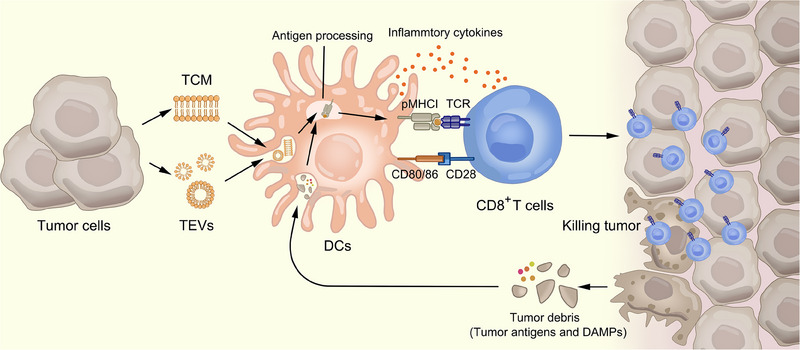
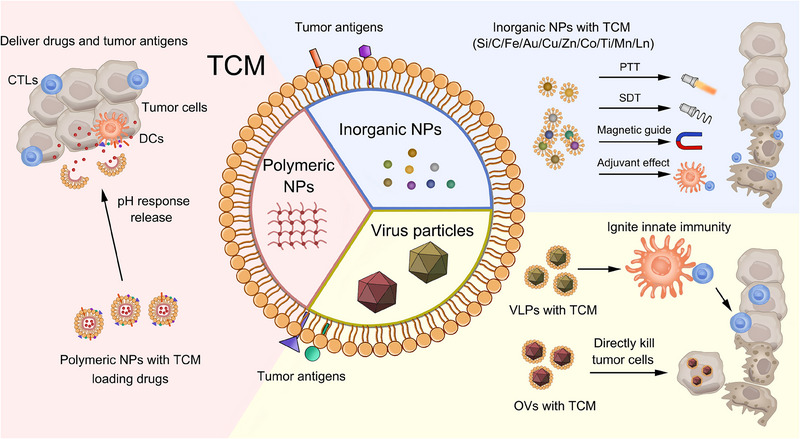
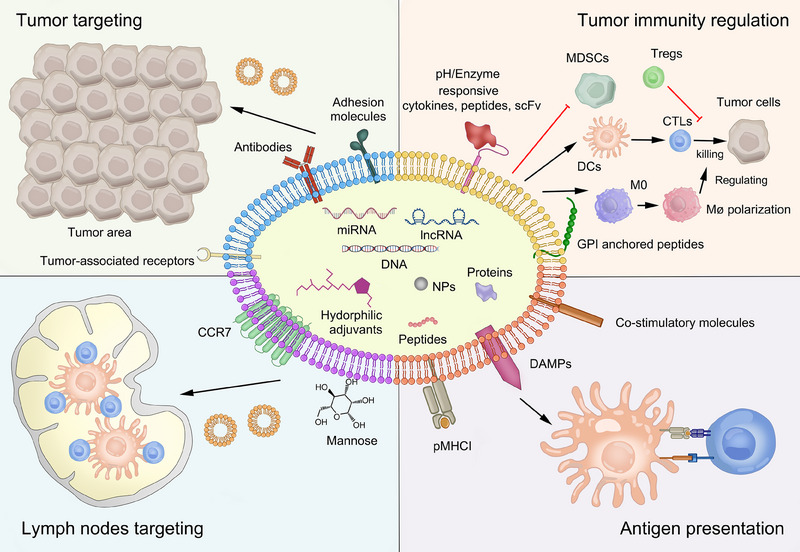
Because therapeutic cancer vaccines can, in theory, eliminate tumor cells specifically with relatively low toxicity, they have long been considered for application in repressing cancer progression. Traditional cancer vaccines containing a single or a few discrete tumor epitopes have failed in the clinic, possibly due to challenges in epitope selection, target downregulation, cancer cell heterogeneity, tumor microenvironment immunosuppression, or a lack of vaccine immunogenicity. Whole cancer cell or cancer membrane vaccines, which provide a rich source of antigens, are emerging as viable alternatives. Autologous and allogenic cellular cancer vaccines have been evaluated as clinical treatments. Tumor cell membranes (TCMs) are an intriguing antigen source, as they provide membrane-accessible targets and, at the same time, serve as integrated carriers of vaccine adjuvants and other therapeutic agents. This review provides a summary of the properties and technologies for TCM cancer vaccines. Characteristics, categories, mechanisms, and preparation methods are discussed, as are the demonstrable additional benefits derived from combining TCM vaccines with chemotherapy, sonodynamic therapy, phototherapy, and oncolytic viruses. Further research in chemistry, biomedicine, cancer immunology, and bioinformatics to address current drawbacks could facilitate the clinical adoption of TCM vaccines.
由于治疗性癌症疫苗理论上能够以相对较低的毒性特异性地消除肿瘤细胞,长期以来人们一直考虑将其应用于抑制癌症进展。含有单个或几个离散肿瘤表位的传统癌症疫苗在临床上已告失败,这可能是由于表位选择、靶点下调、癌细胞异质性、肿瘤微环境免疫抑制或疫苗免疫原性不足等挑战所致。提供丰富抗原来源的全癌细胞或癌细胞膜疫苗正在成为可行的替代方案。自体和同种异体细胞癌症疫苗已作为临床治疗方法进行了评估。肿瘤细胞膜(TCMs)是一种引人关注的抗原来源,因为它们提供了可接近膜的靶点,同时还作为疫苗佐剂和其他治疗剂的整合载体。本综述总结了肿瘤细胞膜癌症疫苗的特性和技术。讨论了其特点、类别、作用机制和制备方法,以及将肿瘤细胞膜疫苗与化疗、声动力疗法、光疗法和溶瘤病毒联合使用所带来的明显额外益处。在化学、生物医学、癌症免疫学和生物信息学方面开展进一步研究以解决当前的缺点,可能会促进肿瘤细胞膜疫苗的临床应用。