Hakhverdyan Zhanna, Domanski Michal, Hough Loren E, Oroskar Asha A, Oroskar Anil R, Keegan Sarah, Dilworth David J, Molloy Kelly R, Sherman Vadim, Aitchison John D, Fenyö David, Chait Brian T, Jensen Torben Heick, Rout Michael P, LaCava John
Laboratory of Cellular and Structural Biology, The Rockefeller University, New York, New York, USA.
1] Laboratory of Cellular and Structural Biology, The Rockefeller University, New York, New York, USA. [2] Department of Molecular Biology and Genetics, Aarhus University, Aarhus, Denmark.
Nat Methods. 2015 Jun;12(6):553-60. doi: 10.1038/nmeth.3395. Epub 2015 May 4.
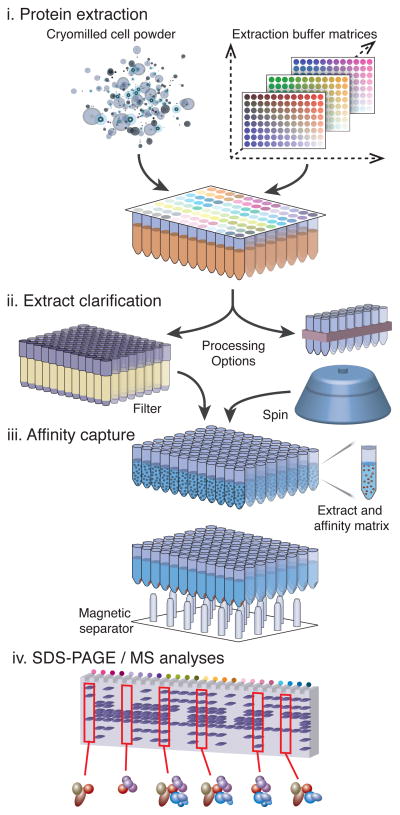
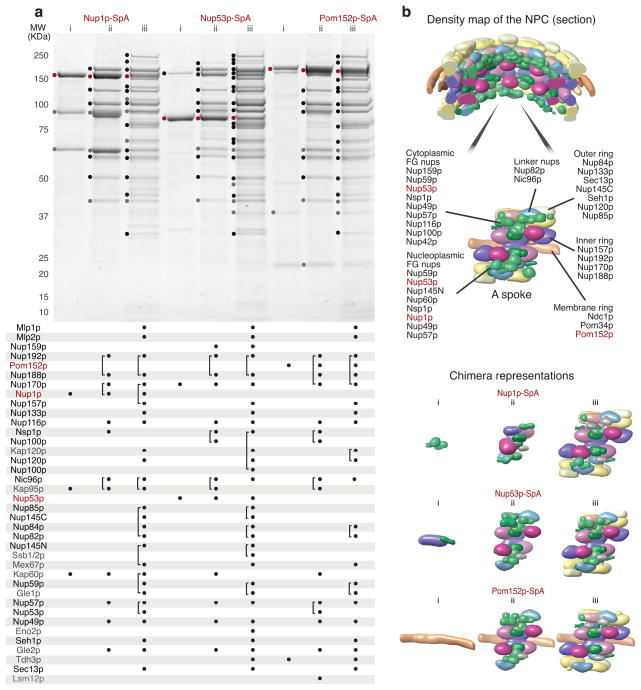
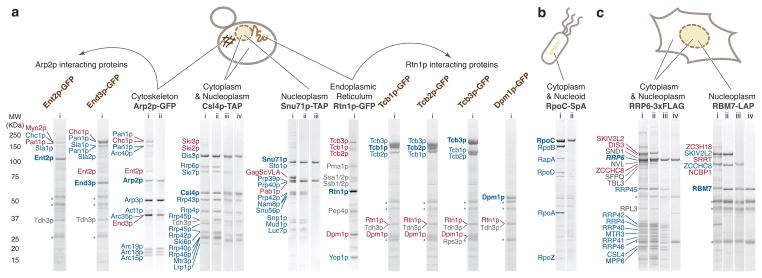
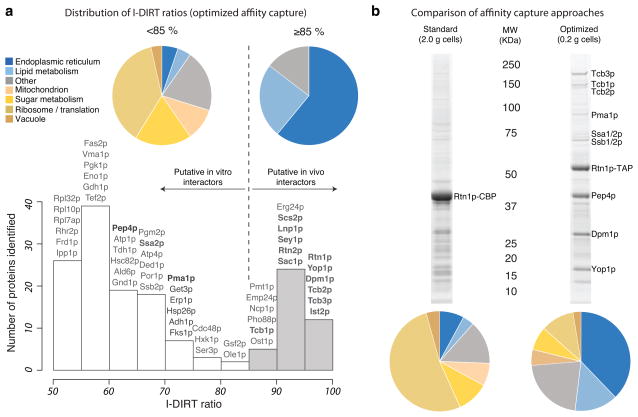
We must reliably map the interactomes of cellular macromolecular complexes in order to fully explore and understand biological systems. However, there are no methods to accurately predict how to capture a given macromolecular complex with its physiological binding partners. Here, we present a screening method that comprehensively explores the parameters affecting the stability of interactions in affinity-captured complexes, enabling the discovery of physiological binding partners in unparalleled detail. We have implemented this screen on several macromolecular complexes from a variety of organisms, revealing novel profiles for even well-studied proteins. Our approach is robust, economical and automatable, providing inroads to the rigorous, systematic dissection of cellular interactomes.
为了全面探索和理解生物系统,我们必须可靠地绘制细胞大分子复合物的相互作用组。然而,目前尚无方法能够准确预测如何捕获给定的大分子复合物及其生理结合伴侣。在此,我们提出一种筛选方法,该方法全面探索影响亲和捕获复合物中相互作用稳定性的参数,从而能够以前所未有的详细程度发现生理结合伴侣。我们已针对来自多种生物体的几种大分子复合物实施了此筛选,甚至为研究充分的蛋白质揭示了新的概况。我们的方法稳健、经济且可自动化,为严格、系统地剖析细胞相互作用组开辟了道路。