Laboratory of Cellular and Structural Biology, The Rockefeller University, New York, New York, USA.
Laboratory of Cellular and Structural Biology, The Rockefeller University, New York, New York, USA.
J Biol Chem. 2022 Jun;298(6):101882. doi: 10.1016/j.jbc.2022.101882. Epub 2022 Mar 31.
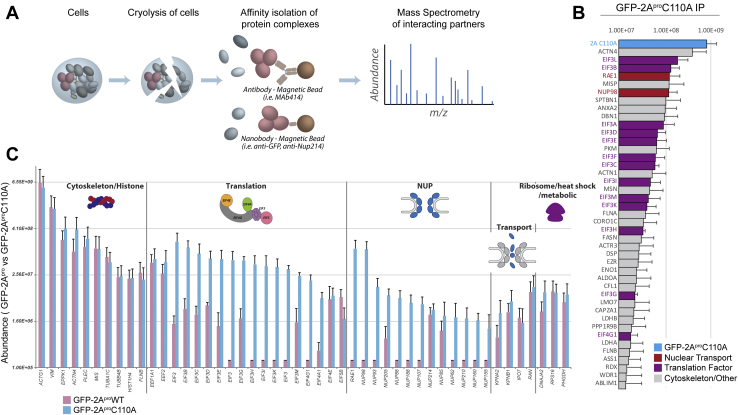
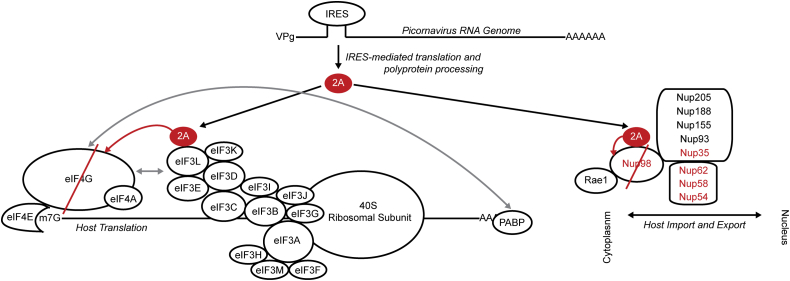
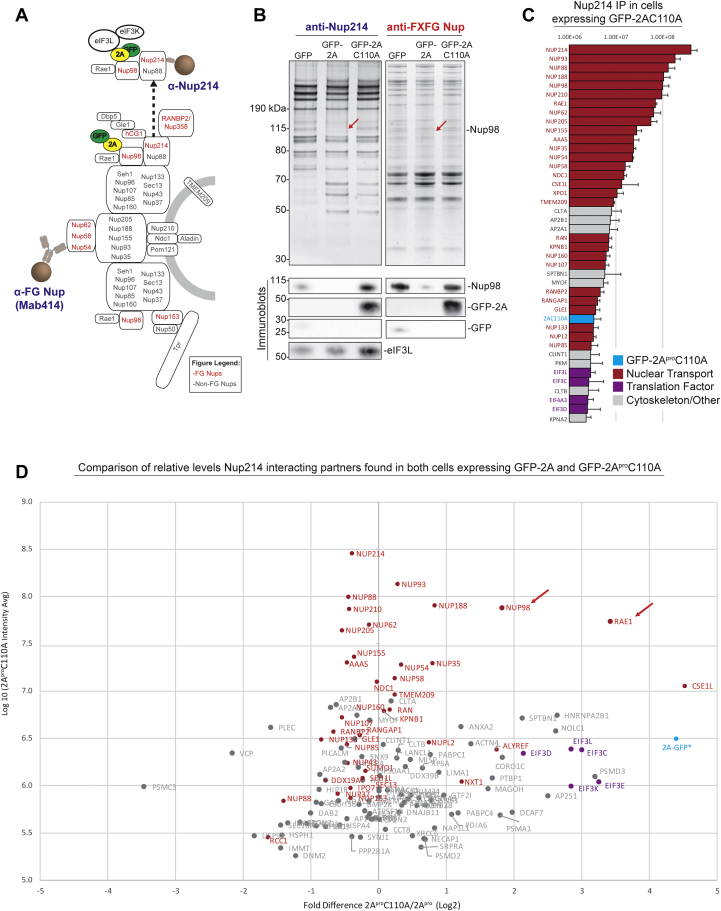
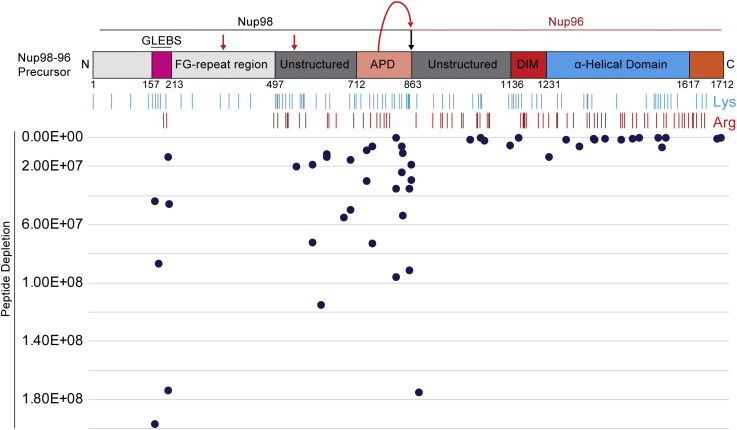
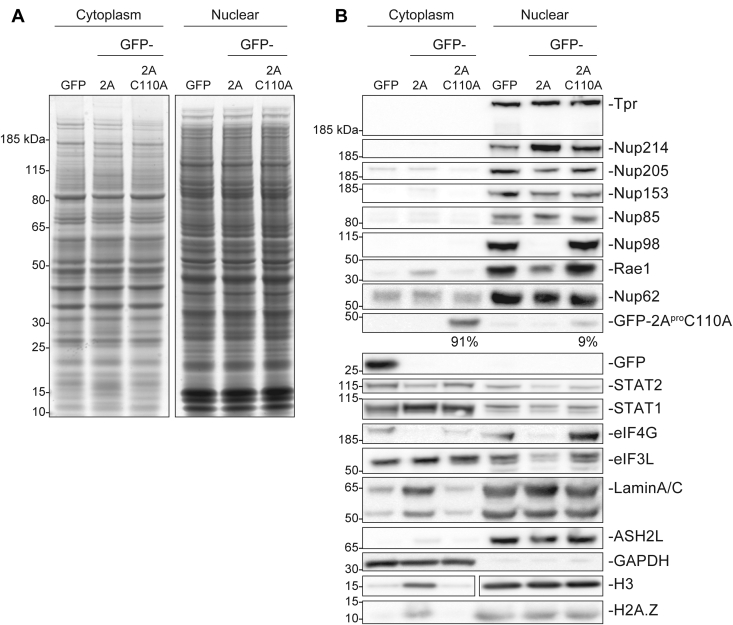
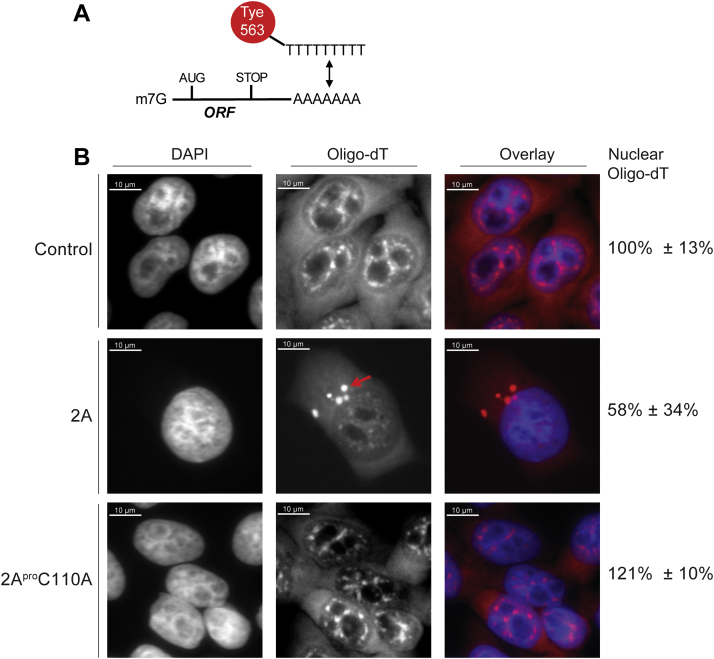
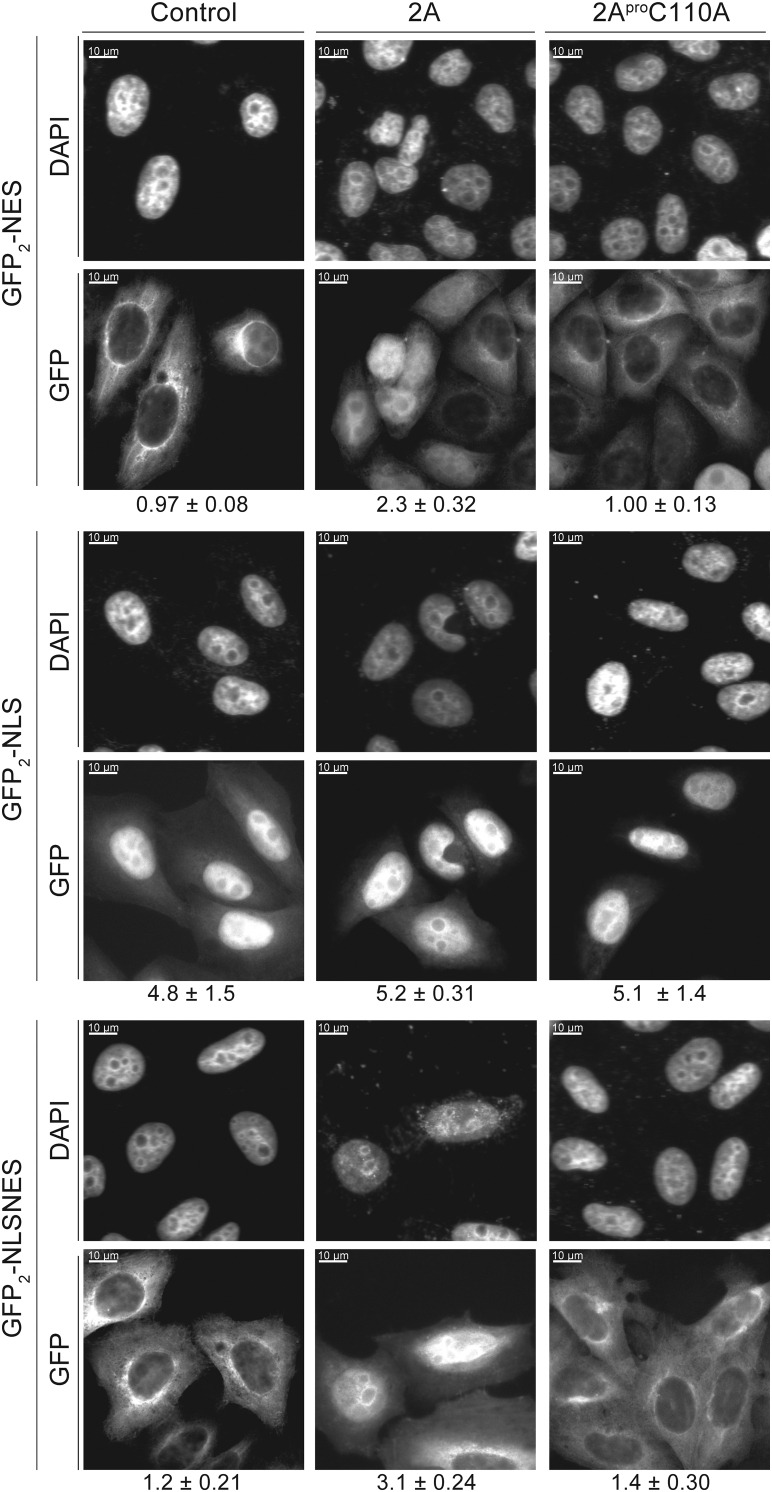
Picornaviruses are small RNA viruses that hijack host cell machinery to promote their replication. During infection, these viruses express two proteases, 2A and 3C, which process viral proteins. They also subvert a number of host functions, including innate immune responses, host protein synthesis, and intracellular transport, by utilizing poorly understood mechanisms for rapidly and specifically targeting critical host proteins. Here, we used proteomic tools to characterize 2A interacting partners, functions, and targeting mechanisms. Our data indicate that, initially, 2A primarily targets just two cellular proteins: eukaryotic translation initiation factor eIF4G (a critical component of the protein synthesis machinery) and Nup98 (an essential component of the nuclear pore complex, responsible for nucleocytoplasmic transport). The protease appears to employ two different cleavage mechanisms; it likely interacts with eIF3L, utilizing the eIF3 complex to proteolytically access the eIF4G protein but also directly binds and degrades Nup98. This Nup98 cleavage results in only a marginal effect on nuclear import of proteins, while nuclear export of proteins and mRNAs were more strongly affected. Collectively, our data indicate that 2A selectively inhibits protein translation, key nuclear export pathways, and cellular mRNA localization early in infection to benefit viral replication at the expense of particular cell functions.
小 RNA 病毒是一类劫持宿主细胞机制来促进自身复制的病毒。在感染过程中,这些病毒表达两种蛋白酶,2A 和 3C,用于加工病毒蛋白。它们还利用尚未完全了解的机制,快速且特异性地靶向关键宿主蛋白,从而颠覆许多宿主功能,包括先天免疫反应、宿主蛋白合成和细胞内运输。在这里,我们使用蛋白质组学工具来描述 2A 相互作用的伙伴、功能和靶向机制。我们的数据表明,2A 最初主要靶向两种细胞蛋白:真核翻译起始因子 eIF4G(蛋白质合成机制的关键组成部分)和 Nup98(核孔复合物的重要组成部分,负责核质转运)。该蛋白酶似乎采用两种不同的切割机制;它可能与 eIF3L 相互作用,利用 eIF3 复合物来对 eIF4G 蛋白进行蛋白水解,但也直接结合并降解 Nup98。Nup98 的这种切割对蛋白质的核输入影响不大,而对蛋白质和 mRNA 的核输出影响更大。总的来说,我们的数据表明 2A 选择性地抑制病毒感染早期的蛋白质翻译、关键的核输出途径和细胞 mRNA 定位,以牺牲特定细胞功能为代价促进病毒复制。