Igarashi Jun, Fukuda Noboru, Inoue Takashi, Nakai Shigeki, Saito Kosuke, Fujiwara Kyoko, Matsuda Hiroyuki, Ueno Takahiro, Matsumoto Yoshiaki, Watanabe Takayoshi, Nagase Hiroki, Bando Toshikazu, Sugiyama Hiroshi, Itoh Toshio, Soma Masayoshi
Department of General Medicine, Nihon University School of Medicine, Tokyo, Japan.
Division of Life Science, Advanced Research Institute for the Sciences and Humanities, Nihon University Graduate School, Tokyo, Japan; Division of Nephrology Hypertension and Endocrinology, Department of Medicine, Nihon University School of Medicine, Tokyo, Japan.
PLoS One. 2015 May 4;10(5):e0125295. doi: 10.1371/journal.pone.0125295. eCollection 2015.
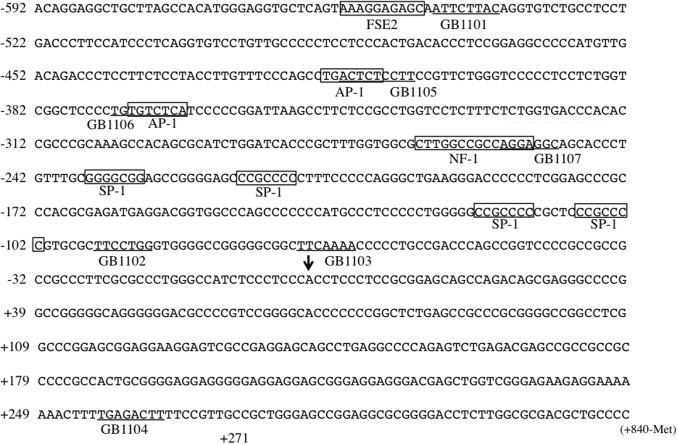
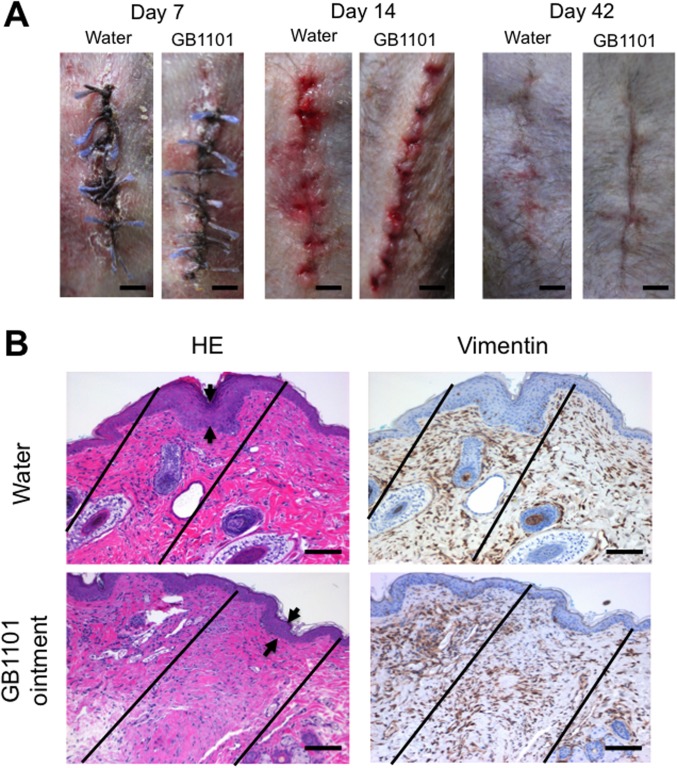
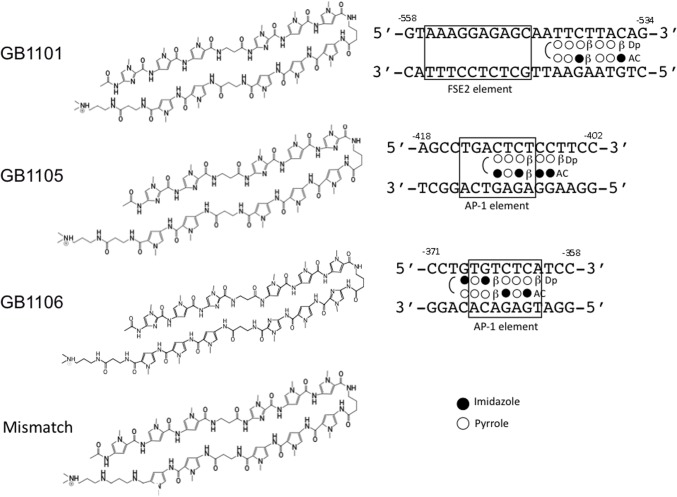
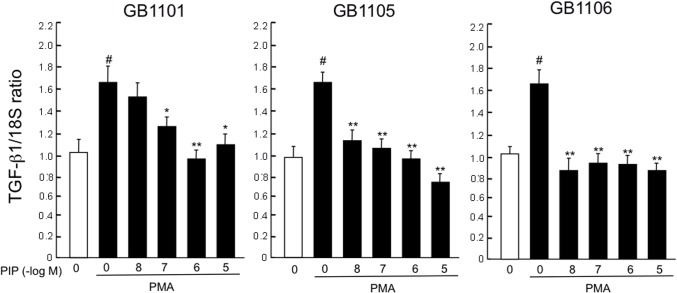
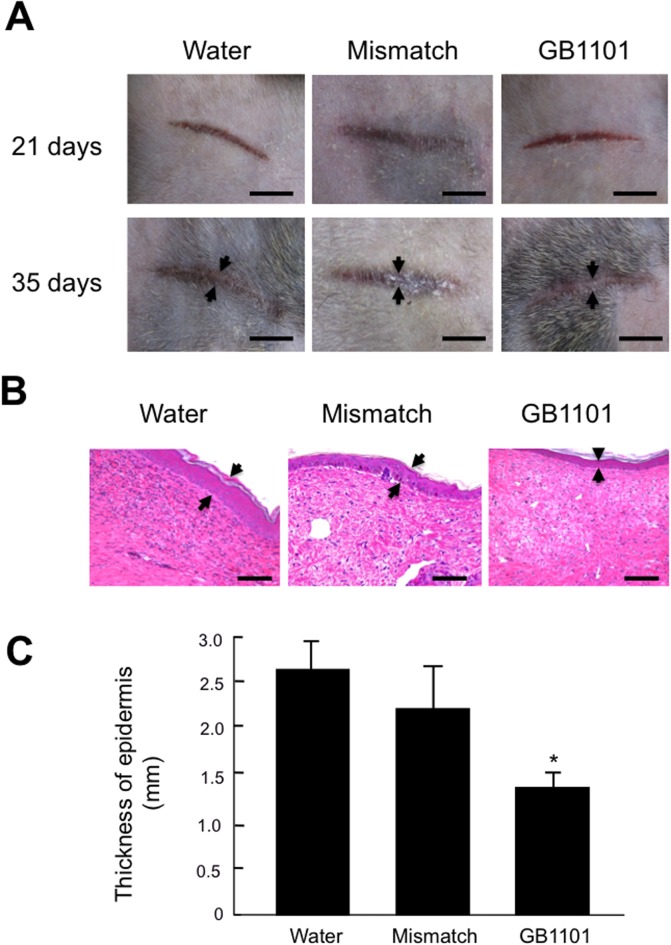
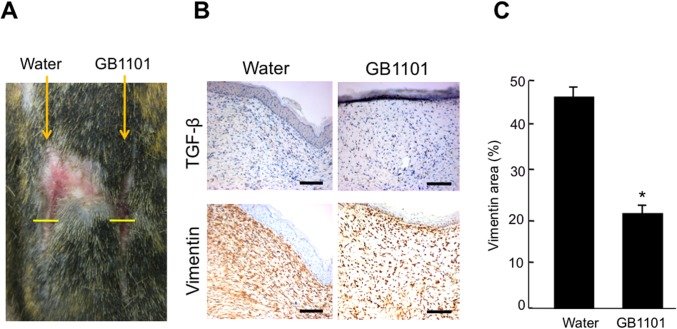
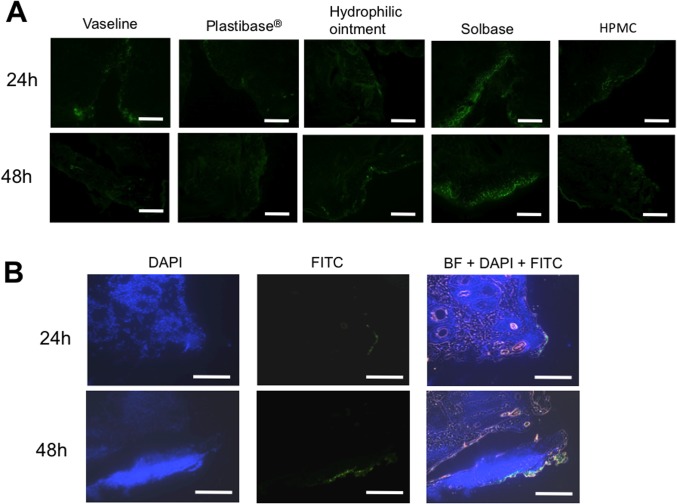
We report a preclinical study of a pyrrole-imidazole (PI) polyamide that targets the human transforming growth factor (hTGF)-β1 gene as a novel transcriptional gene silencer in a common marmoset primate model. We designed and then synthesized PI polyamides to target the hTGF-β1 promoter. We examined effects of seven PI polyamides (GB1101-1107) on the expression of hTGF-β1 mRNA stimulated with phorbol 12-myristate 13-acetate (PMA) in human vascular smooth muscle cells. GB1101, GB1105 and GB1106 significantly inhibited hTGF-β1 mRNA expression. We examined GB1101 as a PI polyamide to hTGF-β1 for hypertrophic scars in marmosets in vivo. Injection of GB1101 completely inhibited hypertrophic scar formation at 35 days post-incision and inhibited cellular infiltration, TGF-β1 and vimentin staining, and epidermal thickness. Mismatch polyamide did not affect hypertrophic scarring or histological changes. Epidermis was significantly thinner with GB1101 than with water and mismatch PI polyamides. We developed the PI polyamides for practical ointment medicines for the treatment of hypertrophic scars. FITC-labeled GB1101 with solbase most efficiently distributed in the nuclei of epidermal keratinocytes, completely suppressed hypertropic scarring at 42 days after incision, and considerably inhibited epidermal thickness and vimentin-positive fibroblasts. PI polyamides targeting hTGF-β1 promoter with solbase ointment will be practical medicines for treating hypertrophic scars after surgical operations and skin burns.
我们报告了一项在普通狨猴灵长类动物模型中,针对人转化生长因子(hTGF)-β1基因的吡咯-咪唑(PI)聚酰胺作为新型转录基因沉默剂的临床前研究。我们设计并合成了靶向hTGF-β1启动子的PI聚酰胺。我们研究了七种PI聚酰胺(GB1101-1107)对佛波酯12-肉豆蔻酸酯13-乙酸酯(PMA)刺激的人血管平滑肌细胞中hTGF-β1 mRNA表达的影响。GB1101、GB1105和GB1106显著抑制hTGF-β1 mRNA表达。我们将GB1101作为针对hTGF-β1的PI聚酰胺用于狨猴体内的增生性瘢痕研究。注射GB1101在切口后35天完全抑制了增生性瘢痕形成,并抑制了细胞浸润、TGF-β1和波形蛋白染色以及表皮厚度。错配聚酰胺不影响增生性瘢痕形成或组织学变化。使用GB1101时表皮明显比用水和错配PI聚酰胺时更薄。我们开发了用于治疗增生性瘢痕的实用软膏药物的PI聚酰胺。用溶胶基质的异硫氰酸荧光素(FITC)标记的GB1101最有效地分布在表皮角质形成细胞的细胞核中,在切口后42天完全抑制了增生性瘢痕形成,并显著抑制了表皮厚度和波形蛋白阳性成纤维细胞。用溶胶基质软膏靶向hTGF-β1启动子的PI聚酰胺将成为治疗手术和皮肤烧伤后增生性瘢痕的实用药物。