Ahluwalia Vishwadeep, Wade James B, Moeller F Gerard, White Melanie B, Unser Ariel B, Gavis Edith A, Sterling Richard K, Stravitz R Todd, Sanyal Arun J, Siddiqui Mohammad S, Puri Puneet, Luketic Velimir, Heuman Douglas M, Fuchs Michael, Matherly Scott, Bajaj Jasmohan S
Division of Gastroenterology, Hepatology and Nutrition, Virginia Commonwealth University, Richmond, VA.
Department of Psychiatry, McGuire Veterans Administration Medical Center, Virginia Commonwealth University, Richmond, VA.
Liver Transpl. 2015 Sep;21(9):1123-32. doi: 10.1002/lt.24163. Epub 2015 Jul 21.
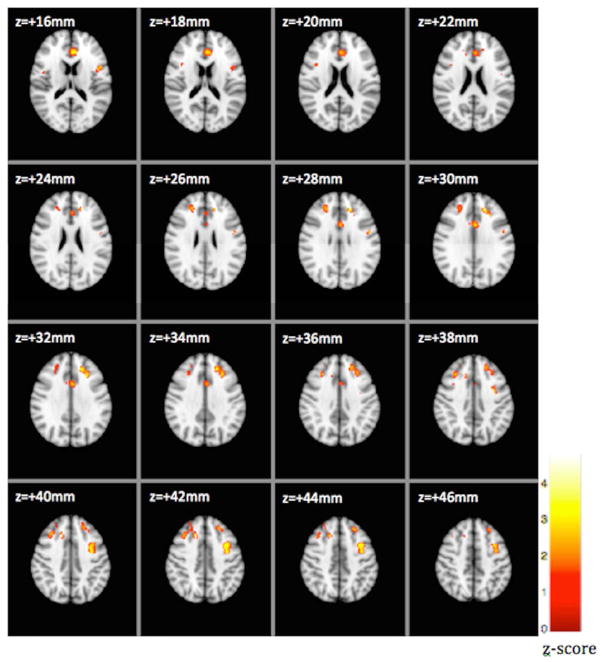
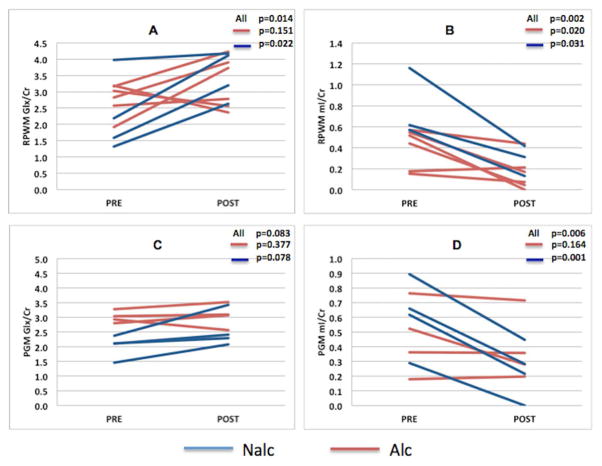
Poor brain reserve in alcoholic cirrhosis could worsen insight regarding disease severity and increase the patients' vulnerability toward further deterioration. The aim of this study was to analyze brain reserve in abstinent alcoholic cirrhotic (Alc) patients compared to nonalcoholic cirrhotic (Nalc) patients in the context of hepatic encephalopathy (HE) and to evaluate relative change in brain reserve between groups over time and before and after elective transjugular intrahepatic portosystemic shunt (TIPS) placement. The cross-sectional study included 46 Alc and 102 Nalc outpatients with or without HE. Cognitive tests were followed by magnetic resonance imaging (MRI), including proton magnetic resonance spectroscopy (1 H-MRS), diffusion tensor imaging, and T1-weighted imaging. The prospective study included 1H-MRS on a subset of 10 patients before and after TIPS placement. Another subset of 26 patients underwent (1) H-MRS at least 1 year apart. For the cross-sectional study, Alc patients were worse on cognitive tests than Nalc patients. MRI results suggest a greater effect of hyperammonemia, brain edema, and significantly higher cortical damage in Alc as compared to Nalc patients. The effect of HE status on cognitive tests and brain reserve was more marked in the Nalc than in the Alc group. For the TIPS study, Nalc patients showed a greater adverse relative change after TIPS compared to the Alc group. At 1-year follow-up, both groups remained stable between the 2 visits. However, Alc patients continued to show poor brain reserve compared to Nalc patients over time. In conclusion, Alc patients, despite abstinence, have a poor brain reserve, whereas Nalc patients have a greater potential for brain reserve deterioration after HE and TIPS. Information regarding the brain reserve in cirrhosis could assist medical teams to refine their communication and monitoring strategies for different etiologies.
酒精性肝硬化患者的脑储备不足可能会使对疾病严重程度的认识恶化,并增加患者进一步恶化的易感性。本研究的目的是在肝性脑病(HE)的背景下,分析戒酒的酒精性肝硬化(Alc)患者与非酒精性肝硬化(Nalc)患者的脑储备,并评估两组之间脑储备随时间以及在择期经颈静脉肝内门体分流术(TIPS)放置前后的相对变化。横断面研究纳入了46例有或无HE的Alc门诊患者和102例Nalc门诊患者。认知测试后进行磁共振成像(MRI),包括质子磁共振波谱(1H-MRS)、扩散张量成像和T1加权成像。前瞻性研究包括对10例患者在TIPS放置前后进行1H-MRS检查。另一组26例患者至少间隔1年进行一次(1)H-MRS检查。对于横断面研究,Alc患者在认知测试中的表现比Nalc患者差。MRI结果表明,与Nalc患者相比,Alc患者高氨血症、脑水肿的影响更大,皮质损伤明显更严重。HE状态对认知测试和脑储备的影响在Nalc组比在Alc组更明显。对于TIPS研究,与Alc组相比,Nalc患者在TIPS后显示出更大的不良相对变化。在1年随访时,两组在两次就诊之间均保持稳定。然而,随着时间的推移,与Nalc患者相比,Alc患者的脑储备仍然较差。总之,Alc患者尽管戒酒,但脑储备不足,而Nalc患者在发生HE和TIPS后脑储备恶化的可能性更大。关于肝硬化患者脑储备的信息可以帮助医疗团队完善针对不同病因的沟通和监测策略。