Steinmann Institute, University of Bonn , Bonn , Germany.
Naturmuseum Südtirol , Bozen/Bolzano , Italy ; Department für Geo- und Umweltwissenschaften, Paläontologie und Geobiologie, Ludwig-Maximilians-Universität and Bayerische Staatssammlung für Paläontologie und Geobiologie , München , Germany.
PeerJ. 2015 Apr 28;3:e921. doi: 10.7717/peerj.921. eCollection 2015.
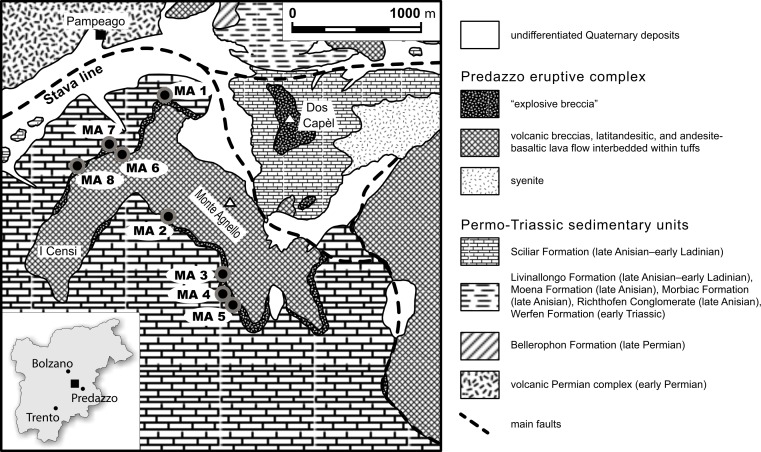
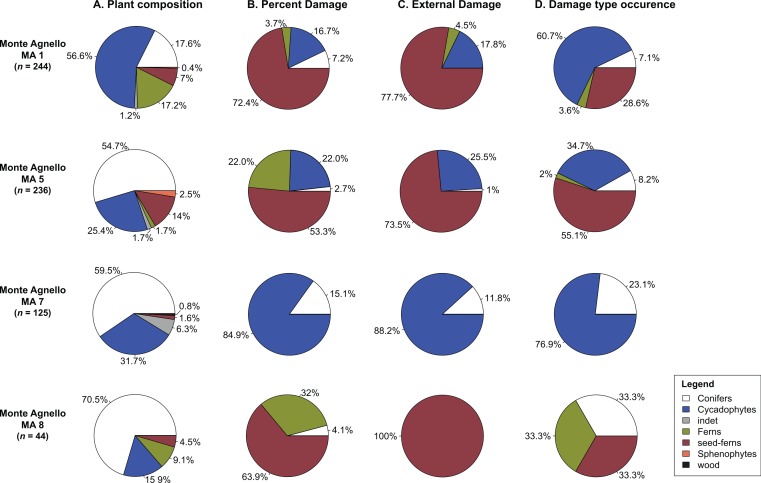
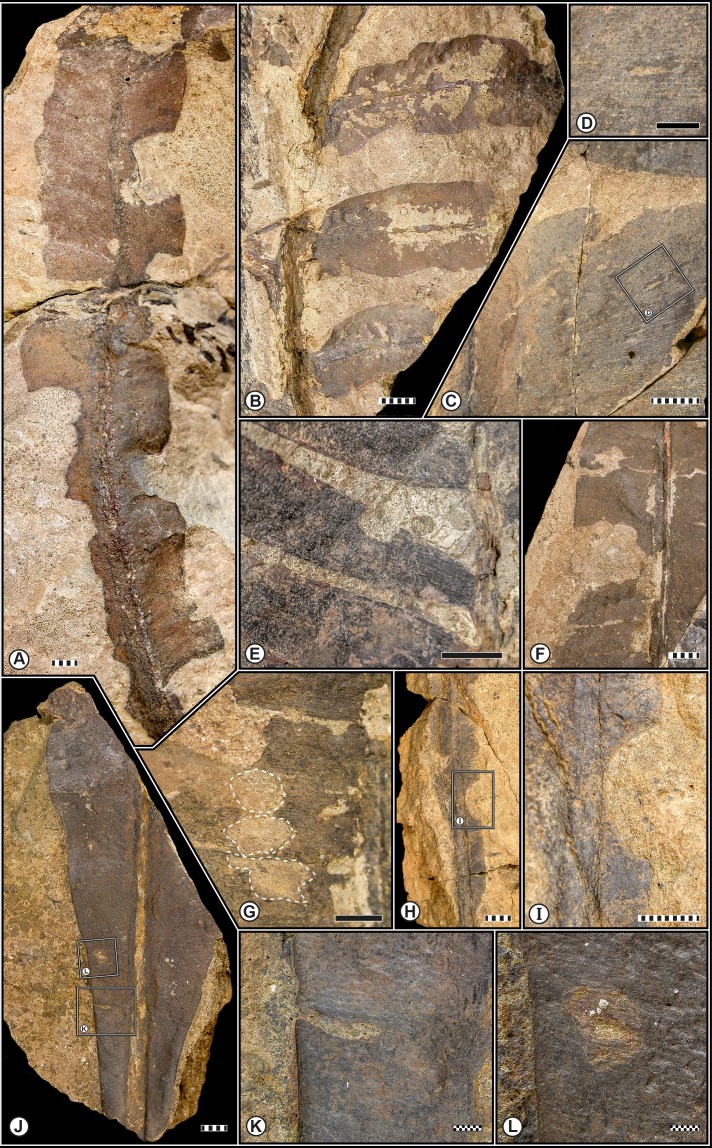
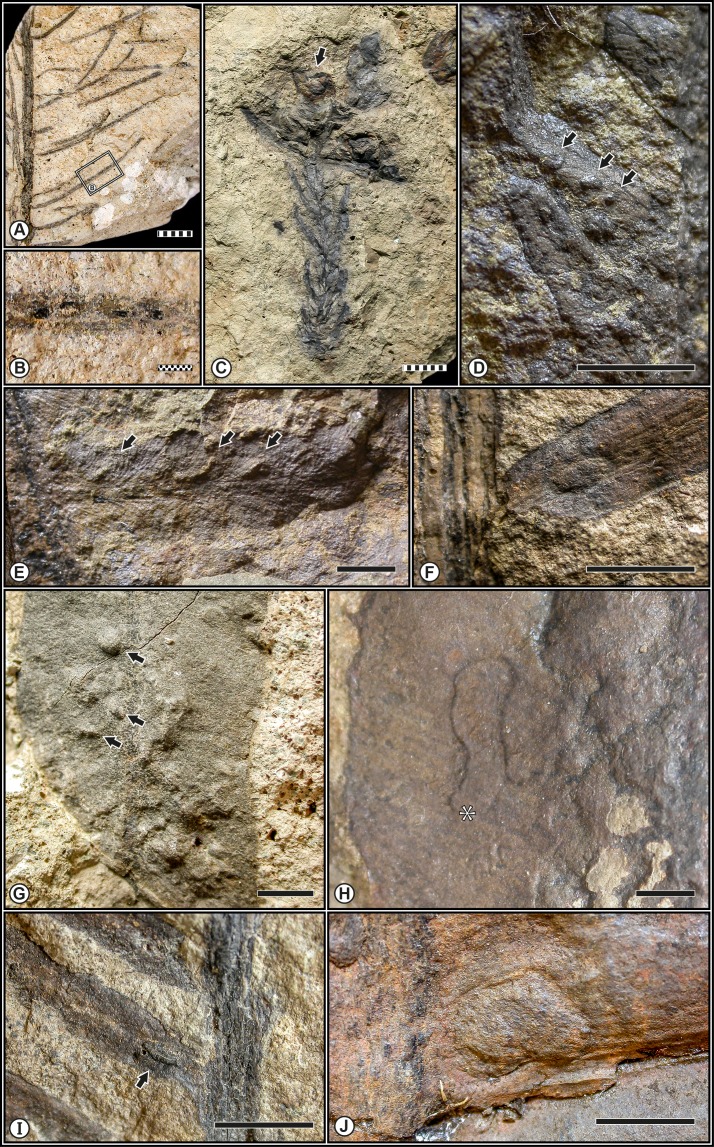
The Paleozoic-Mesozoic transition is characterized by the most massive extinction of the Phanerozoic. Nevertheless, an impressive adaptive radiation of herbivorous insects occurred on gymnosperm-dominated floras not earlier than during the Middle to Late Triassic, penecontemporaneous with similar events worldwide, all which exhibit parallel expansions of generalized and mostly specialized insect herbivory on plants, expressed as insect damage on a various plant organs and tissues. The flora from Monte Agnello is distinctive, due to its preservation in subaerially deposited pyroclastic layers with exceptionally preserved details. Thus, the para-autochthonous assemblage provides insights into environmental disturbances, caused by volcanic activity, and how they profoundly affected the structure and composition of herbivory patterns. These diverse Middle Triassic biota supply extensive evidence for insect herbivore colonization, resulting in specific and complex herbivory patterns involving the frequency and diversity of 20 distinctive damage types (DTs). These DT patterns show that external foliage feeders, piercer-and-suckers, leaf miners, gallers, and oviposition culprits were intricately using almost all tissue types from the dominant host plants of voltzialean conifers (e.g., Voltzia), horsetails, ferns (e.g., Neuropteridium, Phlebopteris, Cladophlebis and Thaumatopteris), seed ferns (e.g., Scytophyllum), and cycadophytes (e.g., Bjuvia and Nilssonia).
古生代-中生代过渡期的特点是显生宙中最大规模的灭绝。然而,中生代中期至晚期,在以裸子植物为主的植物群中,食草昆虫发生了令人印象深刻的适应性辐射,与世界各地同时发生的类似事件同时发生,所有这些事件都表现出广义和大多专门的植物食草昆虫在植物上的平行扩张,表现为对各种植物器官和组织的昆虫损害。来自 Monte Agnello 的植物群很独特,因为它保存在空气中沉积的火山碎屑层中,细节保存得异常完好。因此,准原地组合提供了对火山活动引起的环境干扰的深入了解,以及它们如何深刻影响食草模式的结构和组成。这些多样化的中生代生物群为昆虫食草动物的殖民化提供了广泛的证据,导致了特定和复杂的食草模式,涉及 20 种独特的损伤类型(DT)的频率和多样性。这些 DT 模式表明,外部叶片取食者、穿刺和吸食者、潜叶虫、瘿蜂和产卵罪魁祸首复杂地使用了来自优势伏尔特西亚松(例如,Voltzia)、木贼、蕨类植物(例如,Neuropteridium、Phlebopteris、Cladophlebis 和 Thaumatopteris)、种子蕨类植物(例如,Scytophyllum)和苏铁植物(例如,Bjuvia 和 Nilssonia)的几乎所有组织类型。