Needle Danielle, Lountos George T, Waugh David S
Macromolecular Crystallography Laboratory, Center for Cancer Research, National Cancer Institute at Frederick, Frederick, Maryland, USA.
Acta Crystallogr D Biol Crystallogr. 2015 May;71(Pt 5):1102-11. doi: 10.1107/S1399004715003521. Epub 2015 Apr 24.
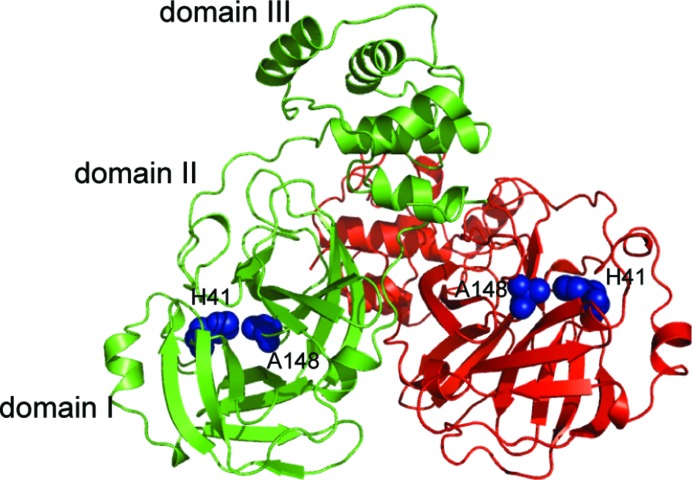
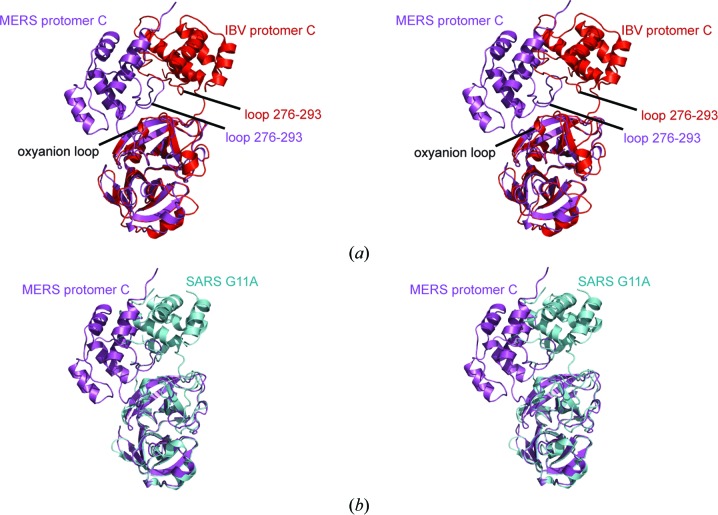
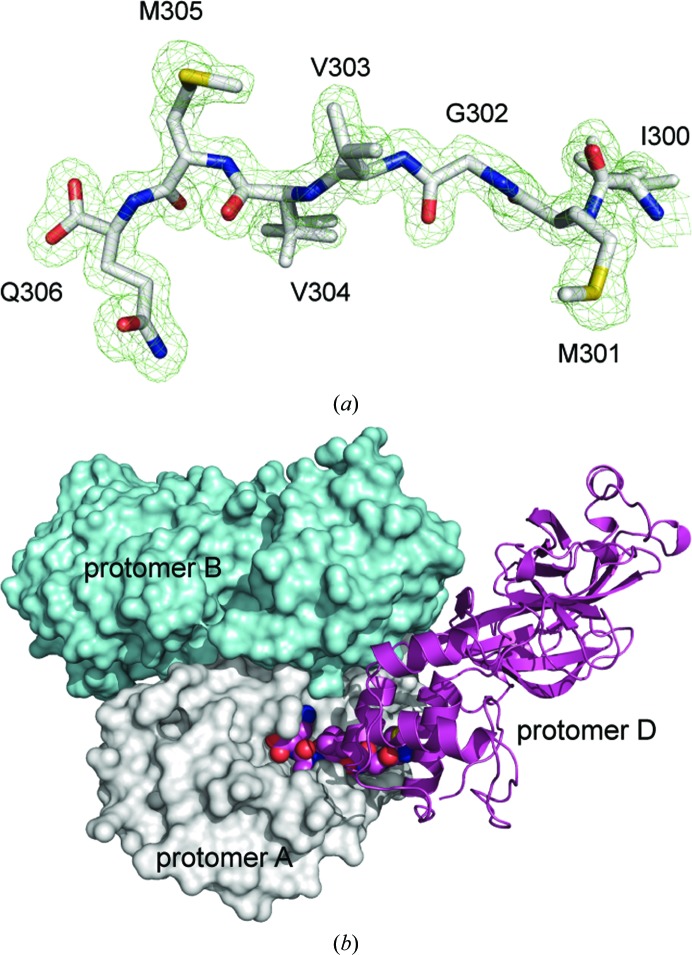
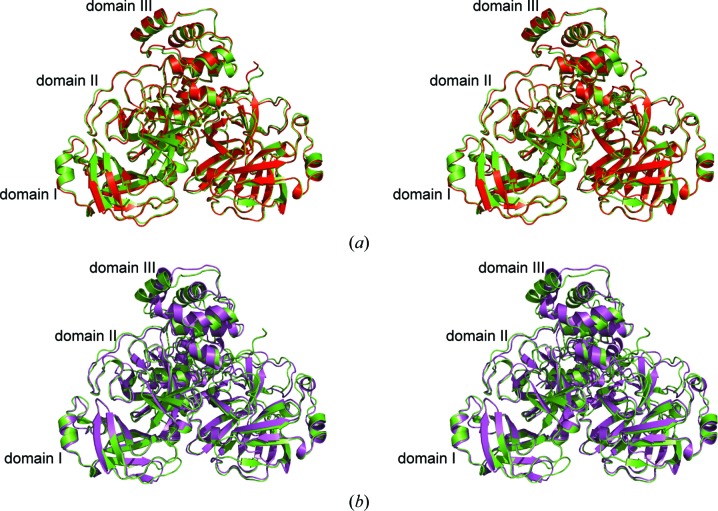
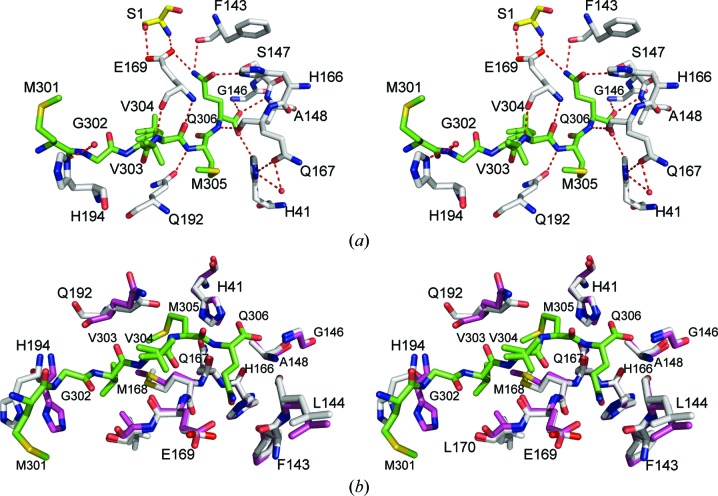
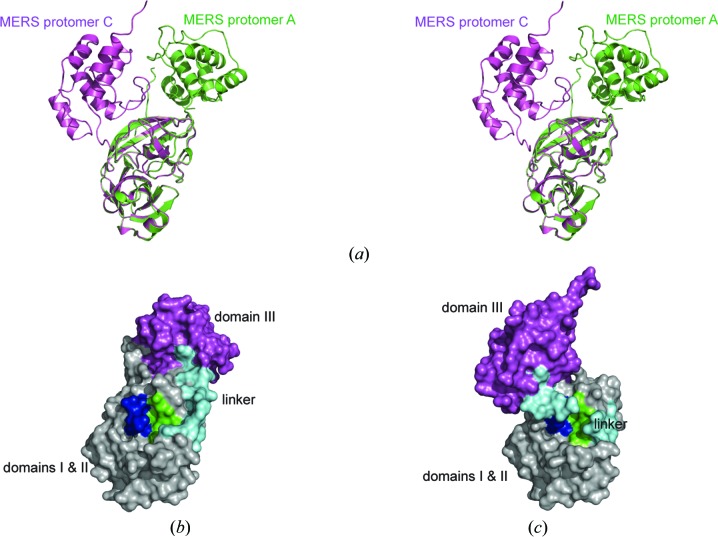
Middle East respiratory syndrome coronavirus (MERS-CoV) is a highly pathogenic virus that causes severe respiratory illness accompanied by multi-organ dysfunction, resulting in a case fatality rate of approximately 40%. As found in other coronaviruses, the majority of the positive-stranded RNA MERS-CoV genome is translated into two polyproteins, one created by a ribosomal frameshift, that are cleaved at three sites by a papain-like protease and at 11 sites by a 3C-like protease (3 CL(pro)). Since 3 CL(pro) is essential for viral replication, it is a leading candidate for therapeutic intervention. To accelerate the development of 3 CL(pro) inhibitors, three crystal structures of a catalytically inactive variant (C148A) of the MERS-CoV 3 CL(pro) enzyme were determined. The aim was to co-crystallize the inactive enzyme with a peptide substrate. Fortuitously, however, in two of the structures the C-terminus of one protomer is bound in the active site of a neighboring molecule, providing a snapshot of an enzyme-product complex. In the third structure, two of the three protomers in the asymmetric unit form a homodimer similar to that of SARS-CoV 3 CL(pro); however, the third protomer adopts a radically different conformation that is likely to correspond to a crystallographic monomer, indicative of substantial structural plasticity in the enzyme. The results presented here provide a foundation for the structure-based design of small-molecule inhibitors of the MERS-CoV 3 CL(pro) enzyme.
中东呼吸综合征冠状病毒(MERS-CoV)是一种高致病性病毒,可引发严重的呼吸道疾病并伴有多器官功能障碍,致死率约为40%。正如在其他冠状病毒中所发现的那样,MERS-CoV基因组的大部分正链RNA被翻译为两种多聚蛋白,其中一种是通过核糖体移码产生的,它们会被木瓜样蛋白酶在三个位点以及被3C样蛋白酶(3CL(pro))在11个位点切割。由于3CL(pro)对于病毒复制至关重要,它是治疗干预的主要候选对象。为了加速3CL(pro)抑制剂的研发,我们测定了MERS-CoV 3CL(pro)酶的催化无活性变体(C148A)的三种晶体结构。目的是使无活性酶与肽底物共结晶。然而,幸运的是,在其中两种结构中,一个原体的C末端结合在相邻分子的活性位点中,提供了酶-产物复合物的一个瞬间图像。在第三种结构中,不对称单元中的三个原体中的两个形成了与SARS-CoV 3CL(pro)类似的同二聚体;然而,第三个原体采用了一种截然不同的构象,这可能对应于一个晶体学单体,表明该酶具有显著的结构可塑性。本文给出的结果为基于结构设计MERS-CoV 3CL(pro)酶的小分子抑制剂奠定了基础。