Dai Xin, Jiang Ying, Tan Chalet
Department of Pharmaceutical Sciences, Mercer University, Atlanta, Georgia, United States of America.
PLoS One. 2015 May 6;10(5):e0126653. doi: 10.1371/journal.pone.0126653. eCollection 2015.
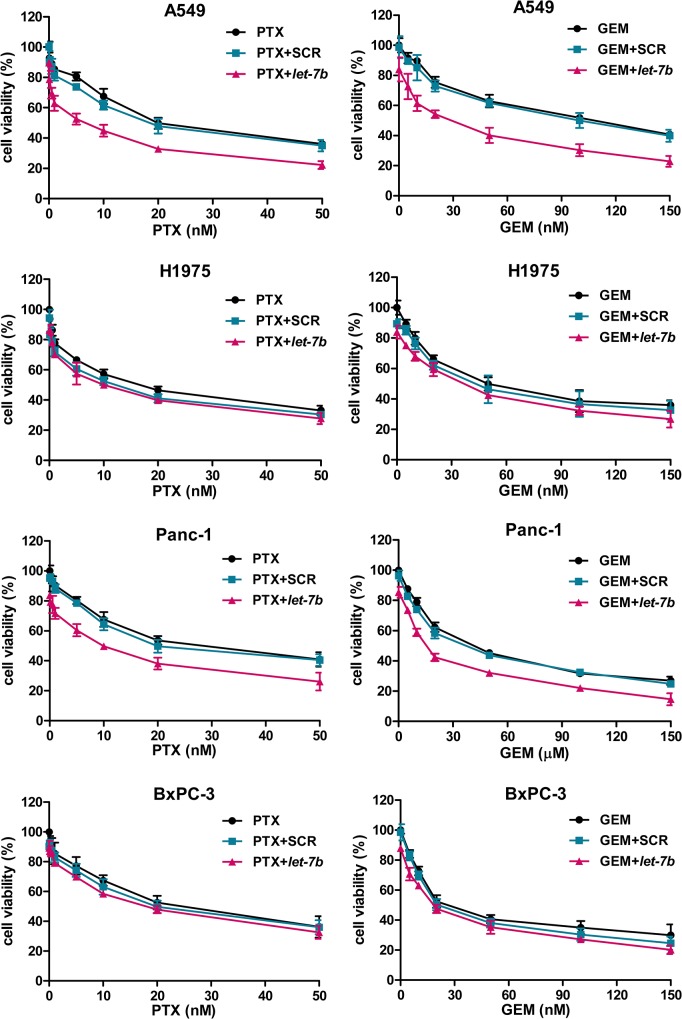
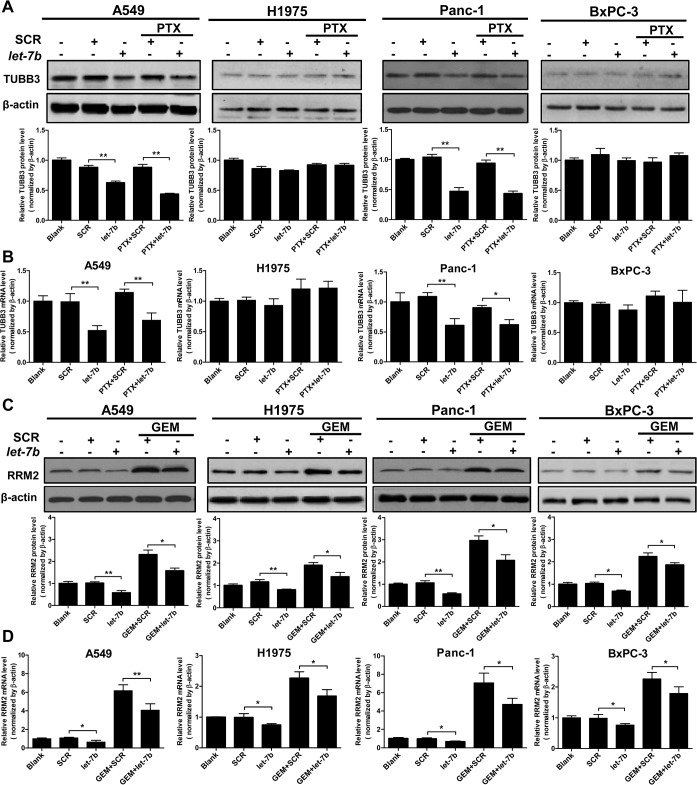
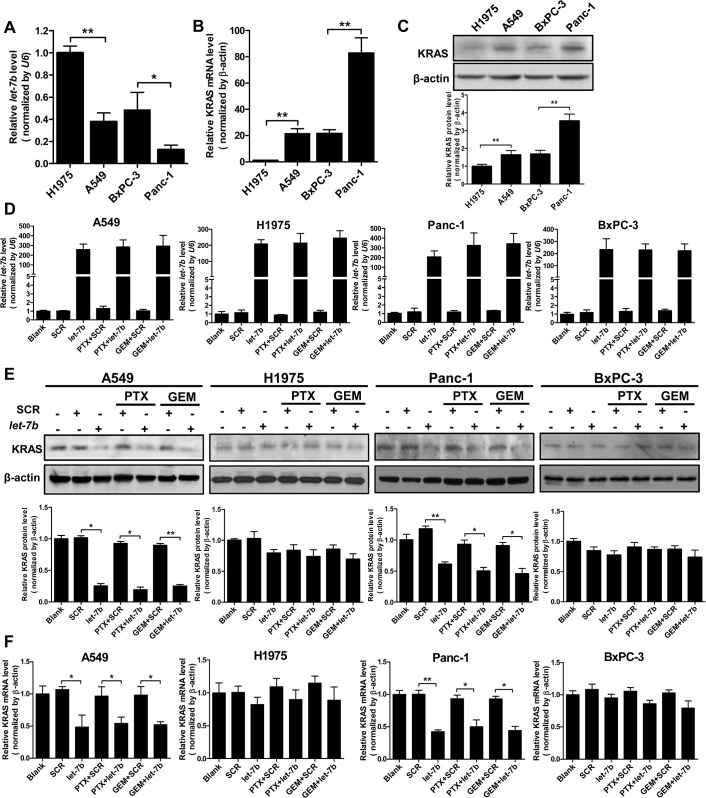
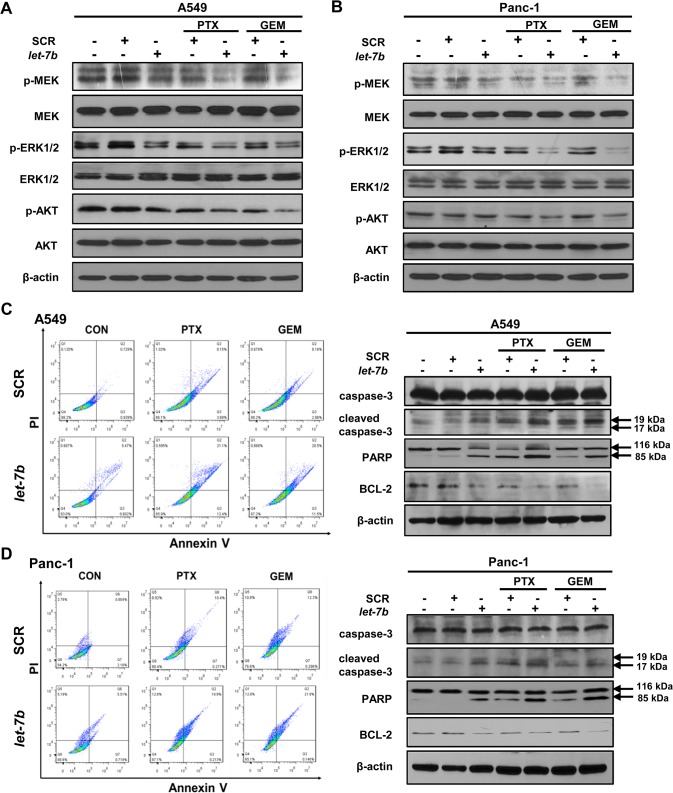
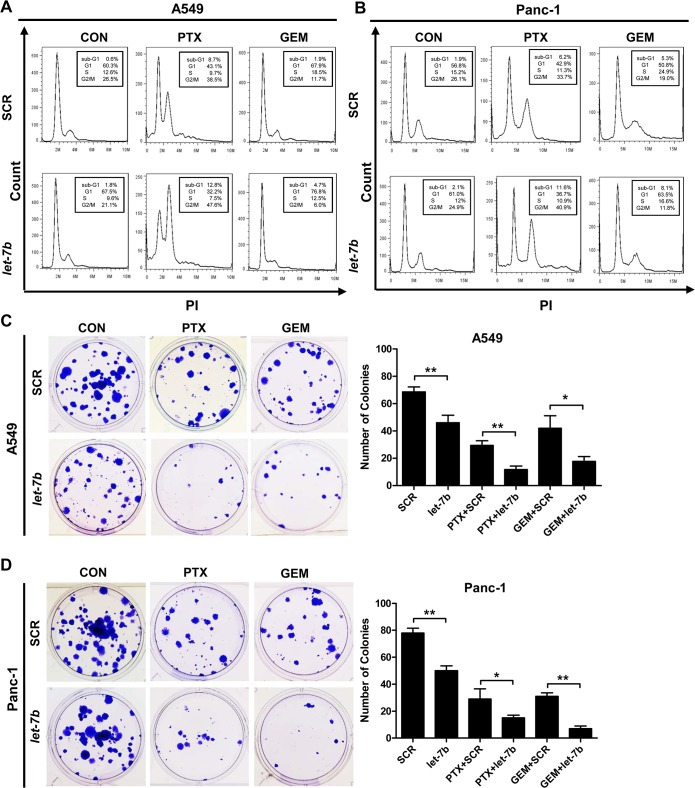
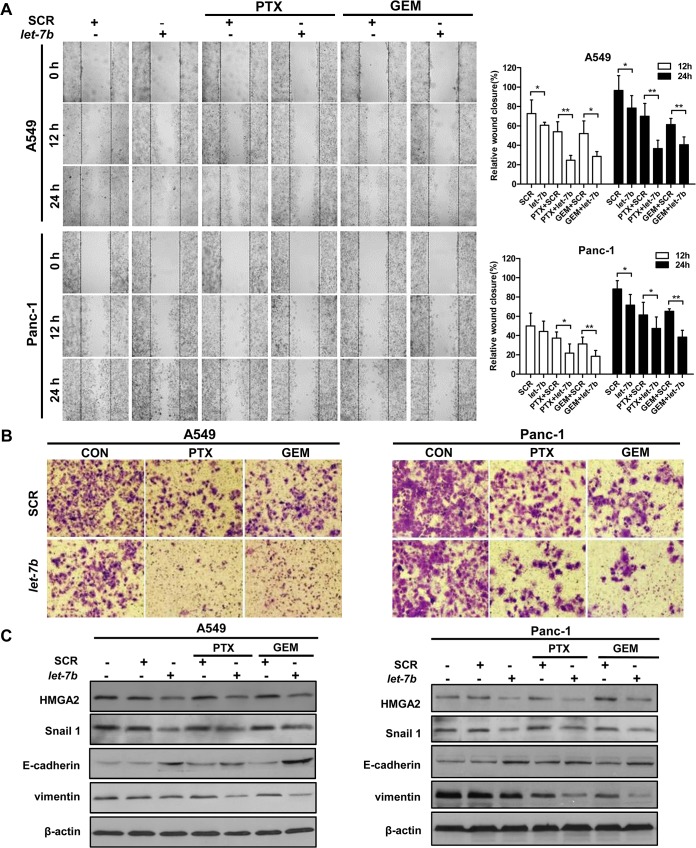
KRAS is the most commonly mutated oncogene in human cancers and is associated with poor prognosis and drug resistance. Let-7 is a family of tumor suppressor microRNAs that are frequently suppressed in solid tumors, where KRAS mutations are highly prevalent. In this study, we investigated the potential use of let-7 as a chemosensitizer. We found that let-7b repletion selectively sensitized KRAS mutant tumor cells to the cytotoxicity of paclitaxel and gemcitabine. Transfection of let-7b mimic downregulated the expression of mutant but not wild-type KRAS. Combination of let-7b mimic with paclitaxel or gemcitabine diminished MEK/ERK and PI3K/AKT signaling concurrently, triggered the onset of apoptosis, and reverted the epithelial-mesenchymal transition in KRAS mutant tumor cells. In addition, let-7b repletion downregulated the expression of β-tubulin III and ribonucleotide reductase subunit M2, two proteins known to mediate tumor resistance to paclitaxel and gemcitabine, respectively. Let-7 may represent a new class of chemosensitizer for the treatment of KRAS mutant tumors.
KRAS是人类癌症中最常见的突变癌基因,与预后不良和耐药性相关。Let-7是一类肿瘤抑制性微小RNA,在实体瘤中常被抑制,而实体瘤中KRAS突变非常普遍。在本研究中,我们调查了Let-7作为化学增敏剂的潜在用途。我们发现,补充Let-7b可选择性地使KRAS突变肿瘤细胞对紫杉醇和吉西他滨的细胞毒性敏感。转染Let-7b模拟物可下调突变型而非野生型KRAS的表达。Let-7b模拟物与紫杉醇或吉西他滨联合使用可同时降低MEK/ERK和PI3K/AKT信号传导,引发细胞凋亡,并逆转KRAS突变肿瘤细胞中的上皮-间质转化。此外,补充Let-7b可下调β-微管蛋白III和核糖核苷酸还原酶亚基M2的表达,这两种蛋白分别已知可介导肿瘤对紫杉醇和吉西他滨的耐药性。Let-7可能代表一类用于治疗KRAS突变肿瘤的新型化学增敏剂。