Zhou Jing, Lu Guodi, Wang Honglan, Zhang Junfeng, Duan Jinao, Ma Hongyue, Wu Qinan
Collaborative Innovation Center of Chinese Medicinal Resources Industrialization, College of Pharmacy, Nanjing University of Chinese Medicine, Nanjing, PR China.
Collaborative Innovation Center of Chinese Medicinal Resources Industrialization, College of Pharmacy, Nanjing University of Chinese Medicine, Nanjing, PR China; Gansu University of Traditional Chinese Medicine, Lanzhou, PR China.
PLoS One. 2015 May 6;10(5):e0126669. doi: 10.1371/journal.pone.0126669. eCollection 2015.
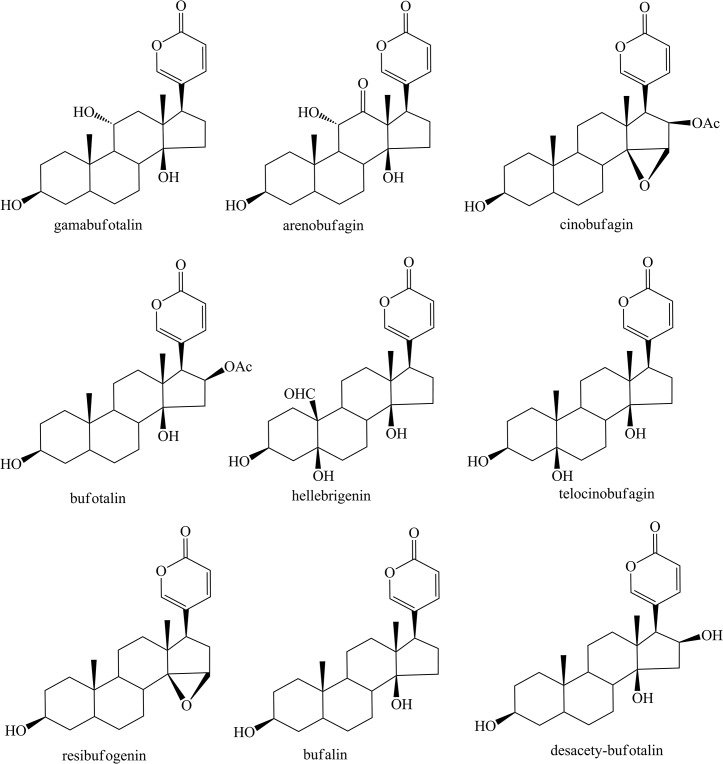
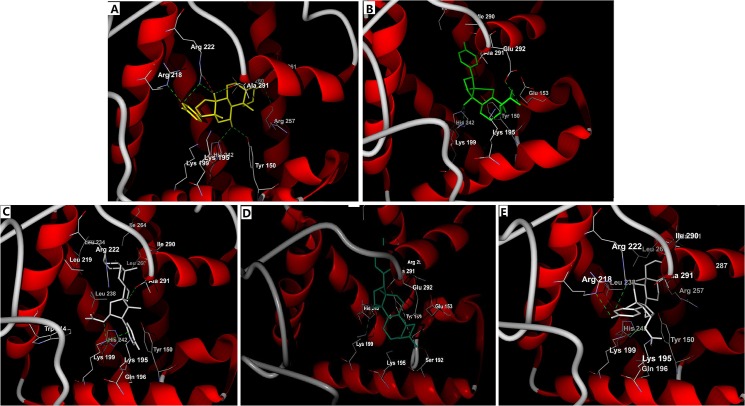
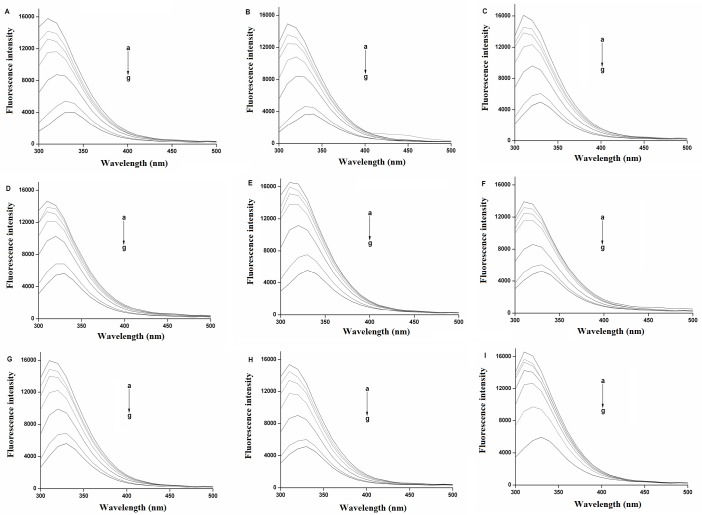
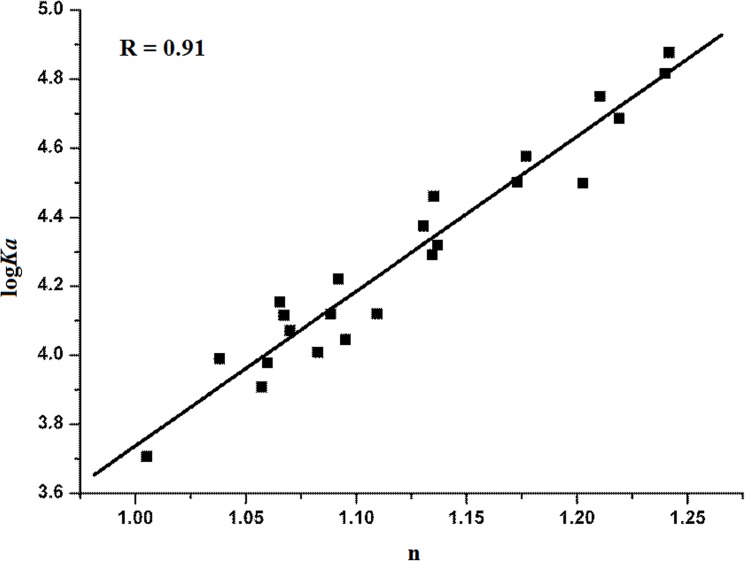
The development of bufadienolides as anti-tumor agents is limited due to poor pharmacokinetic properties regarding drug half-lives and toxicity in vivo. These serious factors might be improved by increasing the drug/albumin-binding ratio. This study therefore investigated the relationship between the structural properties of nine bufadienolides and their affinities for human serum albumin (HSA) by a fluorescence spectroscopy-based analysis and molecular docking. Fluorescence quenching data showed that the interaction of each bufadienolide with HSA formed a non-fluorescent complex, while thermodynamic parameters revealed negative ΔS and ΔH values, corresponding to changes in enthalpy and entropy, respectively. The structural differences between the various bufadienolides markedly influenced their binding affinity for HSA. With the exception of a C = O bond at the C12 position that decreased the binding affinity for HSA, other polar groups tended to increase the affinity, especially a hydroxyl (OH) group at assorted bufadienolide sites. The rank order of binding affinities for drugs with tri-hydroxyl groups was as follows: 11-OH > 5-OH > 16-OH; in addition, 16-acetoxy (OAc), 10-aldehyde and 14-epoxy constituents notably enhanced the binding affinity. Among these groups, 11-OH and 16-acetyl were especially important for a seamless interaction between the bufadienolides and HSA. Furthermore, molecular docking analysis revealed that either an 11-OH or a 16-OAc group spatially close to a five-membered lactone ring significantly facilitated the anchoring of these compounds within site I of the HSA pocket via hydrogen bonding (H-bonding) with Tyr150 or Lys199, respectively. In summary, bufadienolide structure strongly affects binding with HSA, and 11-OH or 16-OAc groups improve the drug association with key amino acid residues. This information is valuable for the prospective development of bufadienolides with improved pharmacological profiles as novel anti-tumor drugs.
由于在药物半衰期和体内毒性方面药代动力学性质较差,蟾蜍二烯内酯作为抗肿瘤药物的开发受到限制。通过提高药物/白蛋白结合率,这些严重因素可能会得到改善。因此,本研究通过基于荧光光谱的分析和分子对接,研究了九种蟾蜍二烯内酯的结构性质与其对人血清白蛋白(HSA)亲和力之间的关系。荧光猝灭数据表明,每种蟾蜍二烯内酯与HSA的相互作用形成了一种非荧光复合物,而热力学参数显示出负的ΔS和ΔH值,分别对应于焓变和熵变。各种蟾蜍二烯内酯之间的结构差异显著影响了它们对HSA的结合亲和力。除了C12位的C = O键会降低对HSA的结合亲和力外,其他极性基团往往会增加亲和力,特别是在各种蟾蜍二烯内酯位点上的羟基(OH)基团。具有三羟基的药物的结合亲和力排序如下:11-OH > 5-OH > 16-OH;此外,16-乙酰氧基(OAc)、10-醛基和14-环氧成分显著增强了结合亲和力。在这些基团中,11-OH和16-乙酰基对于蟾蜍二烯内酯与HSA之间的无缝相互作用尤为重要。此外,分子对接分析表明,靠近五元内酯环的11-OH或16-OAc基团分别通过与Tyr150或Lys199形成氢键(H键),显著促进了这些化合物在HSA口袋位点I内的锚定。总之,蟾蜍二烯内酯结构强烈影响其与HSA的结合,11-OH或16-OAc基团改善了药物与关键氨基酸残基的结合。这些信息对于开发具有改善药理特性的新型抗肿瘤药物蟾蜍二烯内酯具有重要价值。