Kolodziejczyk-Czepas Joanna, Stochmal Anna
Department of General Biochemistry, Faculty of Biology and Environmental Protection, University of Lodz, Pomorska 141/143, 90-236 Lodz, Poland.
Department of Biochemistry, Institute of Soil Science and Plant Cultivation, State Research Institute, Czartoryskich 8, 24-100 Pulawy, Poland.
Phytochem Rev. 2017;16(6):1155-1171. doi: 10.1007/s11101-017-9525-1. Epub 2017 Aug 2.
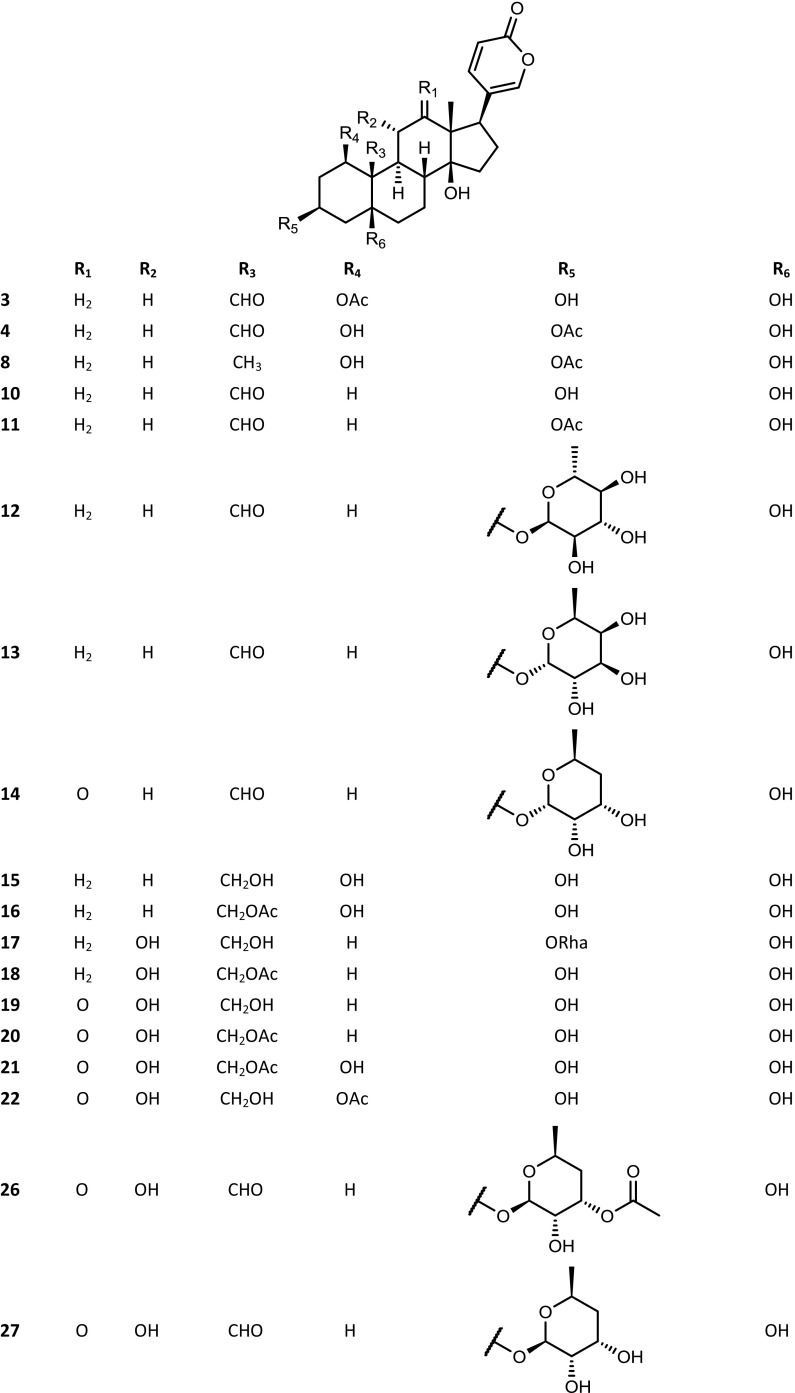
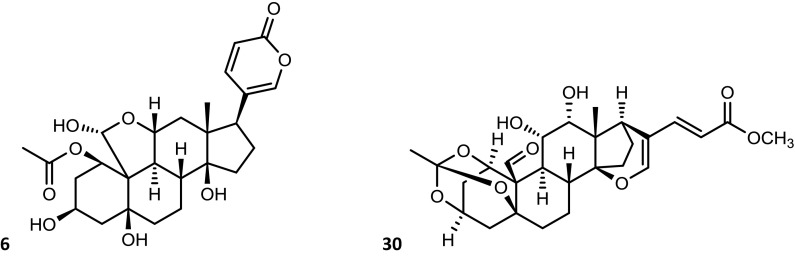
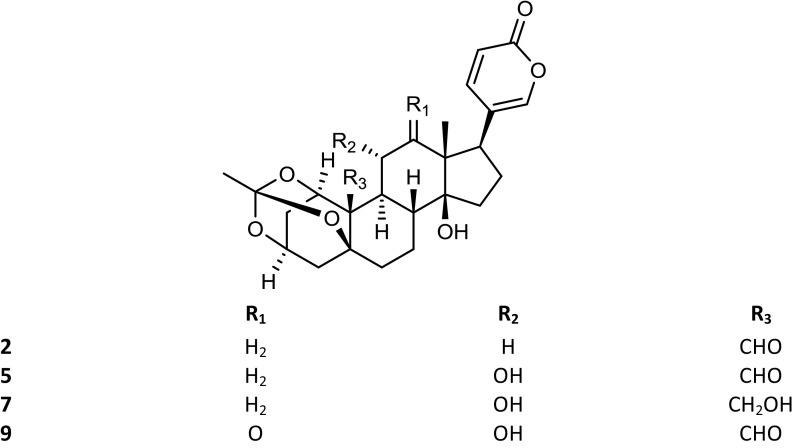
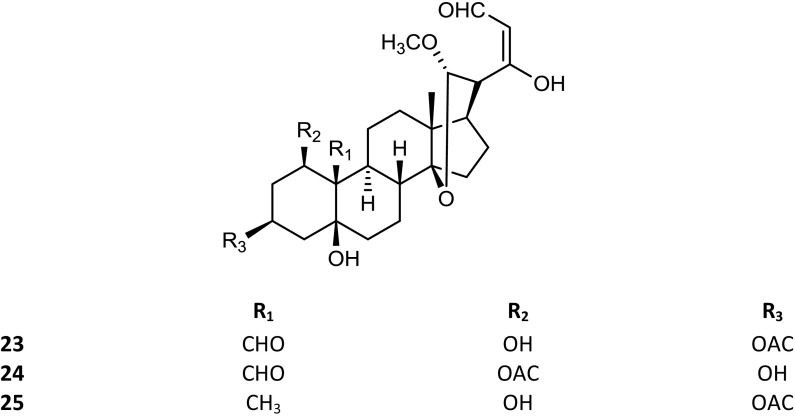
Toad venom is regarded as the main source of bufadienolides; however, synthesis of these substances takes also place in a variety of other animal and plant organisms, including ethnomedicinal plants of the genus. Chemically, bufadienolides are a group of polyhydroxy C-24 steroids and their glycosides, containing a six-membered lactone (α-pyrone) ring at the C-17β position. From the pharmacological point of view, bufadienolides might be a promising group of steroid hormones with cardioactive properties and anticancer activity. Most of the literature concerns bufadienolides of animal origin; however, the medicinal use of these compounds remains limited by their narrow therapeutic index and the risk of development of cardiotoxic effects. On the other hand, plants such as are also a source of bufadienolides. (life plant, air plant, cathedral bells), (mother of thousands) and other species are valuable herbs in traditional medicine of Asia and Africa. The present review focuses on the available data on chemical structures of 31 compounds, biological properties and prospects for therapeutic use of bufadienolides from species. Furthermore, it presents some new investigational trends in research on curative uses of these substances.
蟾蜍毒液被认为是蟾蜍二烯羟酸内酯的主要来源;然而,这些物质也在多种其他动植物生物体中合成,包括该属的民族药用植物。从化学角度来看,蟾蜍二烯羟酸内酯是一组多羟基C-24甾体及其糖苷,在C-17β位置含有一个六元内酯(α-吡喃酮)环。从药理学角度来看,蟾蜍二烯羟酸内酯可能是一类具有心脏活性和抗癌活性的有前景的甾体激素。大多数文献关注的是动物来源的蟾蜍二烯羟酸内酯;然而,这些化合物的药用仍然受到其狭窄的治疗指数和产生心脏毒性作用风险的限制。另一方面,诸如落地生根(长生草、空气草、风铃草)、棒叶落地生根(千母)和其他落地生根属物种等植物也是蟾蜍二烯羟酸内酯的来源。它们是亚洲和非洲传统医学中的珍贵草药。本综述聚焦于来自落地生根属物种的31种化合物的化学结构、生物学特性及蟾蜍二烯羟酸内酯治疗用途前景的现有数据。此外,还介绍了这些物质治疗用途研究中的一些新的研究趋势。