Nishitani Wagner Shin, Alencar Adriano Mesquita, Wang Yingxiao
Department of Bioengineering & Beckman Institute for Advanced Science and Technology, Center for Biophysics and Computational Biology, Institute for Genomic Biology, University of Illinois, Urbana-Champaign, Urbana, Illinois, 61801, United States of America; Instituto de Física, Universidade de São Paulo, São Paulo, São Paulo, Brazil.
Instituto de Física, Universidade de São Paulo, São Paulo, São Paulo, Brazil.
PLoS One. 2015 May 6;10(5):e0126440. doi: 10.1371/journal.pone.0126440. eCollection 2015.
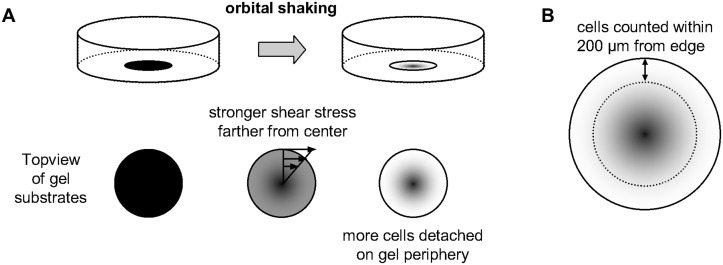
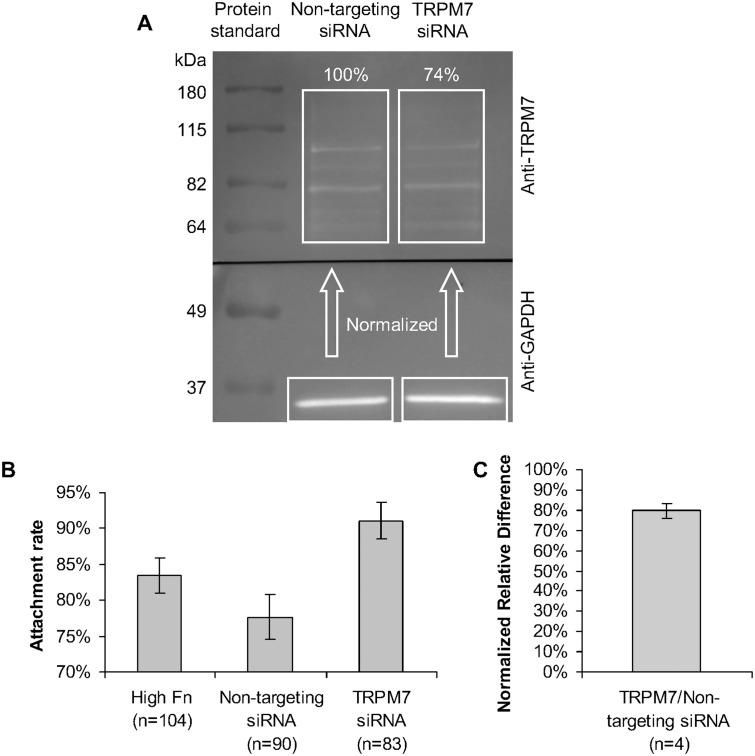
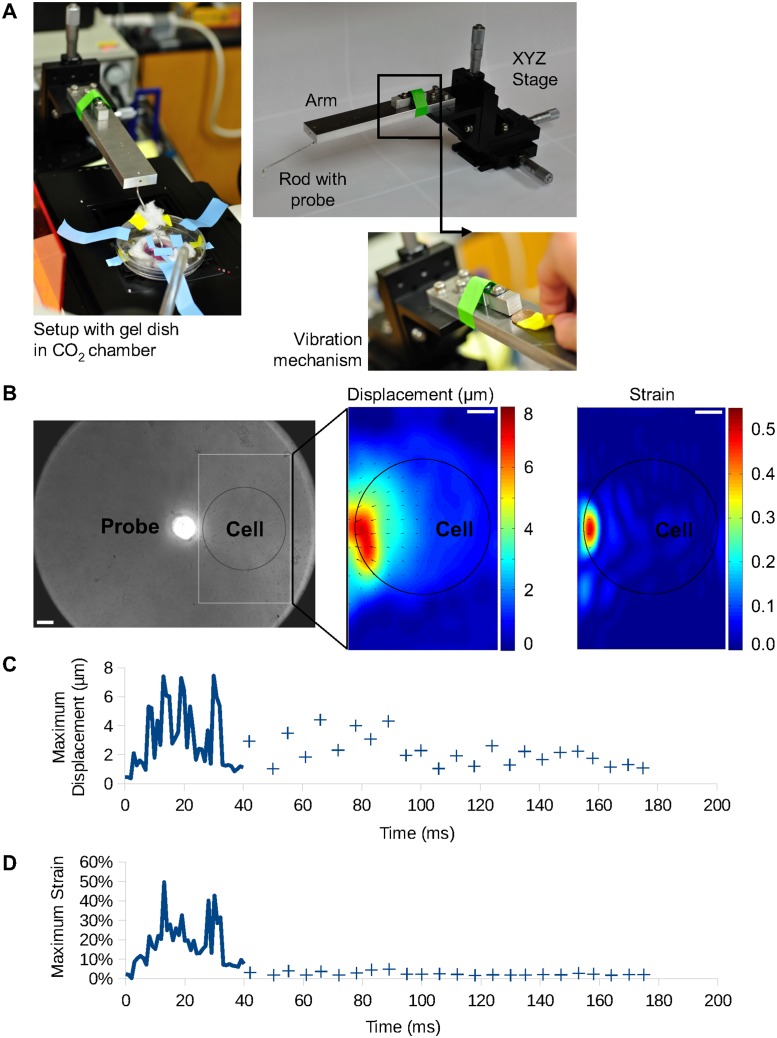
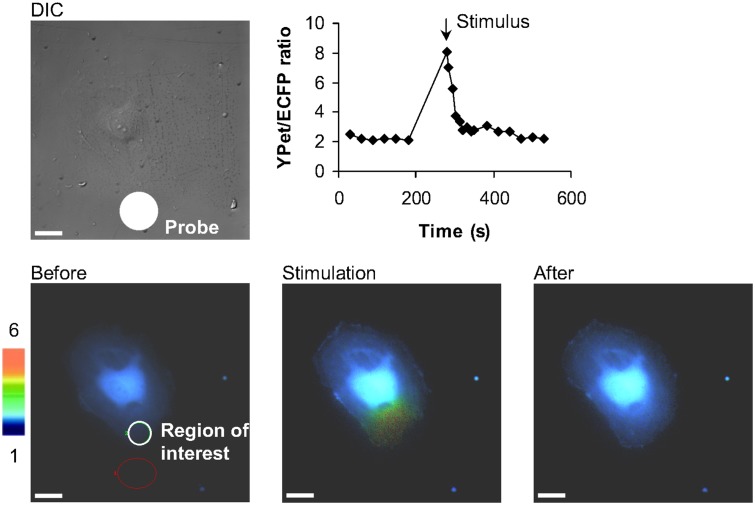
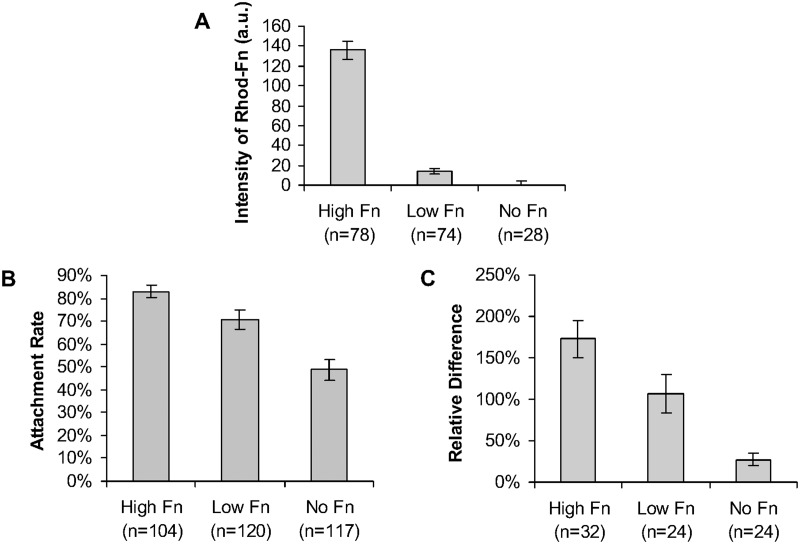
A cell mechanical stimulation equipment, based on cell substrate deformation, and a more sensitive method for measuring adhesion of cells were developed. A probe, precisely positioned close to the cell, was capable of a vertical localized mechanical stimulation with a temporal frequency of 207 Hz, and strain magnitude of 50%. This setup was characterized and used to probe the response of Human Umbilical Endothelial Vein Cells (HUVECs) in terms of calcium signaling. The intracellular calcium ion concentration was measured by the genetically encoded Cameleon biosensor, with the Transient Receptor Potential cation channel, subfamily M, member 7 (TRPM7) expression inhibited. As TRPM7 expression also regulates adhesion, a relatively simple method for measuring adhesion of cells was also developed, tested and used to study the effect of adhesion alone. Three adhesion conditions of HUVECs on polyacrylamide gel dishes were compared. In the first condition, the substrate is fully treated with Sulfo-SANPAH crosslinking and fibronectin. The other two conditions had increasingly reduced adhesion: partially treated (only coated with fibronectin, with no use of Sulfo-SANPAH, at 5% of the normal amount) and non-treated polyacrylamide gels. The cells showed adhesion and calcium response to the mechanical stimulation correlated to the degree of gel treatment: highest for fully treated gels and lowest for non-treated ones. TRPM7 inhibition by siRNA on HUVECs caused an increase in adhesion relative to control (no siRNA treatment) and non-targeting siRNA, but a decrease to 80% of calcium response relative to non-targeting siRNA which confirms the important role of TRPM7 in mechanotransduction despite the increase in adhesion.
基于细胞基质变形的细胞机械刺激设备以及一种更灵敏的细胞黏附测量方法被开发出来。一个精确放置在细胞附近的探针能够进行频率为207 Hz、应变幅度为50%的垂直局部机械刺激。对该装置进行了表征,并用于探究人脐静脉内皮细胞(HUVECs)在钙信号传导方面的反应。细胞内钙离子浓度通过基因编码的变色龙生物传感器进行测量,同时瞬时受体电位阳离子通道亚家族M成员7(TRPM7)的表达受到抑制。由于TRPM7的表达也调节细胞黏附,因此还开发、测试了一种相对简单的细胞黏附测量方法,并用于单独研究黏附的影响。比较了HUVECs在聚丙烯酰胺凝胶培养皿上的三种黏附条件。在第一种条件下,基质用磺基 - SANPAH交联剂和纤连蛋白进行完全处理。另外两种条件下的黏附逐渐降低:部分处理(仅包被纤连蛋白,不使用磺基 - SANPAH,用量为正常量的5%)和未处理的聚丙烯酰胺凝胶。细胞对机械刺激的黏附及钙反应与凝胶处理程度相关:完全处理的凝胶最高,未处理的最低。通过小干扰RNA(siRNA)抑制HUVECs中的TRPM7,相对于对照(未进行siRNA处理)和非靶向siRNA,黏附增加,但相对于非靶向siRNA,钙反应降低至80%,这证实了TRPM7在机械转导中尽管黏附增加但仍具有重要作用。