Widmer R Jay, Allison Thomas G, Lerman Lilach O, Lerman Amir
Division of Cardiovascular Diseases, Department of Internal Medicine, Mayo Clinic and College of Medicine, 200 1st Street SW, Rochester, MN, 55905, USA.
J Cardiovasc Transl Res. 2015 Jul;8(5):283-92. doi: 10.1007/s12265-015-9629-1. Epub 2015 May 7.
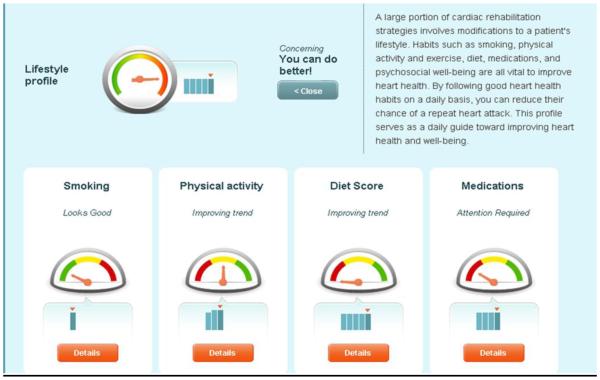
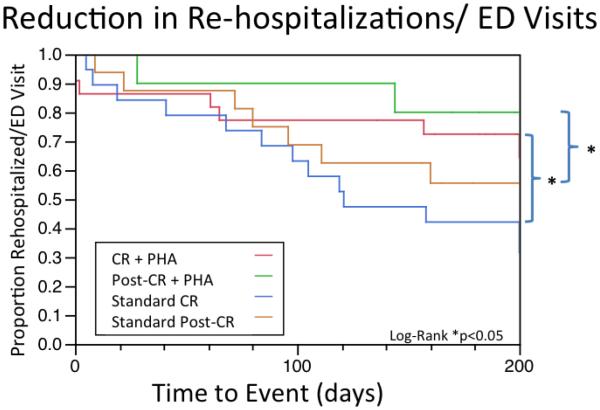
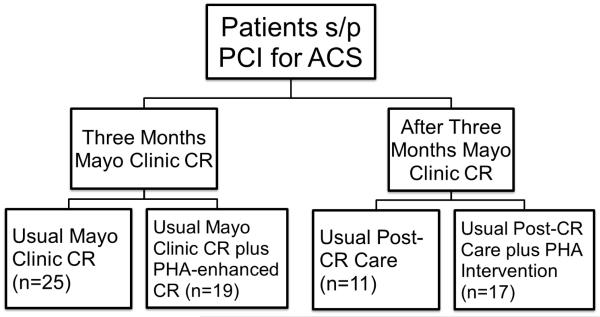
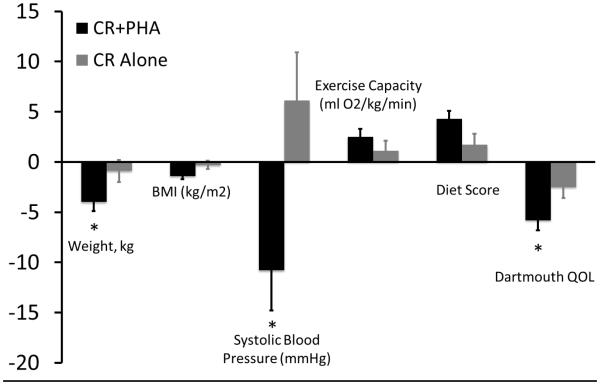
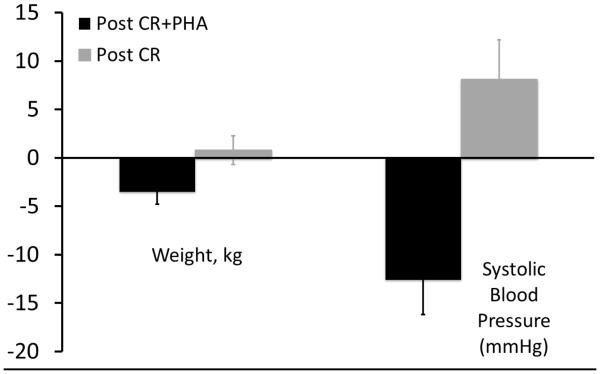
Cardiac rehabilitation (CR) following myocardial infarction is vastly underused. As such, the aim of this study was to test a digital health intervention (DHI) as an adjunct to CR. Patients undergoing standard Mayo Clinic CR were recruited prior to CR (n = 25) or after 3 months CR (n = 17). Changes in risk factors and rehospitalizations plus emergency department (ED) visits were assessed after 3 months. Patients assigned to DHI during CR had significant reductions in weight (-4.0 ± 5.2 kg, P = .001), blood pressure (-10.8 ± 13.5 mmHg, P = .0009), and the group using DHI after 3 months of CR had significant reductions in weight (-2.5 ± 3.8 kg, P = .04) and systolic BP (-12.6 ± 12.4 mmHg, P = .001) compared to the control groups. Both DHI groups also displayed significant reductions in rehospitalizations/ED visits (-37.9 %, P = 0.01 and -28 %, P = .04, respectively). This study suggests that a guideline-driven DHI CR program can augment secondary prevention strategies during usual CR by improving risk factors for repeat events.
心肌梗死后的心脏康复(CR)未得到充分利用。因此,本研究的目的是测试一种数字健康干预措施(DHI)作为CR的辅助手段。在CR之前(n = 25)或CR 3个月后(n = 17)招募接受标准梅奥诊所CR的患者。3个月后评估危险因素、再住院率以及急诊就诊情况的变化。在CR期间分配到DHI组的患者体重显著降低(-4.0±5.2 kg,P = 0.001)、血压显著降低(-10.8±13.5 mmHg,P = 0.0009),并且在CR 3个月后使用DHI的组与对照组相比体重显著降低(-2.5±3.8 kg,P = 0.04)、收缩压显著降低(-12.6±12.4 mmHg,P = 0.001)。两个DHI组的再住院率/急诊就诊率也显著降低(分别为-37.9%,P = 0.01和-28%,P = 0.04)。本研究表明,一个由指南驱动的DHI CR项目可以通过改善再次发病的危险因素,在常规CR期间增强二级预防策略。