Conforti Antonella, Taranta Anna, Biagini Simone, Starc Nadia, Pitisci Angela, Bellomo Francesco, Cirillo Valentina, Locatelli Franco, Bernardo Maria Ester, Emma Francesco
Department of Pediatric Hematology/Oncology, IRCCS Bambino Gesù Children's Hospital, P.le S. Onofrio, 00165, Rome, Italy.
Department of Nephrology and Urology, IRCCS Bambino Gesù Children's Hospital, P.le S. Onofrio, 00165, Rome, Italy.
J Transl Med. 2015 May 7;13:143. doi: 10.1186/s12967-015-0494-0.
Cystinosis is a rare autosomal recessive disease caused by mutations of the CTNS gene, which encodes for a lysosomal cystine/H(+) symporter. In mice, inactivation of the CTNS gene causes intralysosomal cystine accumulation and progressive organ damage that can be reversed, at least in part, by infusion of mesenchymal stromal cells (MSCs). Little is known on the mesenchymal compartment of cystinotic patients. The aim of the study was to test the phenotypical and functional properties of cystinotic MSCs (Cys-MSCs) isolated from bone marrow (BM) aspirate of a patient with nephropathic cystinosis.
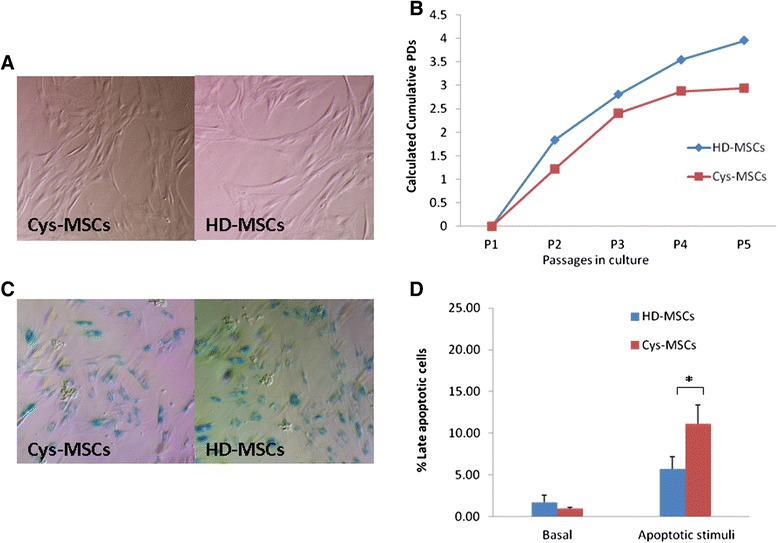
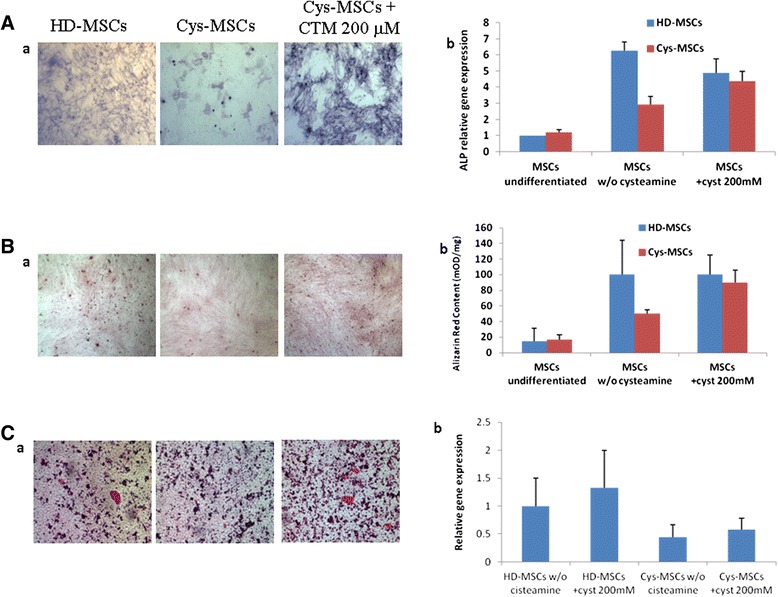
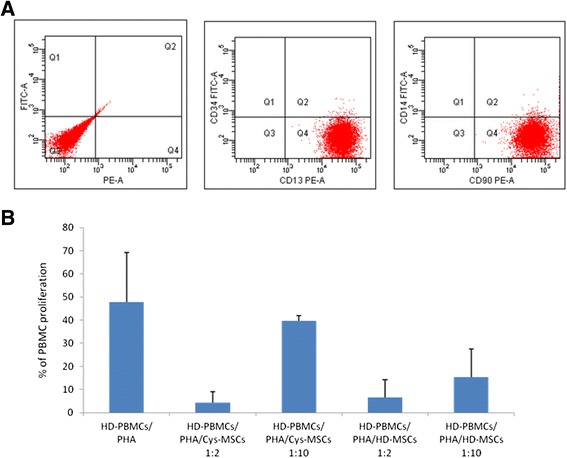
Morphology, proliferative capacity (measured as population doublings), immunophenotype (by flow-cytometry) and immunomodulatory properties (as phytohemagglutinin-induced peripheral blood mononuclear cell proliferation) were analyzed. The osteogenic differentiation potential of Cys-MSCs was evaluated by histological staining (alkaline phosphatase activity, Alzarin Red and von Kossa staining) spectrophotometry and Quantitative Reverse Transcriptase Polymerase Chain Reaction for osteigenic markers in the presence and in the absence of cysteamine. Cys-MSCs were compared with those isolated and expanded ex vivo from three healthy donors (HD-MSCs).
Despite a slightly lower proliferative capacity, Cys-MSCs displayed a characteristic spindle-shaped morphology and similar immunephenotype as HD-MSCs. Cys-MSCs and HD-MSCs prevented proliferation of PHA-stimulated allogeneic peripheral blood mononuclear cells to the same extent. After in vitro induction into osteoblasts, Cys-MSCs showed reduced alkaline phosphatase (ALP) activity, calcium depositions and expression of ALP and collagen type 1. When Cys-MSCs were treated in vitro with increasing doses of cysteamine (50-100-200 μM/L) during the differentiation assay, recovery of Cys-MSCs differentiation capacity into osteoblasts was observed. No difference in adipogenic differentiation was found between Cys-MSCs and HD-MSCs.
Our results indicate that, as compared to HD-MSCs, Cys-MSCs show reduced ability to differentiate into osteoblasts, which can be reverted after cysteamine treatment.
胱氨酸病是一种由CTNS基因突变引起的罕见常染色体隐性疾病,该基因编码一种溶酶体胱氨酸/H(+)同向转运体。在小鼠中,CTNS基因失活会导致溶酶体内胱氨酸积累和进行性器官损伤,而输注间充质基质细胞(MSC)至少可以部分逆转这种损伤。关于胱氨酸病患者的间充质细胞成分知之甚少。本研究的目的是测试从一名肾病性胱氨酸病患者的骨髓抽吸物中分离出的胱氨酸病MSC(Cys-MSC)的表型和功能特性。
分析了形态学、增殖能力(以群体倍增数衡量)、免疫表型(通过流式细胞术)和免疫调节特性(作为植物血凝素诱导的外周血单个核细胞增殖)。通过组织学染色(碱性磷酸酶活性、茜素红和冯·科萨染色)、分光光度法以及在有和没有半胱胺的情况下对成骨标志物进行定量逆转录聚合酶链反应,评估Cys-MSC的成骨分化潜能,并将Cys-MSC与从三名健康供体体外分离和扩增的MSC(HD-MSC)进行比较。
尽管增殖能力略低,但Cys-MSC呈现出特征性的纺锤形形态,免疫表型与HD-MSC相似。Cys-MSC和HD-MSC在相同程度上抑制了植物血凝素刺激的同种异体外周血单个核细胞的增殖。在体外诱导成骨细胞后,Cys-MSC显示碱性磷酸酶(ALP)活性、钙沉积以及ALP和I型胶原蛋白表达降低。在分化试验期间,当用递增剂量的半胱胺(50-100-200μM/L)对Cys-MSC进行体外处理时,观察到Cys-MSC向成骨细胞的分化能力恢复。Cys-MSC和HD-MSC在脂肪生成分化方面未发现差异。
我们的结果表明,与HD-MSC相比,Cys-MSC向成骨细胞分化的能力降低,而半胱胺处理后这种情况可以逆转。