Robinson Scott Lloyd, Lambeth-Mansell Anneliese, Gillibrand Gavin, Smith-Ryan Abbie, Bannock Laurent
Guru Performance LTD, 58 South Molton St, London, W1K 5SL UK.
Institute of Sport & Exercise Science, University of Worcester, Henwick Grove, Worcester, WR2 6AJ UK.
J Int Soc Sports Nutr. 2015 May 1;12:20. doi: 10.1186/s12970-015-0083-x. eCollection 2015.
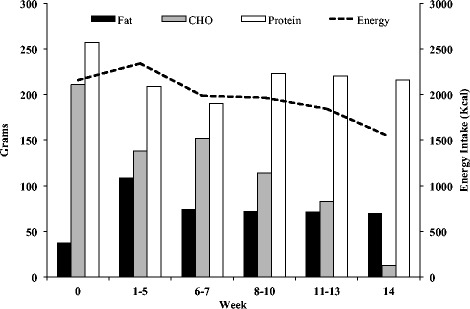
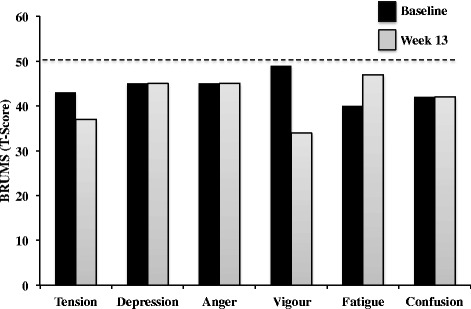
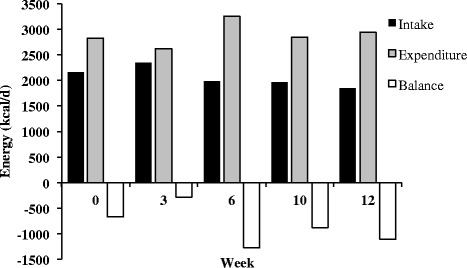
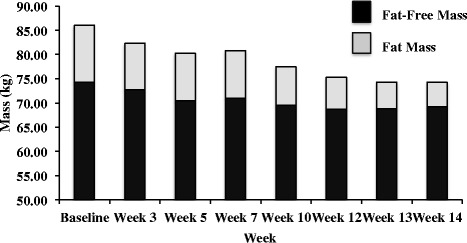
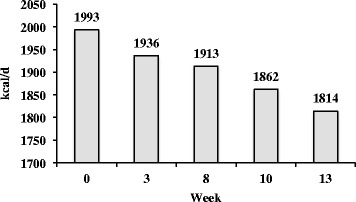
Bodybuilding competitions are becoming increasingly popular. Competitors are judged on their aesthetic appearance and usually exhibit a high level of muscularity and symmetry and low levels of body fat. Commonly used techniques to improve physique during the preparation phase before competitions include dehydration, periods of prolonged fasting, severe caloric restriction, excessive cardiovascular exercise and inappropriate use of diuretics and anabolic steroids. In contrast, this case study documents a structured nutrition and conditioning intervention followed by a 21 year-old amateur bodybuilding competitor to improve body composition, resting and exercise fat oxidation, and muscular strength that does not involve use of any of the above mentioned methods. Over a 14-week period, the Athlete was provided with a scientifically designed nutrition and conditioning plan that encouraged him to (i) consume a variety of foods; (ii) not neglect any macronutrient groups; (iii) exercise regularly but not excessively and; (iv) incorporate rest days into his conditioning regime. This strategy resulted in a body mass loss of 11.7 kg's, corresponding to a 6.7 kg reduction in fat mass and a 5.0 kg reduction in fat-free mass. Resting metabolic rate decreased from 1993 kcal/d to 1814 kcal/d, whereas resting fat oxidation increased from 0.04 g/min to 0.06 g/min. His capacity to oxidize fat during exercise increased more than two-fold from 0.24 g/min to 0.59 g/min, while there was a near 3-fold increase in the corresponding exercise intensity that elicited the maximal rate of fat oxidation; 21% V̇O2max to 60% V̇O2max. Hamstring concentric peak torque decreased (1.7 to 1.5 Nm/kg), whereas hamstring eccentric (2.0 Nm/kg to 2.9 Nm/kg), quadriceps concentric (3.4 Nm/kg to 3.7 Nm/kg) and quadriceps eccentric (4.9 Nm/kg to 5.7 Nm/kg) peak torque all increased. Psychological mood-state (BRUMS scale) was not negatively influenced by the intervention and all values relating to the Athlete's mood-state remained below average over the course of study. This intervention shows that a structured and scientifically supported nutrition strategy can be implemented to improve parameters relevant to bodybuilding competition and importantly the health of competitors, therefore questioning the conventional practices of bodybuilding preparation.
健美比赛越来越受欢迎。参赛者根据其审美外观进行评判,通常表现出高水平的肌肉发达程度和对称性以及低体脂率。在比赛前的准备阶段,常用的改善体型的技术包括脱水、长时间禁食、严格的热量限制、过度的心血管运动以及不当使用利尿剂和合成代谢类固醇。相比之下,本案例研究记录了一名21岁的业余健美参赛者采用的结构化营养和体能训练干预措施,以改善身体成分、静息和运动时的脂肪氧化以及肌肉力量,且不涉及使用上述任何方法。在14周的时间里,为该运动员提供了一份科学设计的营养和体能训练计划,鼓励他(i)食用各种食物;(ii)不忽视任何宏量营养素组;(iii)定期锻炼但不过度;(iv)将休息日纳入他的体能训练计划。这一策略导致体重减轻了11.7千克,相当于脂肪量减少了6.7千克,去脂体重减少了5.0千克。静息代谢率从1993千卡/天降至1814千卡/天,而静息脂肪氧化从0.04克/分钟增加到0.06克/分钟。他在运动时氧化脂肪的能力从0.24克/分钟增加了两倍多至0.59克/分钟,同时引发最大脂肪氧化速率的相应运动强度增加了近三倍;从21%的最大摄氧量增加到60%的最大摄氧量。腘绳肌向心峰值扭矩下降(从1.7牛米/千克降至1.5牛米/千克),而腘绳肌离心(从2.0牛米/千克增至2.9牛米/千克)、股四头肌向心(从3.4牛米/千克增至3.7牛米/千克)和股四头肌离心(从4.9牛米/千克增至5.7牛米/千克)峰值扭矩均增加。心理情绪状态(BRUMS量表)未受到该干预的负面影响,在研究过程中,与该运动员情绪状态相关的所有值均保持在平均水平以下。这一干预表明,可以实施一种结构化且有科学依据的营养策略来改善与健美比赛相关的参数,重要的是改善参赛者的健康状况,因此对传统的健美准备做法提出了质疑。