Guitard Joëlle, Pillet Adèle, Soubrier Martin, Modesto Anne, Chauveau Dominique
Department of Nephrology and Clinical Immunology , University Hospital Rangueil , Toulouse.
Department of Rheumatology and Clinical Immunology , University Hospital Gabriel Montpied , Clermont-Ferrand.
NDT Plus. 2009 Oct;2(5):357-9. doi: 10.1093/ndtplus/sfp094. Epub 2009 Jul 22.
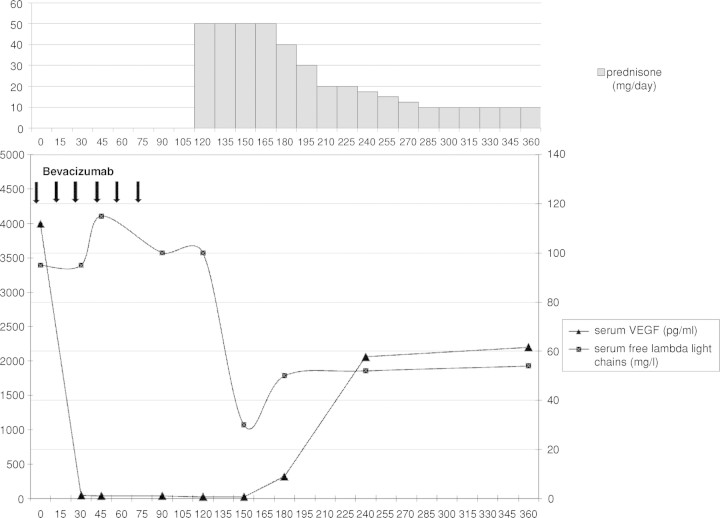
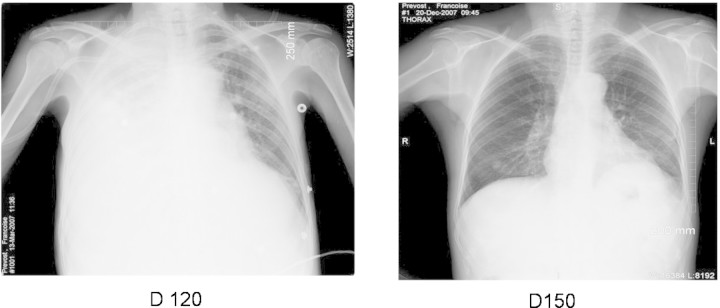
Polyneuropathy, organomegaly, endocrinopathy, monoclonal protein, skin changes (POEMS) syndrome is a systemic condition related to plasma cell dyscrasia. Increased vascular permeability is responsible for some of the hallmarks of this disorder that may include renal microangiopathy. Several lines of evidence suggest that vascular endothelial growth factor (VEGF) is central to the pathogenesis of POEMS syndrome. Thus, specifically targeting VEGF over-expression seems to be a promising treatment. Anti-VEGF therapies are yielding conflicting results. We report on a patient with POEMS syndrome treated with bevacizumab, an anti-VEGF monoclonal antibody. Sequential monitoring of serum VEGF showed sustained normalization of serum VEGF levels, without any beneficial effect on the patient's condition. Indications of this treatment should be chosen carefully.
多神经病、器官肿大、内分泌病、单克隆蛋白、皮肤改变(POEMS)综合征是一种与浆细胞异常增生相关的全身性疾病。血管通透性增加是该疾病某些特征的原因,这些特征可能包括肾微血管病。多项证据表明血管内皮生长因子(VEGF)是POEMS综合征发病机制的核心。因此,特异性靶向VEGF过表达似乎是一种有前景的治疗方法。抗VEGF治疗产生了相互矛盾的结果。我们报告了一名接受抗VEGF单克隆抗体贝伐单抗治疗的POEMS综合征患者。对血清VEGF的连续监测显示血清VEGF水平持续正常化,但对患者病情没有任何有益影响。这种治疗的适应证应谨慎选择。