Schneider Michael J, Evans Roni, Haas Mitchell, Leach Matthew, Hawk Cheryl, Long Cynthia, Cramer Gregory D, Walters Oakland, Vihstadt Corrie, Terhorst Lauren
Department of Physical Therapy, School of Health and Rehabilitation Sciences, Clinical and Translational Science Institute, University of Pittsburgh, Pittsburgh, PA USA.
Center for Spirituality and Healing, Integrative Health and Wellbeing Research Program, University of Minnesota, Minneapolis, MN USA.
Chiropr Man Therap. 2015 May 4;23:16. doi: 10.1186/s12998-015-0060-0. eCollection 2015.
Evidence based practice (EBP) is being increasingly utilized by health care professionals as a means of improving the quality of health care. The introduction of EBP principles into the chiropractic profession is a relatively recent phenomenon. There is currently a lack of information about the EBP literacy level of US chiropractors and the barriers/facilitators to the use of EBP in the chiropractic profession.
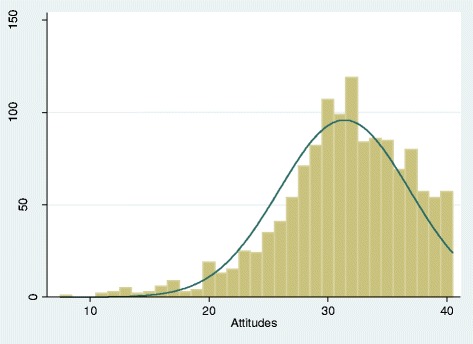
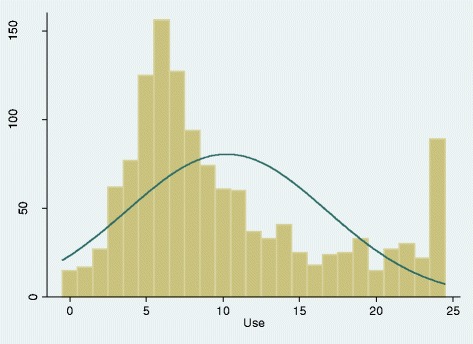
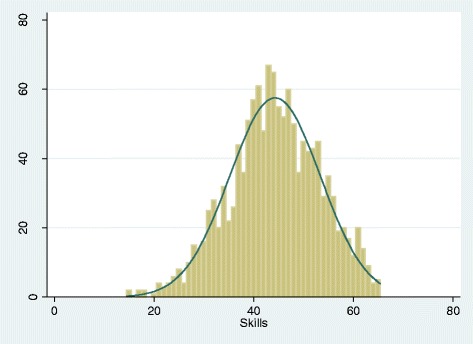
A nationwide EBP survey of US chiropractors was administered online (Nov 2012-Mar 2013) utilizing a validated self-report instrument (EBASE) in which three sub-scores are reported: attitudes, skills and use. Means, medians, and frequency distributions for each of the sub-scores were generated. Descriptive statistics were used to analyze the demographic characteristics of the sample. Means and proportions were calculated for all of the responses to each of the questions in the survey.
A total of 1,314 US chiropractors completed the EBASE survey; the sample appeared to be representative of the US chiropractic profession. Respondents were predominantly white (94.3%), male (75%), 47 (+/- 11.6) years of age, and in practice for more than 10 years (60%). EBASE sub-score means (possible ranges) were: attitudes, 31.4 (8-40); skills, 44.3 (13-65); and use, 10.3 (0-24). Survey participants generally held favorable attitudes toward EBP, but reported less use of EBP. A minority of participants indicated that EBP coursework (17%) and critical thinking (29%) were a major part of their chiropractic education. The most commonly reported barrier to the use of EBP was "lack of time". Almost 90% of the sample indicated that they were interested in improving their EBP skills.
American chiropractors appear similar to chiropractors in other countries, and other health professionals regarding their favorable attitudes towards EBP, while expressing barriers related to EBP skills such as research relevance and lack of time. This suggests that the design of future EBP educational interventions should capitalize on the growing body of EBP implementation research developing in other health disciplines. This will likely include broadening the approach beyond a sole focus on EBP education, and taking a multilevel approach that also targets professional, organizational and health policy domains.
循证实践(EBP)正越来越多地被医疗保健专业人员用作提高医疗质量的一种手段。将循证实践原则引入整脊疗法领域是一个相对较新的现象。目前缺乏关于美国整脊治疗师的循证实践素养水平以及整脊疗法领域使用循证实践的障碍/促进因素的信息。
2012年11月至2013年3月期间,通过在线方式对美国整脊治疗师进行了一项全国性的循证实践调查,使用了经过验证的自我报告工具(EBASE),该工具报告了三个子分数:态度、技能和使用情况。生成了每个子分数的均值、中位数和频率分布。使用描述性统计分析样本的人口统计学特征。计算了调查中每个问题所有回答的均值和比例。
共有1314名美国整脊治疗师完成了EBASE调查;该样本似乎代表了美国整脊疗法领域。受访者主要为白人(94.3%)、男性(75%),年龄47岁(±11.6岁),从业超过10年(60%)。EBASE子分数均值(可能范围)为:态度,31.4(8 - 40);技能,44.3(13 - 65);使用情况,10.3(0 - 24)。调查参与者总体上对循证实践持积极态度,但报告的循证实践使用较少。少数参与者表示循证实践课程作业(17%)和批判性思维(29%)是他们整脊疗法教育的主要部分。使用循证实践最常报告的障碍是“缺乏时间”。近90%的样本表示他们有兴趣提高自己的循证实践技能。
美国整脊治疗师在对循证实践的积极态度方面似乎与其他国家的整脊治疗师以及其他医疗专业人员相似,同时也表达了与循证实践技能相关的障碍,如研究相关性和缺乏时间。这表明未来循证实践教育干预措施的设计应利用其他医疗学科中不断发展的循证实践实施研究成果。这可能包括拓宽方法,不仅仅局限于单纯关注循证实践教育,而是采取多层次方法,同时针对专业、组织和卫生政策领域。