Siddiqui M Ruby, Willis Andrew, Bil Karla, Singh Jatinder, Mukomena Sompwe Eric, Ariti Cono
MSF-UK, London, EC1N 8QX, UK.
MSF-Canada, Toronto, ON, M5S 2T9, Canada.
F1000Res. 2015 Feb 24;4:51. doi: 10.12688/f1000research.6122.2. eCollection 2015.
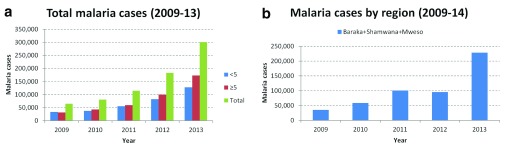
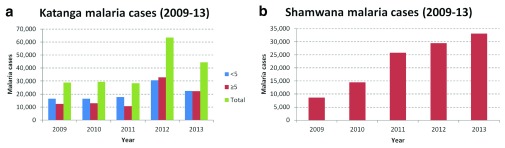
Between 2011 and 2013 the number of recorded malaria cases had more than doubled, and between 2009 and 2013 had increased almost 4-fold in MSF-OCA (Médecins sans Frontières - Operational Centre Amsterdam) programmes in the Democratic Republic of the Congo (DRC). The reasons for this rise are unclear. Incorrect intake of Artemisinin Combination Therapy (ACT) could result in failure to treat the infection and potential recurrence. An adherence study was carried out to assess whether patients were completing the full course of ACT. One hundred and eight malaria patients in Shamwana, Katanga province, DRC were visited in their households the day after ACT was supposed to be completed. They were asked a series of questions about ACT administration and the blister pack was observed (if available). Sixty seven (62.0%) patients were considered probably adherent. This did not take into account the patients that vomited or spat their pills or took them at the incorrect time of day, in which case adherence dropped to 46 (42.6%). The most common reason that patients gave for incomplete/incorrect intake was that they were vomiting or felt unwell (10 patients (24.4%), although the reasons were not recorded for 22 (53.7%) patients). This indicates that there may be poor understanding of the importance of completing the treatment or that the side effects of ACT were significant enough to over-ride the pharmacy instructions. Adherence to ACT was poor in this setting. Health education messages emphasising the need to complete ACT even if patients vomit doses, feel unwell or their health conditions improve should be promoted.
2011年至2013年期间,疟疾记录病例数增加了一倍多,在无国界医生组织阿姆斯特丹行动中心(MSF - OCA)于刚果民主共和国(DRC)开展的项目中,2009年至2013年期间病例数几乎增长了4倍。病例数上升的原因尚不清楚。不正确服用青蒿素联合疗法(ACT)可能导致治疗感染失败及潜在复发。开展了一项依从性研究,以评估患者是否完成ACT的整个疗程。在刚果民主共和国加丹加省沙姆瓦纳,ACT理应完成后的第二天,对108名疟疾患者进行了家访。询问了他们一系列有关ACT服药情况的问题,并观察了药板包装(如果有的话)。67名(62.0%)患者被认为可能依从。这并未将呕吐、吐出药丸或在错误时间服药的患者考虑在内,若将这些情况考虑进去,依从患者数降至46名(42.6%)。患者给出的未完整/不正确服药的最常见原因是呕吐或感觉不适(10名患者(24.4%),不过22名(53.7%)患者未记录原因)。这表明可能对完成治疗的重要性理解不足,或者ACT的副作用严重到足以让患者无视药房的指示。在这种情况下,ACT的依从性较差。应推广健康教育信息,强调即使患者呕吐、感觉不适或健康状况改善,也需完成ACT疗程。