Gibson Heather, Munns Stephanie, Freytag Svend, Barton Kenneth, Veenstra Jesse, Bettahi Ilham, Bissonette Jayne, Wei Wei-Zen
Karmanos Cancer Institute; Wayne State University ; Detroit, MI USA.
Department of Radiation Oncology; Henry Ford Health System ; Detroit, MI USA.
Oncoimmunology. 2015 Feb 3;4(1):e984523. doi: 10.4161/2162402X.2014.984523. eCollection 2015 Jan.
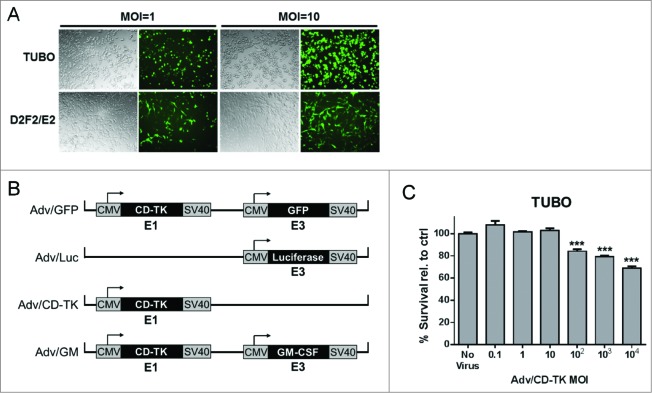
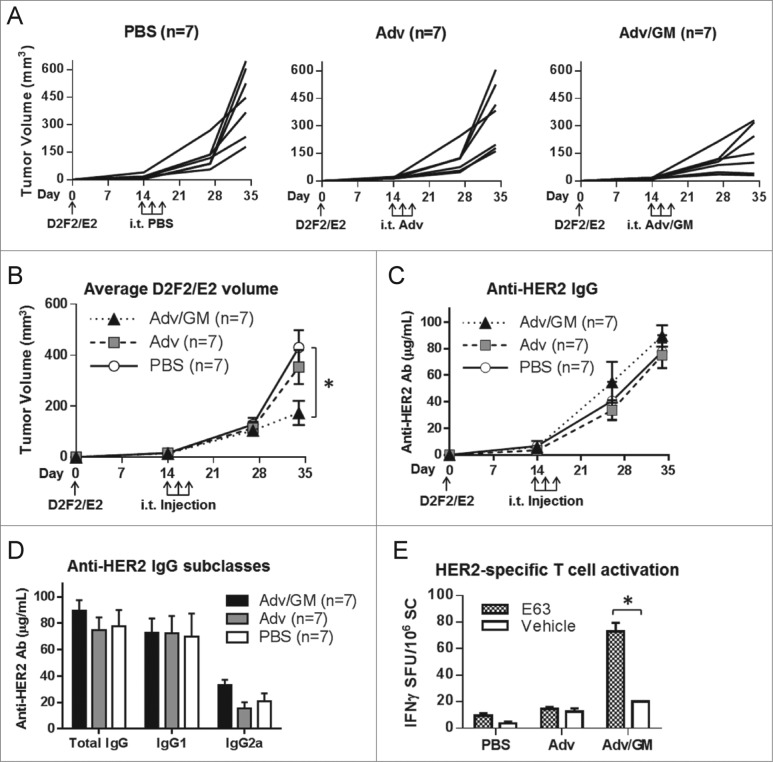
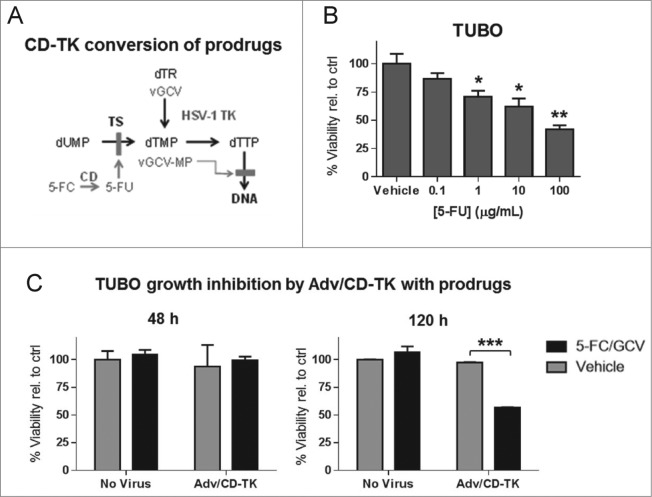
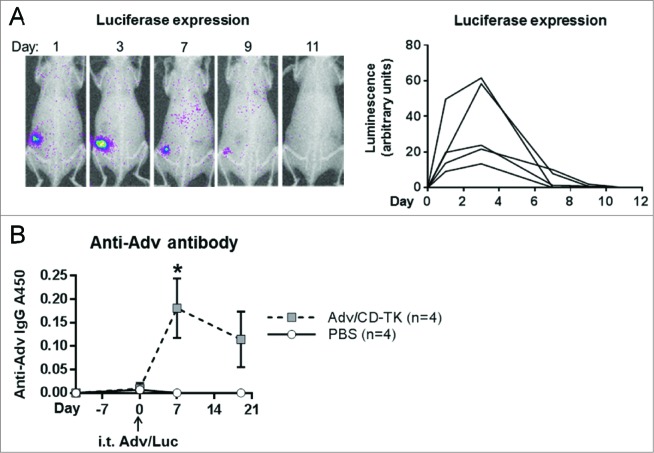
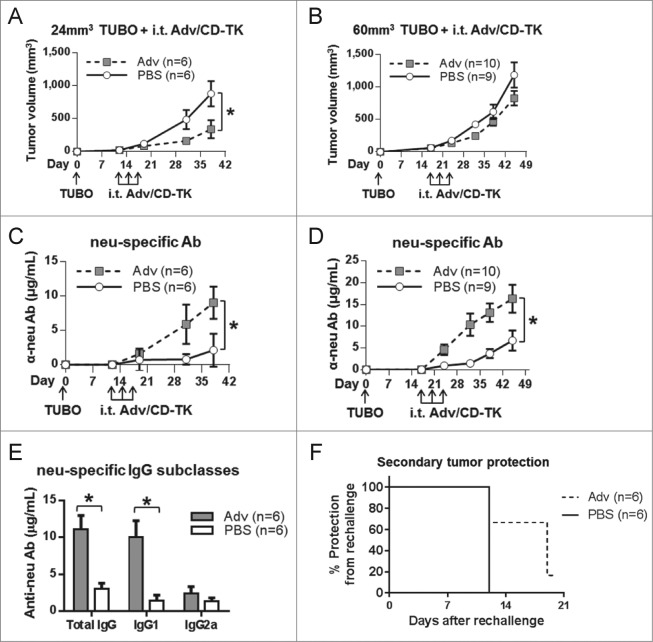
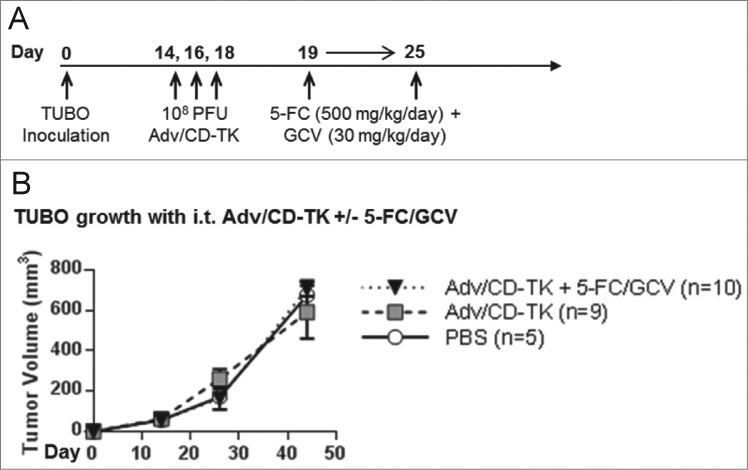
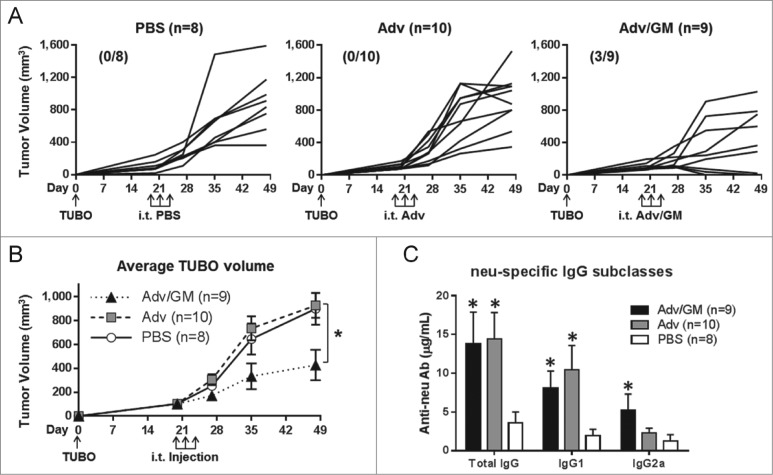
The goal is to elucidate the immune modulating activity of an adenovirus (Adv) vector which showed therapeutic activity in human clinical trials. The oncolytic adenovirus (Adv/CD-TK) expressing two suicide genes was tested in two HER2/neu positive BALB/c mouse mammary tumor systems: rat neu-induced TUBO and human HER2-transfected D2F2/E2. Intra-tumoral (i.t.) Adv/CD-TK injection of TUBO tumor plus systemic prodrug therapy showed limited antitumor activity, not exceeding that by the virus itself. Antibody (Ab) to the virus was induced in Adv-/Luc-treated mice, to coincide with the loss of transgene expression. Low replication activity of adenoviruses in rodent cells may limit viral persistence. Host immunity against Adv or Adv-infected cells further mutes suicide gene activity. Treatment of TUBO tumors with Adv/CD-TK alone, however, induced neu-specific Ab responses. Treatment with Adv/CD-TK/GM (Adv/GM) that also expressed mouse granulocyte macrophage colony stimulating factor (GM-CSF), but without prodrug treatment, delayed tumor growth, enhanced anti-neu Ab production and conferred complete protection against secondary tumor challenge. D2F2/E2 tumor-bearing mice showed decreased tumor growth following i.t. Adv/GM treatment and they generated greater HER2-specific T-cell responses. These data suggest that i.t. injection of Adv itself induces immune reactivity to tumor-associated antigens and the encoded cytokine, GM-CSF, amplifies that immune response, resulting in tumor growth inhibition. Incorporation of suicide gene therapy did not improve the efficacy of Adv therapy in this mouse mammary tumor system. Oncolytic adenoviral therapy may be streamlined and improved by substituting the suicide genes with immune modulating genes to exploit tumor immunity for therapeutic benefit.
目标是阐明一种在人体临床试验中显示出治疗活性的腺病毒(Adv)载体的免疫调节活性。在两种HER2/neu阳性的BALB/c小鼠乳腺肿瘤模型系统中测试了表达两种自杀基因的溶瘤腺病毒(Adv/CD-TK):大鼠neu诱导的TUBO和人HER2转染的D2F2/E2。对TUBO肿瘤进行瘤内(i.t.)注射Adv/CD-TK并联合全身前药治疗显示出有限的抗肿瘤活性,未超过病毒本身的活性。在Adv-/Luc治疗的小鼠中诱导产生了针对该病毒的抗体(Ab),这与转基因表达的丧失相一致。腺病毒在啮齿动物细胞中的低复制活性可能会限制病毒的持久性。宿主对Adv或Adv感染细胞的免疫进一步抑制了自杀基因的活性。然而,单独用Adv/CD-TK治疗TUBO肿瘤可诱导产生neu特异性Ab反应。用还表达小鼠粒细胞巨噬细胞集落刺激因子(GM-CSF)但未进行前药治疗的Adv/CD-TK/GM(Adv/GM)进行治疗,可延缓肿瘤生长、增强抗neu Ab的产生并提供针对二次肿瘤攻击的完全保护。荷D2F2/E2肿瘤的小鼠在瘤内注射Adv/GM治疗后肿瘤生长减缓,并且产生了更强的HER2特异性T细胞反应。这些数据表明,瘤内注射Adv本身可诱导对肿瘤相关抗原的免疫反应,而编码的细胞因子GM-CSF可放大这种免疫反应,从而导致肿瘤生长受到抑制。在该小鼠乳腺肿瘤模型系统中,加入自杀基因治疗并未提高Adv治疗的疗效。通过用免疫调节基因替代自杀基因以利用肿瘤免疫获得治疗益处,溶瘤腺病毒治疗可能会得到简化和改进。