Collier Ann E, Wek Ronald C, Spandau Dan F
Department of Biochemistry and Molecular Biology, Indiana University School of Medicine, Indianapolis, Indiana, USA.
Department of Biochemistry and Molecular Biology, Indiana University School of Medicine, Indianapolis, Indiana, USA.
J Invest Dermatol. 2015 Oct;135(10):2502-2511. doi: 10.1038/jid.2015.177. Epub 2015 May 7.
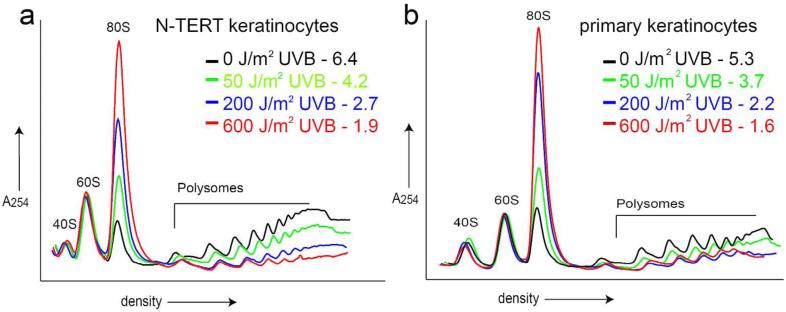
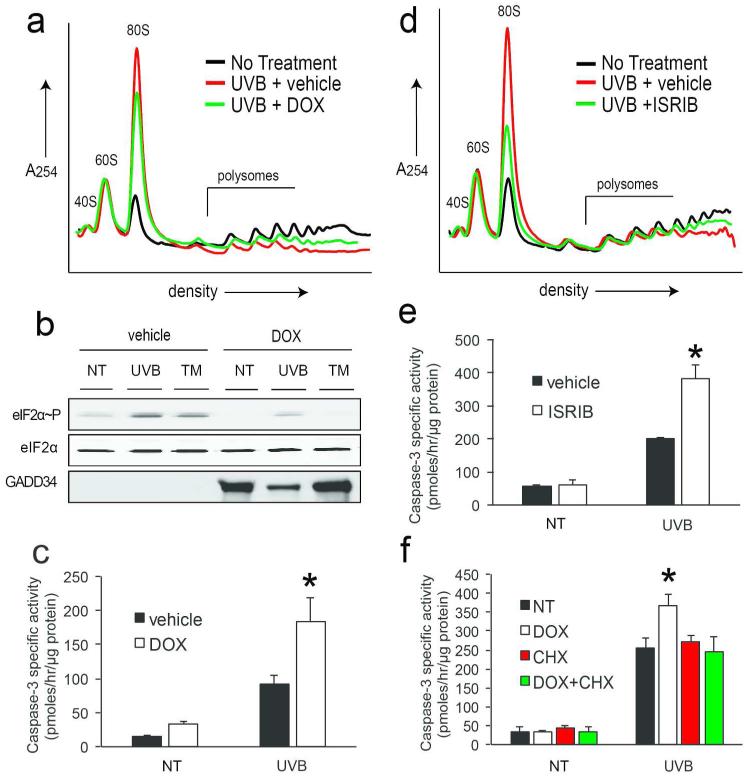
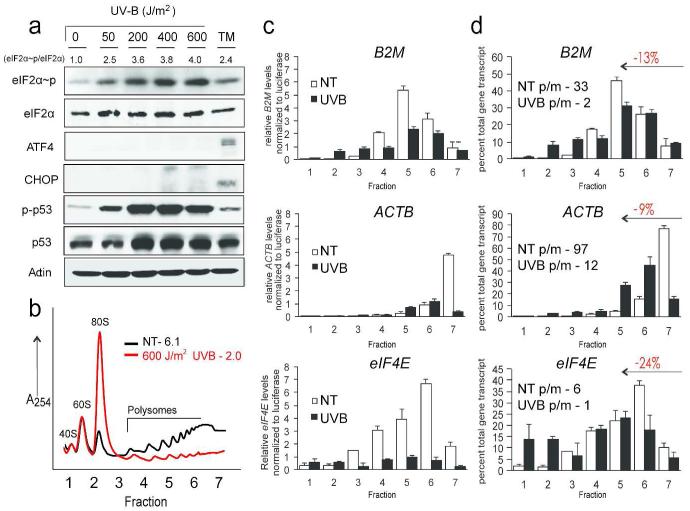
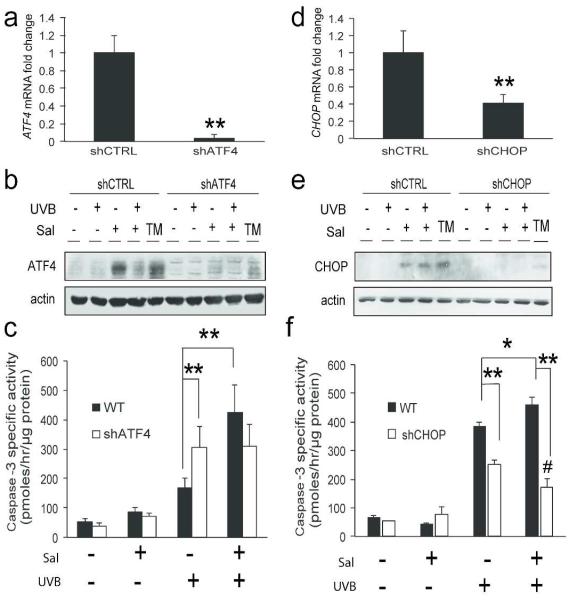
This study delineates the mechanisms by which UVB regulates protein synthesis in human keratinocytes and the importance of translational control in cell survival. Translation initiation is regulated by phosphorylation of eukaryotic initiation factor 2 (eIF2-P) that causes decreased global protein synthesis coincident with enhanced translation of selected stress-related transcripts, such as activating transcription factor 4 (ATF4). ATF4 is a transcriptional activator of the integrated stress response (ISR) that has cytoprotective functions as well as apoptotic signals through the downstream transcriptional regulator C/EBP homologous protein (CHOP; GADD153/DDIT3). We determined that UVB irradiation is a potent inducer of eIF2-P in keratinocytes, leading to decreased levels of translation initiation. However, expression of ATF4 or CHOP was not induced by UVB as compared with traditional ISR activators. The rationale for this discordant response is that ATF4 mRNA is reduced by UVB, and despite its ability to be preferentially translated, there are diminished levels of available transcript. Forced expression of ATF4 and CHOP protein before UVB irradiation significantly enhanced apoptosis, suggesting that this portion of the ISR is deleterious in keratinocytes following UVB. Inhibition of eIF2-P and translational control reduced viability following UVB that was alleviated by cycloheximide (CHX), indicating that translation repression through eIF2-P is central to keratinocyte survival.
本研究阐述了紫外线B(UVB)调节人类角质形成细胞中蛋白质合成的机制以及翻译控制在细胞存活中的重要性。翻译起始由真核起始因子2(eIF2-P)的磷酸化调节,这会导致整体蛋白质合成减少,同时与选定的应激相关转录本(如激活转录因子4,ATF4)的翻译增强相一致。ATF4是整合应激反应(ISR)的转录激活因子,通过下游转录调节因子C/EBP同源蛋白(CHOP;GADD153/DDIT3)发挥细胞保护功能以及凋亡信号作用。我们确定UVB照射是角质形成细胞中eIF2-P的有效诱导剂,导致翻译起始水平降低。然而,与传统的ISR激活剂相比,UVB并未诱导ATF4或CHOP的表达。这种不一致反应的原理是UVB会降低ATF4 mRNA水平,尽管它有优先翻译的能力,但可用转录本水平却降低了。在UVB照射前强制表达ATF4和CHOP蛋白会显著增强细胞凋亡,这表明UVB照射后ISR的这一部分对角质形成细胞是有害的。抑制eIF2-P和翻译控制会降低UVB照射后的细胞活力,而环己酰亚胺(CHX)可缓解这种情况,这表明通过eIF2-P进行的翻译抑制是角质形成细胞存活的关键。