Doloff Joshua C, Waxman David J
Department of Biology, Division of Cell and Molecular Biology, Boston University, Boston, USA.
BMC Cancer. 2015 May 8;15:375. doi: 10.1186/s12885-015-1358-y.
Cyclophosphamide treatment on a six-day repeating metronomic schedule induces a dramatic, innate immune cell-dependent regression of implanted gliomas. However, little is known about the underlying mechanisms whereby metronomic cyclophosphamide induces innate immune cell mobilization and recruitment, or about the role of DNA damage and cell stress response pathways in eliciting the immune responses linked to tumor regression.
Untreated and metronomic cyclophosphamide-treated human U251 glioblastoma xenografts were analyzed on human microarrays at two treatment time points to identify responsive tumor cell-specific factors and their upstream regulators. Mouse microarray analysis across two glioma models (human U251, rat 9L) was used to identify host factors and gene networks that contribute to the observed immune and tumor regression responses.
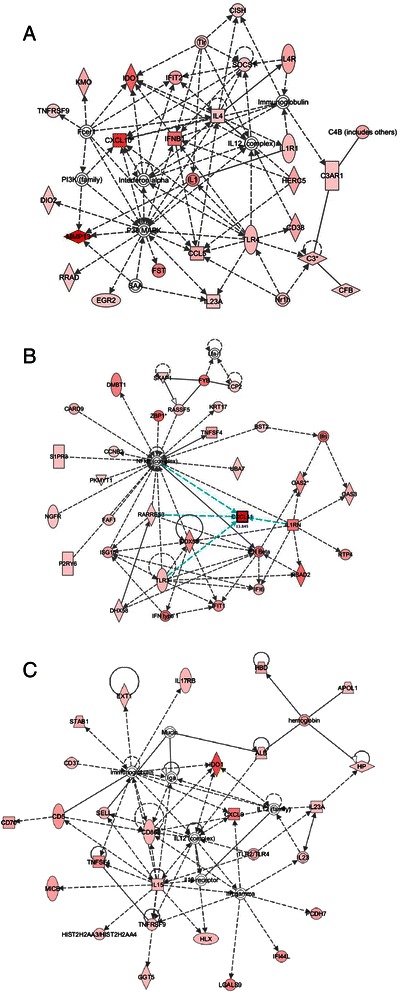
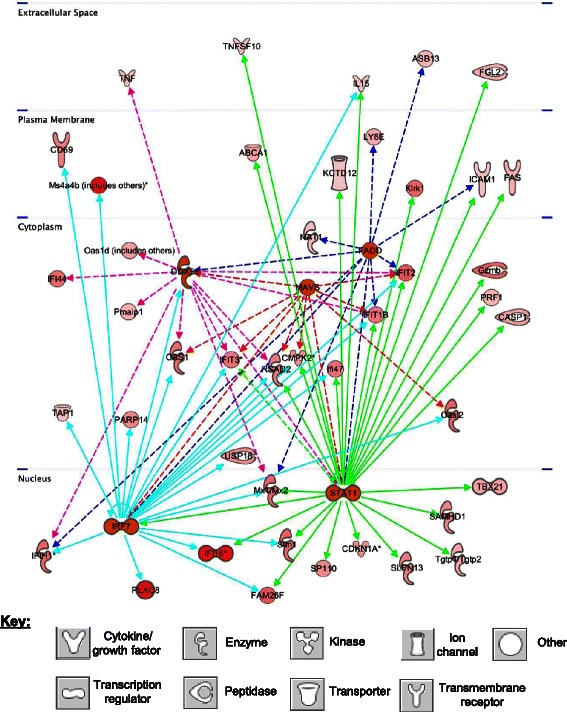
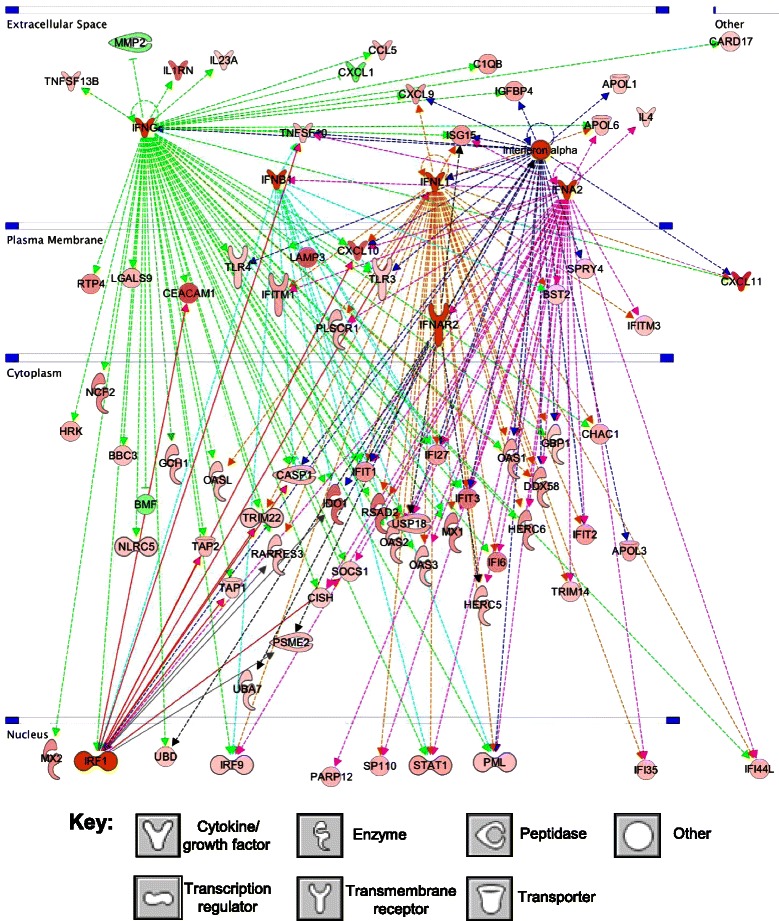
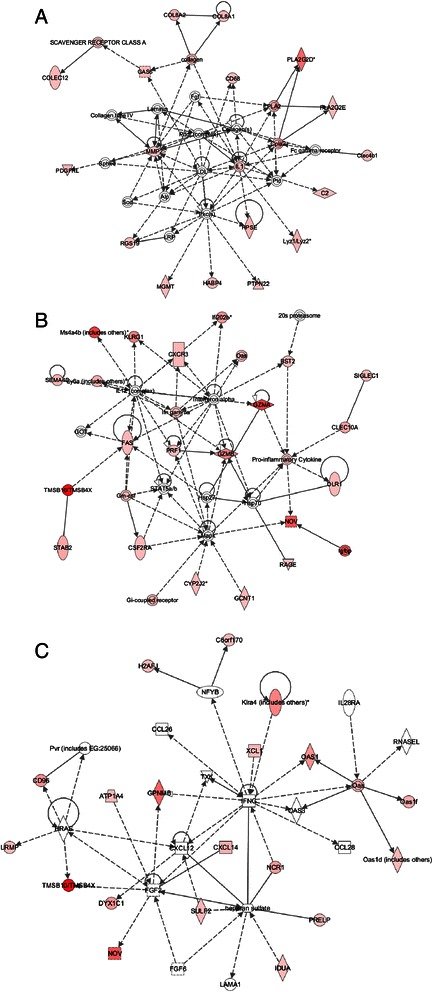
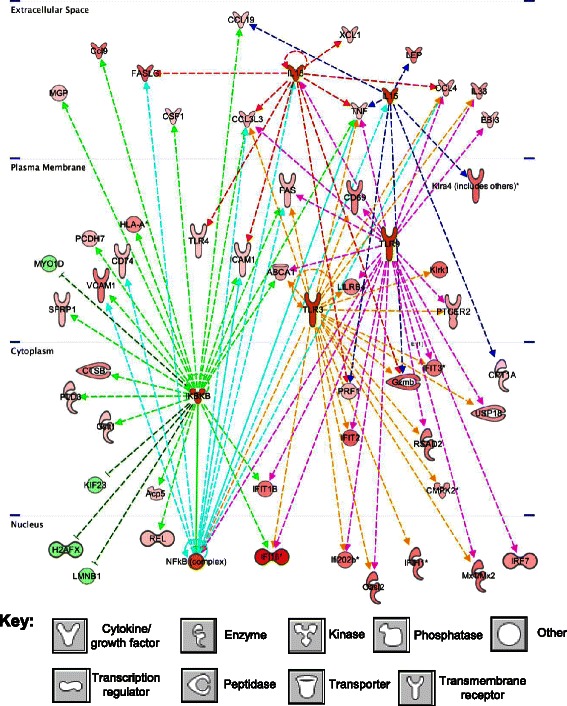
Metronomic cyclophosphamide increased expression of tumor cell-derived DNA damage, cell stress, and cell death genes, which may facilitate innate immune activation. Increased expression of many host (mouse) immune networks was also seen in both tumor models, including complement components, toll-like receptors, interferons, and cytolysis pathways. Key upstream regulators activated by metronomic cyclophosphamide include members of the interferon, toll-like receptor, inflammatory response, and PPAR signaling pathways, whose activation may contribute to anti-tumor immunity. Many upstream regulators inhibited by metronomic cyclophosphamide, including hypoxia-inducible factors and MAP kinases, have glioma-promoting activity; their inhibition may contribute to the therapeutic effectiveness of the six-day repeating metronomic cyclophosphamide schedule.
Large numbers of responsive cytokines, chemokines and immune regulatory genes linked to innate immune cell recruitment and tumor regression were identified, as were several immunosuppressive factors that may contribute to the observed escape of some tumors from metronomic CPA-induced, immune-based regression. These factors may include useful biomarkers that facilitate discovery of clinically effective immunogenic metronomic drugs and treatment schedules, and the selection of patients most likely to be responsive to immunogenic drug scheduling.
按六天重复节律给药的环磷酰胺治疗可诱导植入性胶质瘤发生显著的、依赖先天性免疫细胞的消退。然而,关于节律性环磷酰胺诱导先天性免疫细胞动员和募集的潜在机制,以及DNA损伤和细胞应激反应途径在引发与肿瘤消退相关的免疫反应中的作用,人们知之甚少。
在两个治疗时间点,对未经治疗和接受节律性环磷酰胺治疗的人U251胶质母细胞瘤异种移植瘤进行人类微阵列分析,以确定反应性肿瘤细胞特异性因子及其上游调节因子。通过对两种胶质瘤模型(人U251、大鼠9L)进行小鼠微阵列分析,以确定促成所观察到的免疫和肿瘤消退反应的宿主因子和基因网络。
节律性环磷酰胺增加了肿瘤细胞衍生的DNA损伤、细胞应激和细胞死亡基因的表达,这可能促进先天性免疫激活。在两种肿瘤模型中还观察到许多宿主(小鼠)免疫网络的表达增加,包括补体成分、Toll样受体、干扰素和细胞溶解途径。由节律性环磷酰胺激活的关键上游调节因子包括干扰素、Toll样受体、炎症反应和PPAR信号通路的成员,它们的激活可能有助于抗肿瘤免疫。许多被节律性环磷酰胺抑制的上游调节因子,包括缺氧诱导因子和丝裂原活化蛋白激酶,具有促进胶质瘤的活性;它们的抑制可能有助于六天重复节律性环磷酰胺给药方案的治疗效果。
确定了大量与先天性免疫细胞募集和肿瘤消退相关的反应性细胞因子、趋化因子和免疫调节基因,以及一些免疫抑制因子,这些因子可能导致观察到的一些肿瘤从节律性环磷酰胺诱导的基于免疫的消退中逃逸。这些因子可能包括有用 的生物标志物,有助于发现临床有效的免疫原性节律性药物和治疗方案,以及选择最可能对免疫原性药物方案有反应的患者。