Department of Biology and Bioinformatics Program, Boston University, Boston, MA, 02215, USA.
Department of Biology and Bioinformatics Program, Boston University, Boston, MA, 02215, USA.
Cancer Lett. 2020 Feb 1;470:170-180. doi: 10.1016/j.canlet.2019.11.025. Epub 2019 Nov 22.
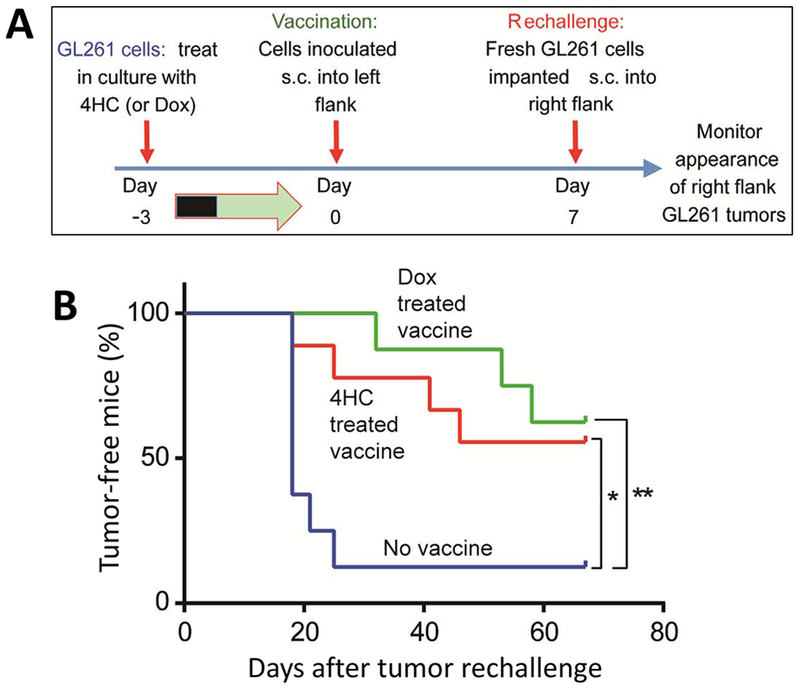
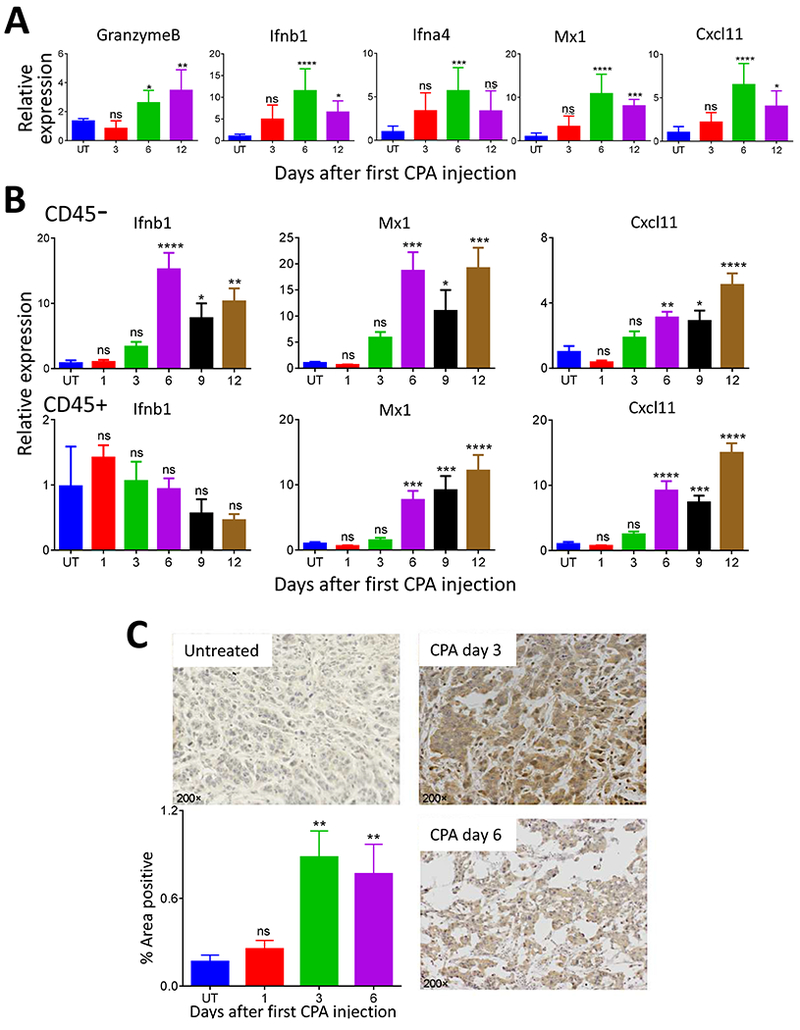
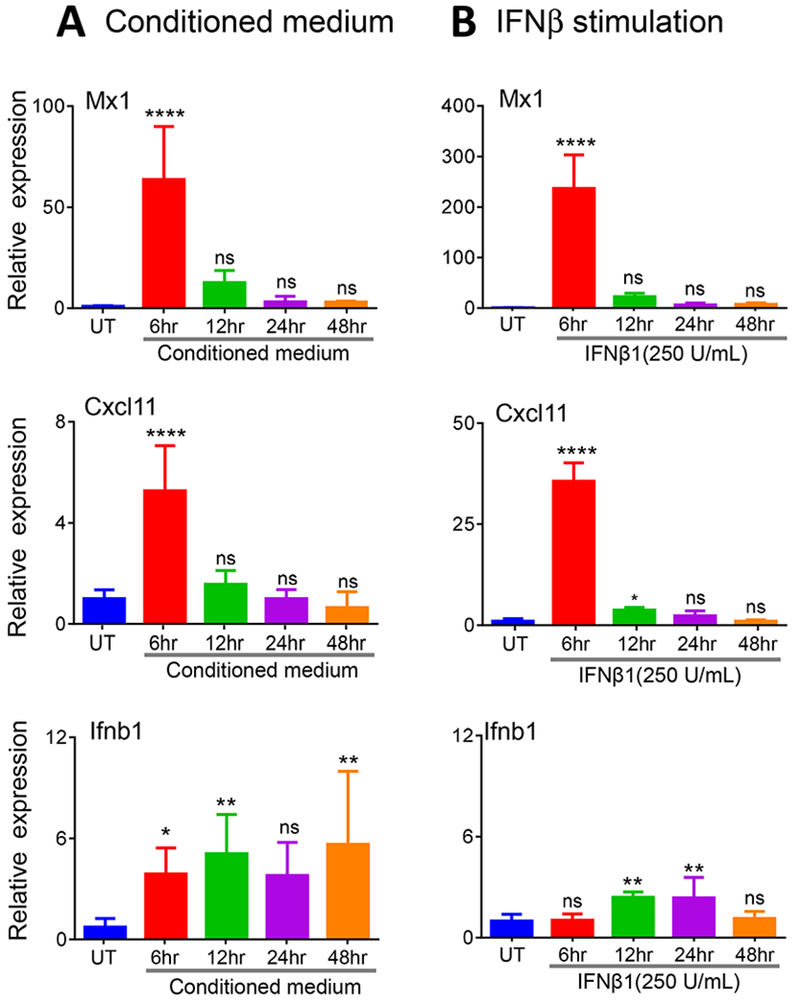
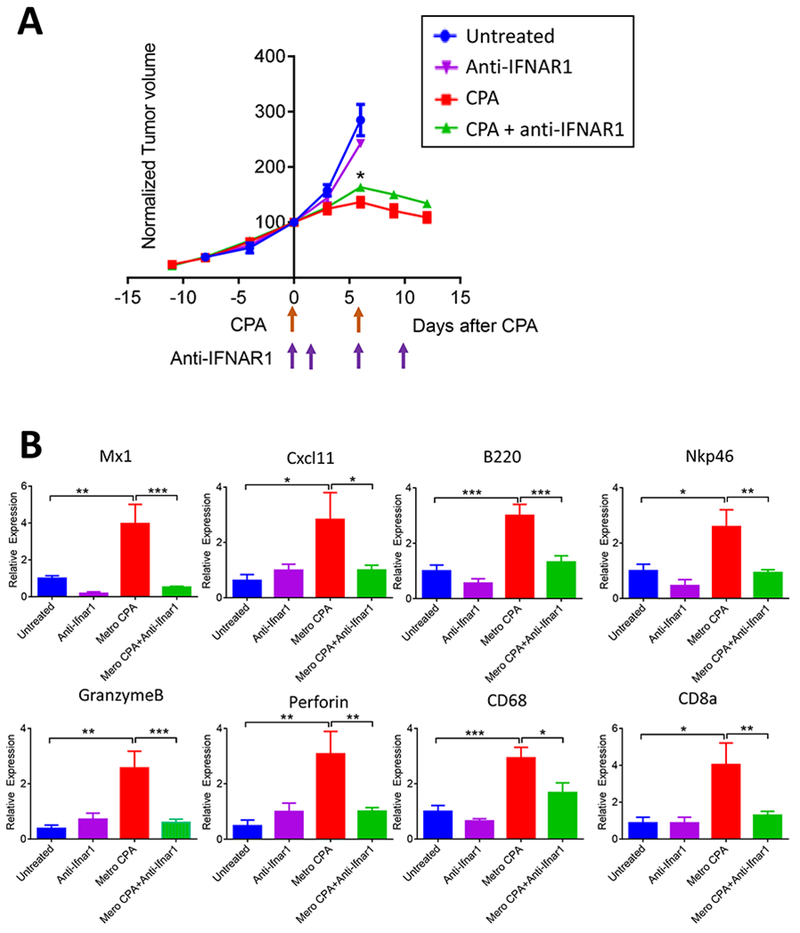
Cyclophosphamide treatment on a medium-dose, intermittent chemotherapy (MEDIC) schedule activates both innate and adaptive immunity leading to major regression of implanted gliomas. Here, we show that this MEDIC treatment regimen induces tumor cell autonomous type-I interferon signaling, followed by release of soluble factors that activate interferon-stimulated genes in both tumor cells and tumor-infiltrating immune cells. In cultured GL261 and CT-2A glioma cells, activated cyclophosphamide stimulated production and release of type-I interferons, leading to robust activation of downstream gene targets. Antibody against the type-I interferon receptor IFNAR1 blocked the cyclophosphamide-stimulated induction of these genes in both cultured glioma cells and implanted gliomas. Furthermore, IFNAR1 antibody strongly inhibited the MEDIC cyclophosphamide-stimulated increases in tumor cell infiltration of macrophages, dendritic cells, B-cells, as well as natural killer cells and cytotoxic T-cells and their cytotoxic effectors. Finally, cyclophosphamide-treated dying glioma cells producing type-I interferons were an effective vaccine against drug-naïve glioma cells implanted in vivo. Thus, cyclophosphamide induces local, tumor cell-centric increases in type-I interferon signaling, which activates immunogenic cell death and is essential for the striking antitumor immune responses that MEDIC cyclophosphamide treatment elicits in these glioma models.
环磷酰胺中剂量、间歇性化疗(MEDIC)方案治疗可激活固有免疫和适应性免疫,导致植入性神经胶质瘤的显著消退。在这里,我们表明,这种 MEDIC 治疗方案诱导肿瘤细胞自主的 I 型干扰素信号,随后释放可溶性因子,激活肿瘤细胞和肿瘤浸润免疫细胞中的干扰素刺激基因。在培养的 GL261 和 CT-2A 神经胶质瘤细胞中,激活的环磷酰胺刺激 I 型干扰素的产生和释放,导致下游基因靶标的强烈激活。针对 I 型干扰素受体 IFNAR1 的抗体阻断了环磷酰胺刺激在培养的神经胶质瘤细胞和植入的神经胶质瘤中这些基因的诱导。此外,IFNAR1 抗体强烈抑制了 MEDIC 环磷酰胺刺激的巨噬细胞、树突状细胞、B 细胞以及自然杀伤细胞和细胞毒性 T 细胞及其细胞毒性效应物对肿瘤细胞的浸润增加。最后,产生 I 型干扰素的环磷酰胺处理死亡的神经胶质瘤细胞是针对体内植入的药物-naive 神经胶质瘤细胞的有效疫苗。因此,环磷酰胺诱导局部、以肿瘤细胞为中心的 I 型干扰素信号增加,激活免疫原性细胞死亡,是 MEDIC 环磷酰胺治疗在这些神经胶质瘤模型中引发显著抗肿瘤免疫反应所必需的。