Son Ga-Yeon, Shin Dong Min, Hong Jeong Hee
Department of Oral Biology, BK21 PLUS Project, Yonsei University College of Dentistry, Seoul 120-752, Korea.
Department of Physiology, Gachon Graduate School of Medicine, Gachon University, Incheon 406-799, Korea.
Korean J Physiol Pharmacol. 2015 May;19(3):291-7. doi: 10.4196/kjpp.2015.19.3.291. Epub 2015 Apr 30.
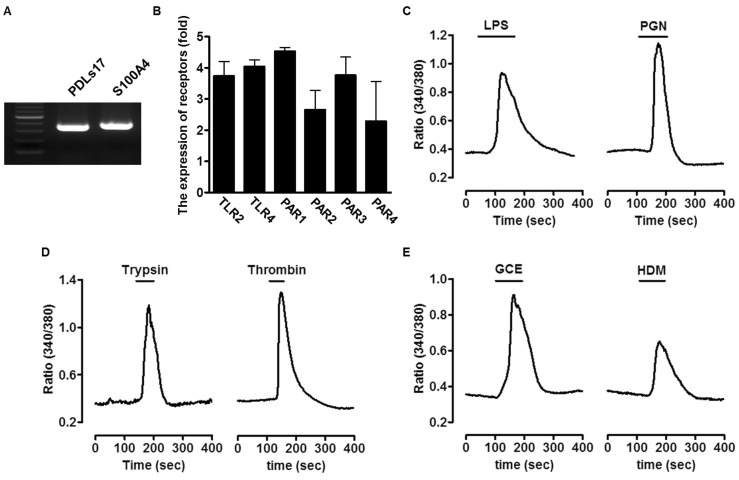
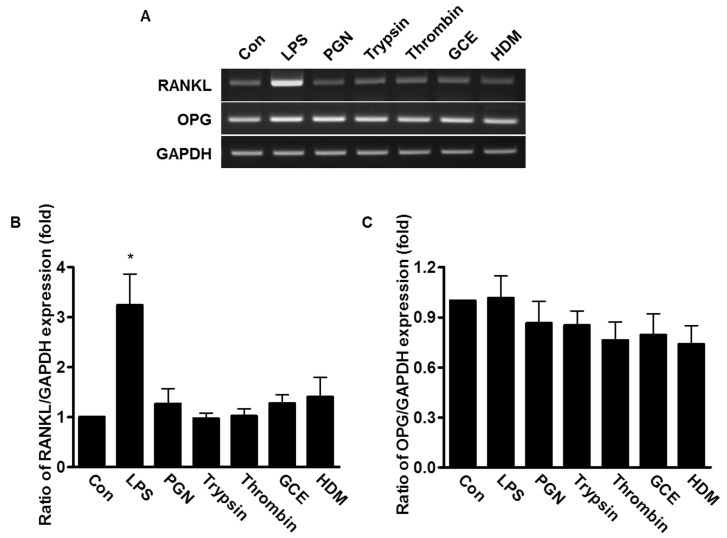
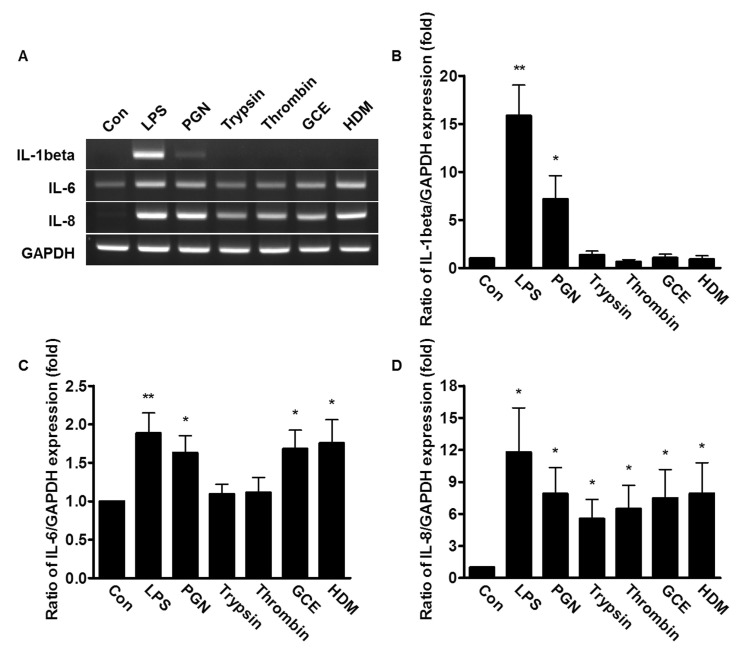
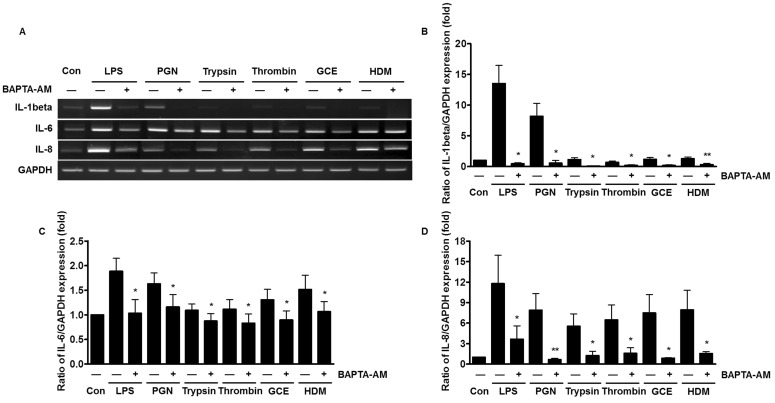
An oral environment is constantly exposed to environmental factors and microorganisms. The periodontal ligament (PDL) fibroblasts within this environment are subject to bacterial infection and allergic reaction. However, how these condition affect PDL fibroblasts has yet to be elucidated. PDL fibroblasts were isolated from healthy donors. We examined using reverse transcription-polymerase chain reaction and measuring the intracellular Ca(2+) concentration ([Ca(2+)]i). This study investigated the receptors activated by exogenous bacterial pathogens (Lipopolysaccharide and peptidoglycan) and allergens (German cockroach extract and house dust mite) as well as these pathogenic mediators-induced effects on the intracellular Ca(2+) signaling in human PDL fibroblasts. Moreover, we evaluated the expression of pro-inflammatory cytokines (interleukin (IL)-1β, IL-6, and IL-8) and bone remodeling mediators (receptor activator of NF-κB ligand and osteoprotegerin) and intracellular Ca(2+)-involved effect. Bacterial pathogens and allergic mediators induced increased expression of pro-inflammatory cytokines, and these results are dependent on intracellular Ca(2+). However, bacterial pathogens and allergic mediators did not lead to increased expression of bone remodeling mediators, except lipopolysaccharide-induced effect on receptor activator of NF-κB ligand expression. These experiments provide evidence that a pathogens and allergens-induced increase in [Ca(2+)]i affects the inflammatory response in human PDL fibroblasts.
口腔环境持续暴露于环境因素和微生物中。在这种环境中的牙周膜(PDL)成纤维细胞会受到细菌感染和过敏反应的影响。然而,这些情况如何影响PDL成纤维细胞尚待阐明。从健康供体中分离出PDL成纤维细胞。我们使用逆转录-聚合酶链反应并测量细胞内Ca(2+)浓度([Ca(2+)]i)进行检测。本研究调查了外源性细菌病原体(脂多糖和肽聚糖)和过敏原(德国小蠊提取物和屋尘螨)激活的受体,以及这些致病介质对人PDL成纤维细胞内Ca(2+)信号传导的诱导作用。此外,我们评估了促炎细胞因子(白细胞介素(IL)-1β、IL-6和IL-8)和骨重塑介质(核因子κB受体活化因子配体和骨保护素)的表达以及细胞内Ca(2+)相关效应。细菌病原体和过敏介质诱导促炎细胞因子表达增加,且这些结果依赖于细胞内Ca(2+)。然而,除脂多糖对核因子κB受体活化因子配体表达的诱导作用外,细菌病原体和过敏介质并未导致骨重塑介质表达增加。这些实验提供了证据,表明病原体和过敏原诱导的[Ca(2+)]i增加会影响人PDL成纤维细胞的炎症反应。