University Medical Centre of Regensburg, Franz-Josef-Strauß-Allee 11, D-93053, Regensburg, Germany.
Department of Orthodontics, University Medical Centre of Regensburg, Franz-Josef-Strauß-Allee 11, D-93053, Regensburg, Germany.
Int J Oral Sci. 2019 Nov 5;11(4):33. doi: 10.1038/s41368-019-0066-x.
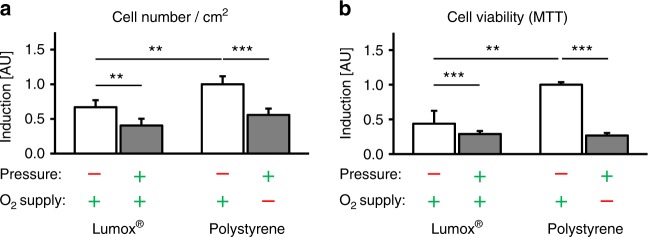
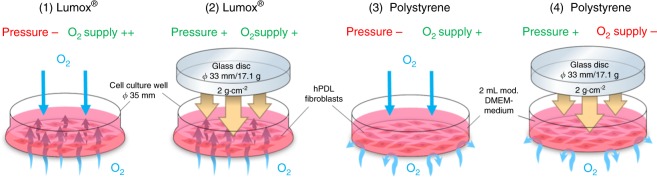
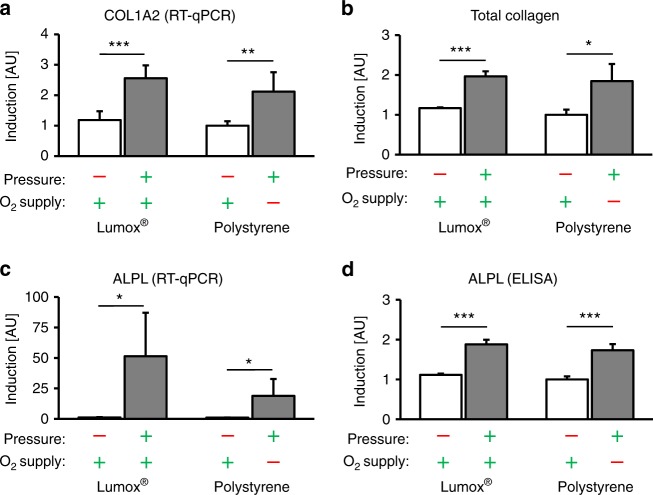
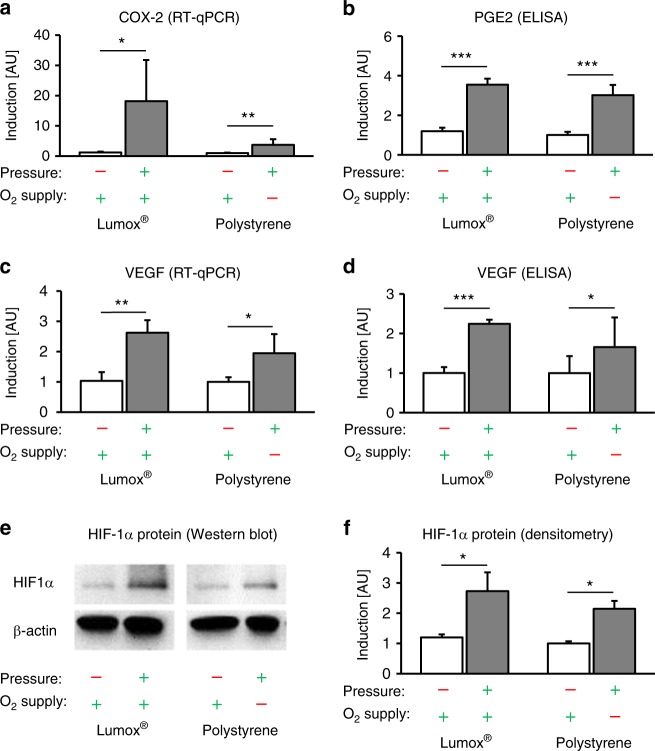
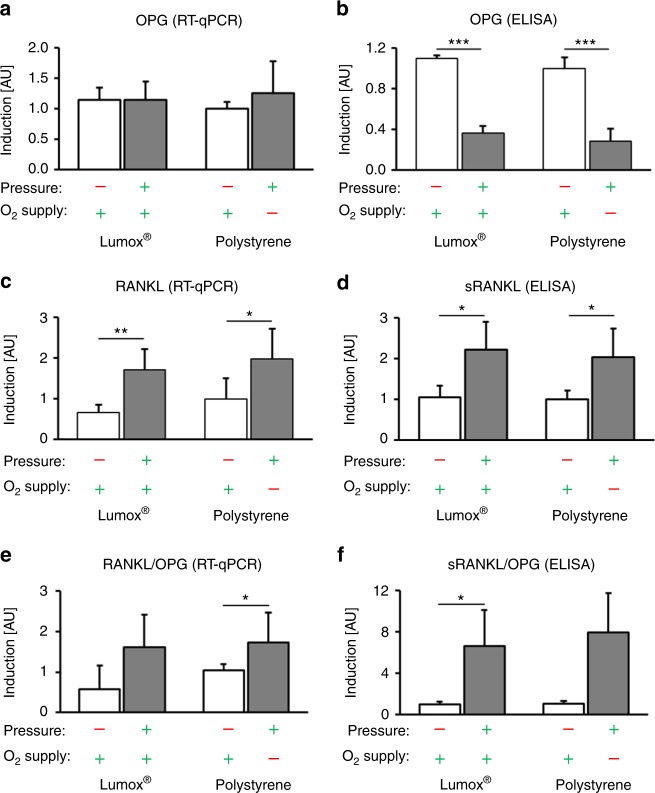
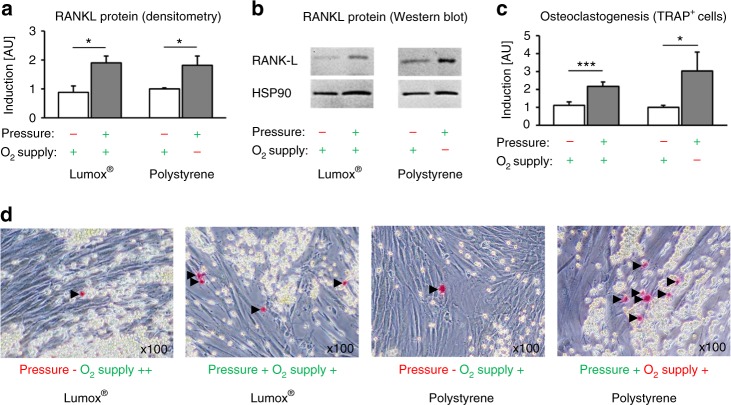
During orthodontic tooth movement (OTM) mechanical forces trigger pseudo-inflammatory, osteoclastogenic and remodelling processes in the periodontal ligament (PDL) that are mediated by PDL fibroblasts via the expression of various signalling molecules. Thus far, it is unknown whether these processes are mainly induced by mechanical cellular deformation (mechanotransduction) or by concomitant hypoxic conditions via the compression of periodontal blood vessels. Human primary PDL fibroblasts were randomly seeded in conventional six-well cell culture plates with O-impermeable polystyrene membranes and in special plates with gas-permeable membranes (Lumox®, Sarstedt), enabling the experimental separation of mechanotransducive and hypoxic effects that occur concomitantly during OTM. To simulate physiological orthodontic compressive forces, PDL fibroblasts were stimulated mechanically at 2 g·cm for 48 h after 24 h of pre-incubation. We quantified the cell viability by MTT assay, gene expression by quantitative real-time polymerase chain reaction (RT-qPCR) and protein expression by western blot/enzyme-linked immunosorbent assays (ELISA). In addition, PDL-fibroblast-mediated osteoclastogenesis (TRAP cells) was measured in a 72-h coculture with RAW264.7 cells. The expression of HIF-1α, COX-2, PGE2, VEGF, COL1A2, collagen and ALPL, and the RANKL/OPG ratios at the mRNA/protein levels during PDL-fibroblast-mediated osteoclastogenesis were significantly elevated by mechanical loading irrespective of the oxygen supply, whereas hypoxic conditions had no significant additional effects. The cellular-molecular mediation of OTM by PDL fibroblasts via the expression of various signalling molecules is expected to be predominantly controlled by the application of force (mechanotransduction), whereas hypoxic effects seem to play only a minor role. In the context of OTM, the hypoxic marker HIF-1α does not appear to be primarily stabilized by a reduced O supply but is rather stabilised mechanically.
在正畸牙齿移动(OTM)过程中,机械力在牙周膜(PDL)中引发假性炎症、破骨细胞生成和重塑过程,这些过程由 PDL 成纤维细胞通过表达各种信号分子介导。到目前为止,尚不清楚这些过程主要是由机械细胞变形(机械转导)还是通过牙周血管受压引起的伴随缺氧条件引起的。人原发性 PDL 成纤维细胞随机接种于具有 O 不可渗透的聚苯乙烯膜的常规六孔细胞培养板和具有透气膜的特殊板(Lumox®,Sarstedt)中,能够实验分离 OTM 过程中同时发生的机械转导和缺氧效应。为了模拟生理正畸压缩力,在预孵育 24 小时后,用 2g·cm 的机械力刺激 PDL 成纤维细胞 48 小时。通过 MTT 测定法测定细胞活力,通过定量实时聚合酶链反应(RT-qPCR)测定基因表达,通过 Western blot/酶联免疫吸附测定(ELISA)测定蛋白质表达。此外,在与 RAW264.7 细胞共培养 72 小时的情况下,测量了 PDL 成纤维细胞介导的破骨细胞生成(TRAP 细胞)。在 PDL 成纤维细胞介导的破骨细胞生成过程中,机械加载无论氧供应如何,均显著上调 HIF-1α、COX-2、PGE2、VEGF、COL1A2、胶原蛋白和 ALPL 的表达以及 RANKL/OPG 比值的 mRNA/蛋白水平,而缺氧条件没有显著的附加作用。PDL 成纤维细胞通过表达各种信号分子介导 OTM 的细胞分子调节预计主要由力的应用(机械转导)控制,而缺氧作用似乎只起次要作用。在 OTM 背景下,缺氧标志物 HIF-1α似乎不是主要通过减少 O 供应来稳定,而是通过机械作用来稳定。