Huang Hang-Ning, Chan Yi-Lin, Wu Chang-Jer, Chen Jyh-Yih
Marine Research Station, Institute of Cellular and Organismic Biology, Academia Sinica, 23-10 Dahuen Road, Jiaushi, Ilan 262, Taiwan.
Department of Life Science, Chinese Culture University, Taipei, Taiwan.
Mar Drugs. 2015 May 6;13(5):2813-33. doi: 10.3390/md13052813.
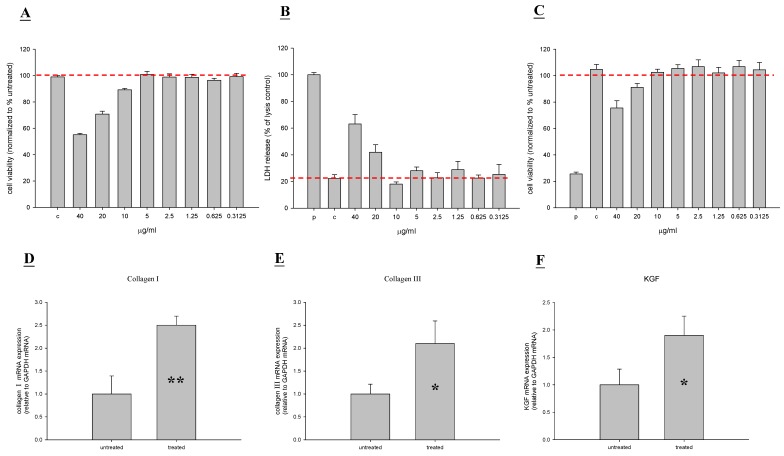
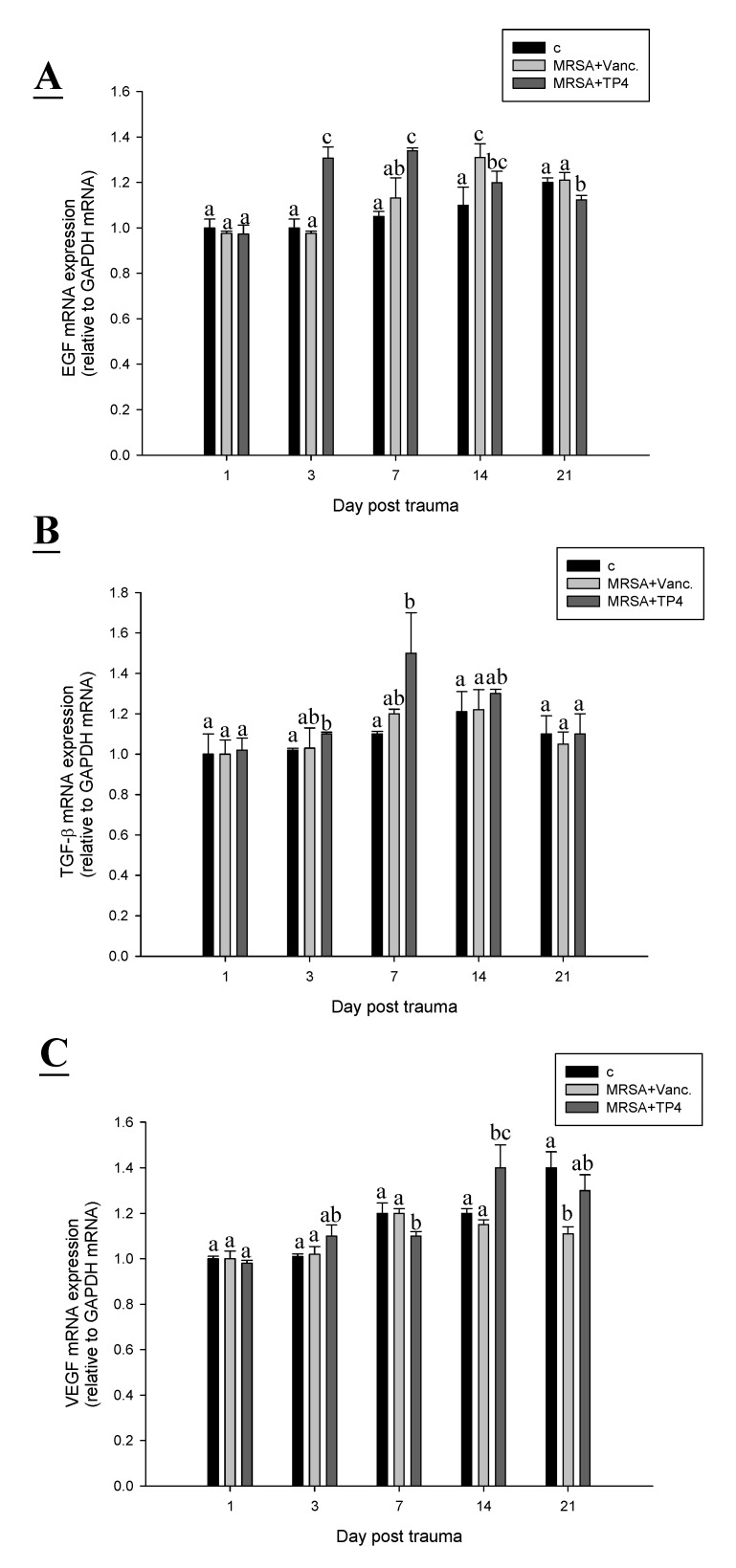
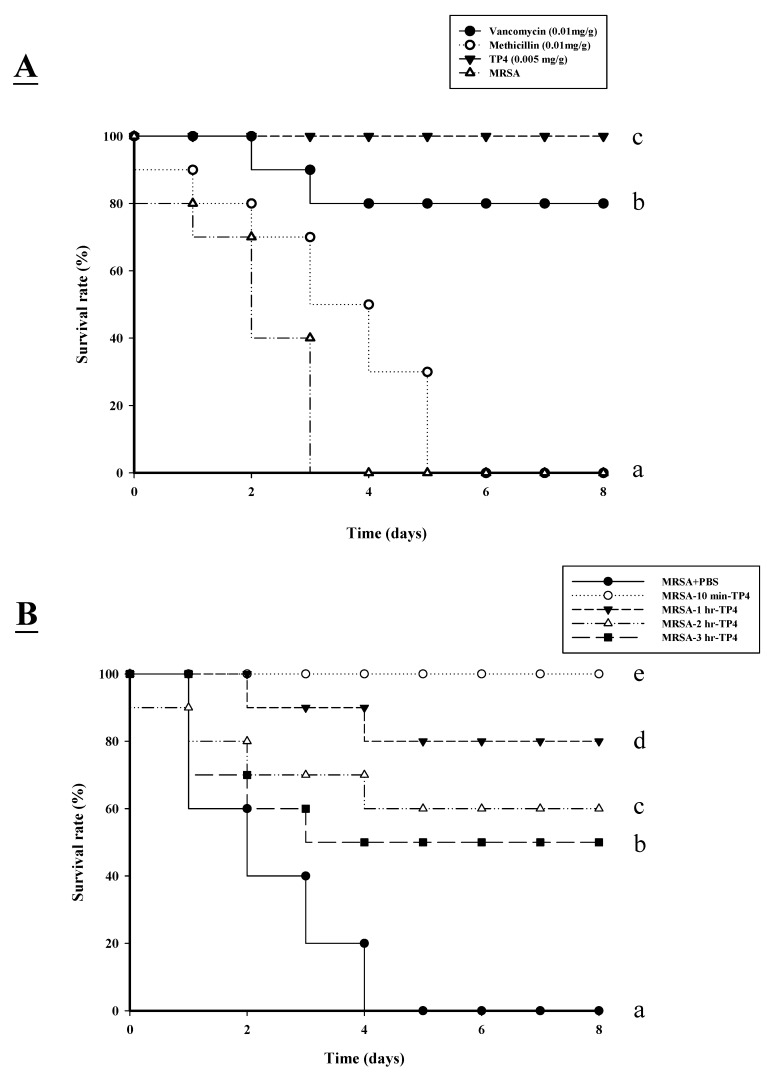
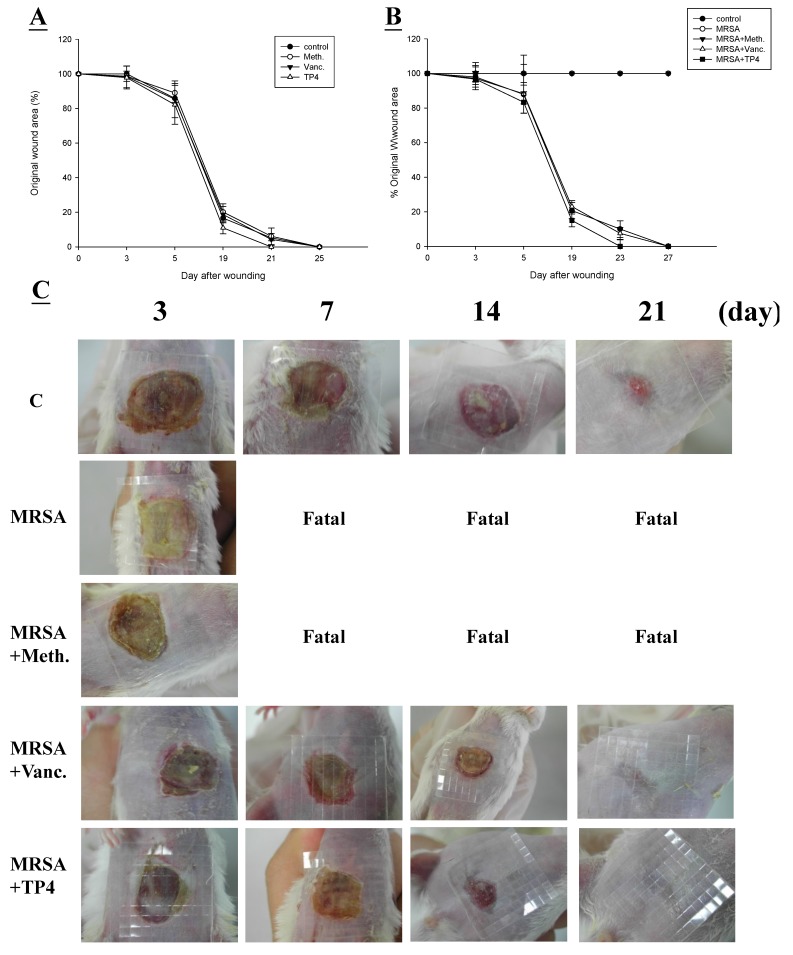
Antimicrobial peptides (AMPs) are endogenous antibiotics that directly affect microorganisms, and also have a variety of receptor-mediated functions. One such AMP, Tilapia piscidin 4 (TP4), was isolated from Nile tilapia (Oreochromis niloticus); TP4 has antibacterial effects and regulates the innate immune system. The aim of the present study was to characterize the role of TP4 in the regulation of wound closure in mice and proliferation of a keratinocyte cell line (HaCaT) and fibroblast cell line (Hs-68). In vitro, TP4 stimulated cell proliferation and activated collagen I, collagen III, and keratinocyte growth factor (KGF) gene expression in Hs-68 cells, which induces keratin production by HaCaT cells. This effect was detectable at TP4 concentrations of 6.25 µg/mL in both cell lines. In vivo, TP4 was found to be highly effective at combating peritonitis and wound infection caused by MRSA in mouse models, without inducing adverse behavioral effects or liver or kidney toxicity. Taken together, our results indicate that TP4 enhances the survival rate of mice infected with the bacterial pathogen MRSA through both antimicrobial and wound closure activities mediated by epidermal growth factor (EGF), transforming growth factor (TGF), and vascular endothelial growth factor (VEGF). The peptide is likely involved in antibacterial processes and regulation of tissue homeostasis in infected wounds in mice. Overall, these results suggest that TP4 may be suitable for development as a novel topical agent for wound dressing.
抗菌肽(AMPs)是直接作用于微生物的内源性抗生素,同时还具有多种受体介导的功能。其中一种抗菌肽,罗非鱼杀菌肽4(TP4),是从尼罗罗非鱼(尼罗罗非鱼)中分离出来的;TP4具有抗菌作用并调节先天免疫系统。本研究的目的是确定TP4在调节小鼠伤口愈合以及角质形成细胞系(HaCaT)和成纤维细胞系(Hs-68)增殖中的作用。在体外,TP4刺激Hs-68细胞的细胞增殖并激活I型胶原、III型胶原和角质形成细胞生长因子(KGF)基因表达,从而诱导HaCaT细胞产生角蛋白。在两种细胞系中,TP4浓度为6.25 µg/mL时即可检测到这种作用。在体内,发现在小鼠模型中TP4在对抗由耐甲氧西林金黄色葡萄球菌(MRSA)引起的腹膜炎和伤口感染方面非常有效,且不会引起不良行为影响或肝或肾毒性。综上所述,我们的结果表明,TP4通过表皮生长因子(EGF)、转化生长因子(TGF)和血管内皮生长因子(VEGF)介导的抗菌和伤口愈合活性提高感染细菌病原体MRSA的小鼠的存活率。该肽可能参与小鼠感染伤口的抗菌过程和组织稳态调节。总体而言,这些结果表明TP4可能适合开发成为一种新型的伤口敷料局部用药。