Kenwright David A, Anderson Tom, Moran Carmel M, Hoskins Peter R
Centre for Cardiovascular Science, University of Edinburgh, Edinburgh, United Kingdom.
Centre for Cardiovascular Science, University of Edinburgh, Edinburgh, United Kingdom.
Ultrasound Med Biol. 2015 Aug;41(8):2232-9. doi: 10.1016/j.ultrasmedbio.2015.04.006. Epub 2015 May 6.
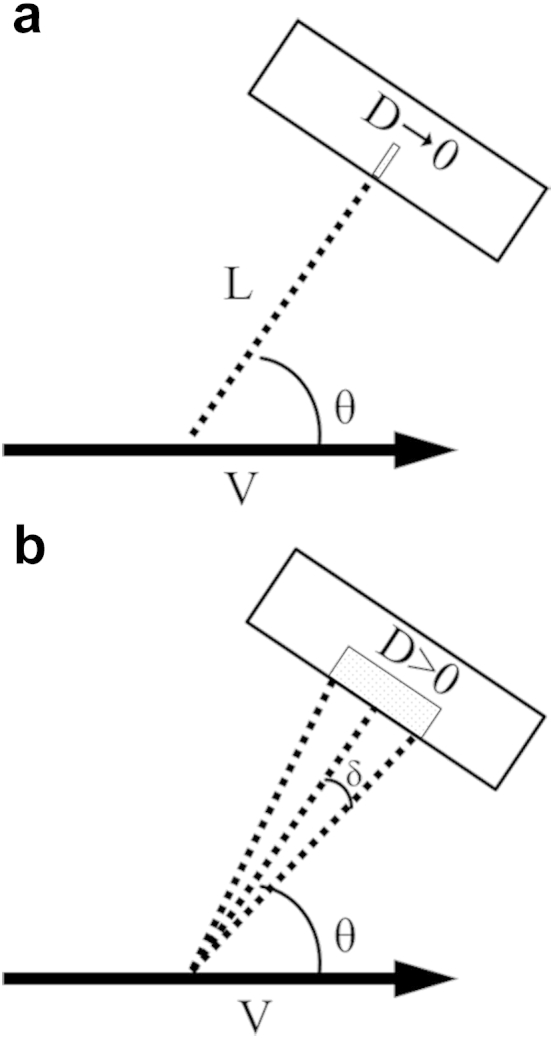
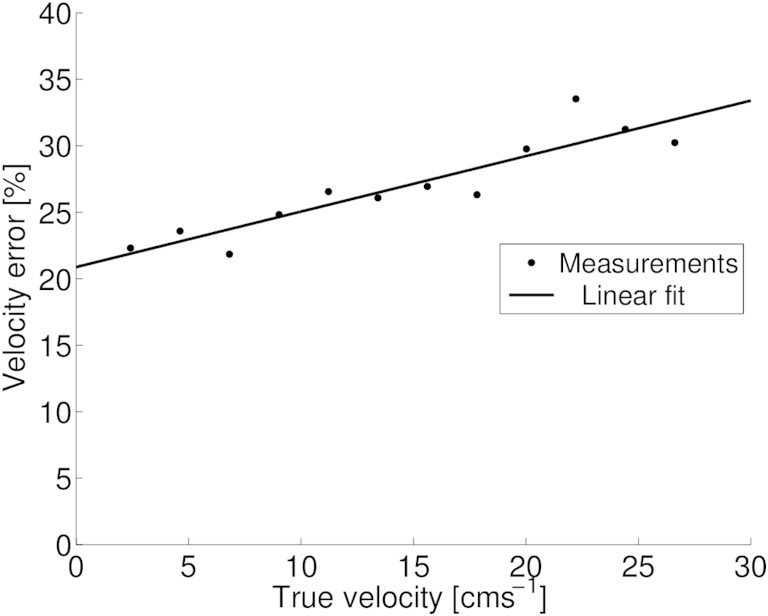
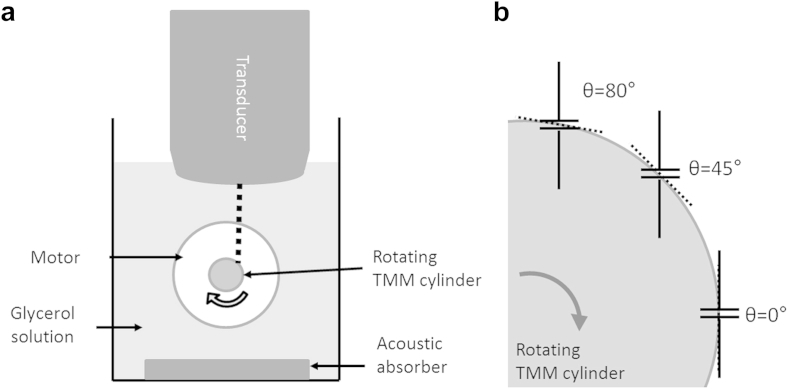
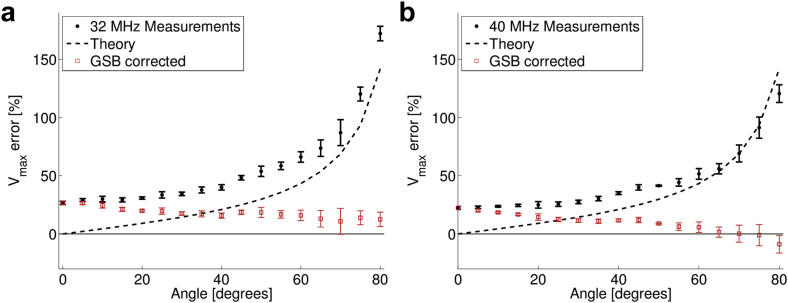
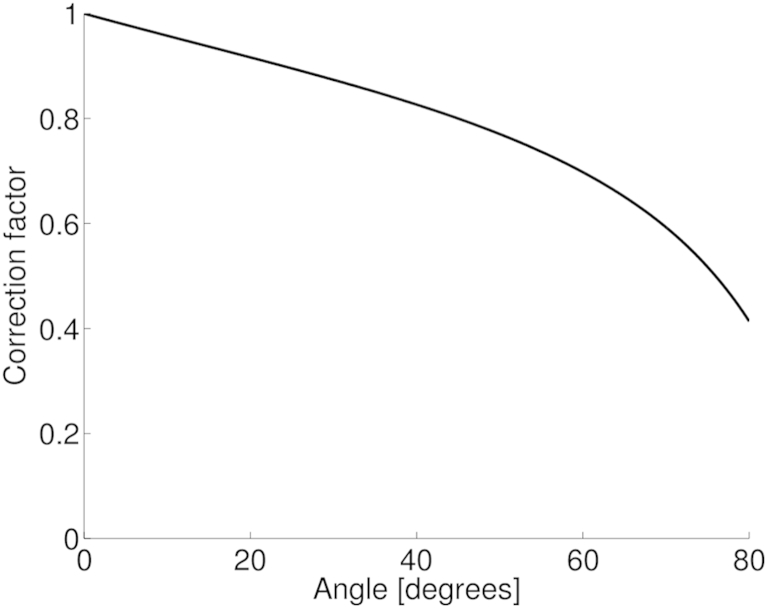
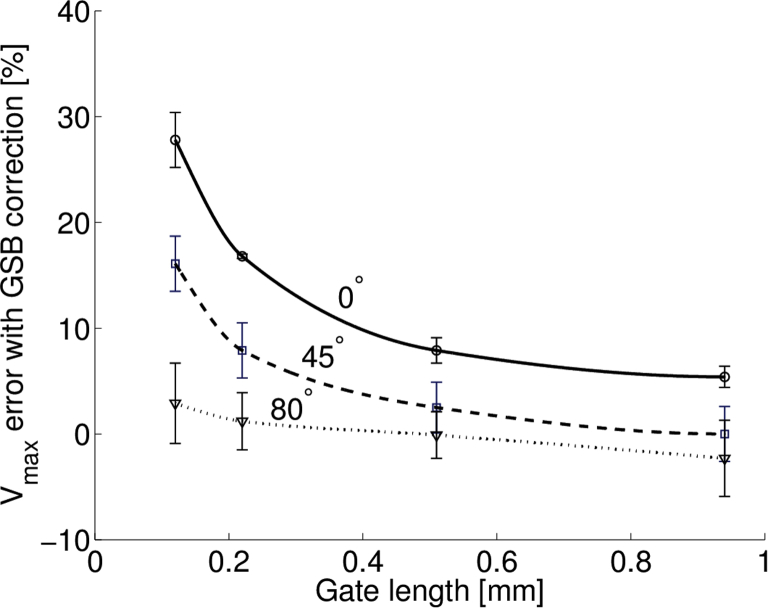
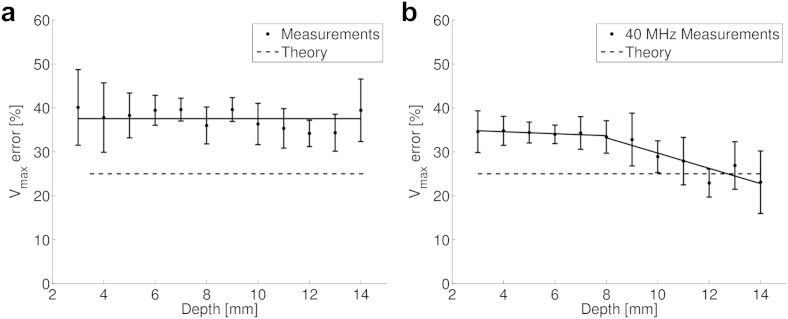
Velocity measurement errors were investigated for an array-based preclinical ultrasound scanner (Vevo 2100, FUJIFILM VisualSonics, Toronto, ON, Canada). Using a small-size rotating phantom made from a tissue-mimicking material, errors in pulse-wave Doppler maximum velocity measurements were observed. The extent of these errors was dependent on the Doppler angle, gate length, gate depth, gate horizontal placement and phantom velocity. Errors were observed to be up to 172% at high beam-target angles. It was found that small gate lengths resulted in larger velocity errors than large gate lengths, a phenomenon that has not previously been reported (e.g., for a beam-target angle of 0°, the error was 27.8% with a 0.2-mm gate length and 5.4% with a 0.98-mm gate length). The error in the velocity measurement with sample volume depth changed depending on the operating frequency of the probe. Some edge effects were observed in the horizontal placement of the sample volume, indicating a change in the array aperture size. The error in the velocity measurements increased with increased phantom velocity, from 22% at 2.4 cm/s to 30% at 26.6 cm/s. To minimise the impact of these errors, an angle-dependent correction factor was derived based on a simple ray model of geometric spectral broadening. Use of this angle-dependent correction factor reduces the maximum velocity measurement errors to <25% in all instances, significantly improving the current estimation of maximum velocity from pulse-wave Doppler ultrasound.
针对一款基于阵列的临床前超声扫描仪(Vevo 2100,富士胶片视觉超声公司,加拿大多伦多),研究了速度测量误差。使用由仿组织材料制成的小型旋转体模,观察到脉冲波多普勒最大速度测量中的误差。这些误差的程度取决于多普勒角度、取样门长度、取样门深度、取样门水平位置和体模速度。在高波束 - 目标角度下,观察到误差高达172%。发现较小的取样门长度比较大的取样门长度会导致更大的速度误差,这一现象此前尚未见报道(例如,对于波束 - 目标角度为0°,取样门长度为0.2 mm时误差为27.8%,取样门长度为0.98 mm时误差为5.4%)。取样容积深度的速度测量误差随探头工作频率而变化。在取样容积的水平放置中观察到一些边缘效应,表明阵列孔径大小发生了变化。速度测量误差随体模速度增加而增大,从2.4 cm/s时的22%增至26.6 cm/s时的30%。为了最小化这些误差的影响,基于几何频谱展宽的简单射线模型推导出了角度相关校正因子。使用此角度相关校正因子可在所有情况下将最大速度测量误差降低至<25%,显著改善了当前通过脉冲波多普勒超声对最大速度的估计。