MPI for Metabolism Research, Hamburg Outstation, c/o DESY, Notkestr. 85, 22607, Hamburg, Germany.
DZNE (German Center for Neurodegenerative Diseases), Ludwig-Erhard-Allee 2, 53175, Bonn, Germany.
Acta Neuropathol Commun. 2015 May 10;3:25. doi: 10.1186/s40478-015-0204-4.
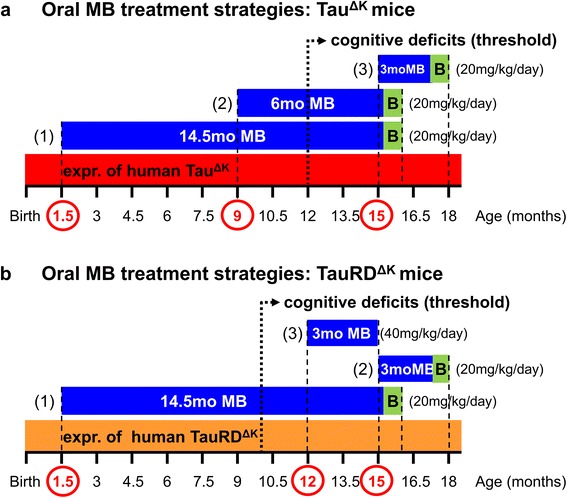
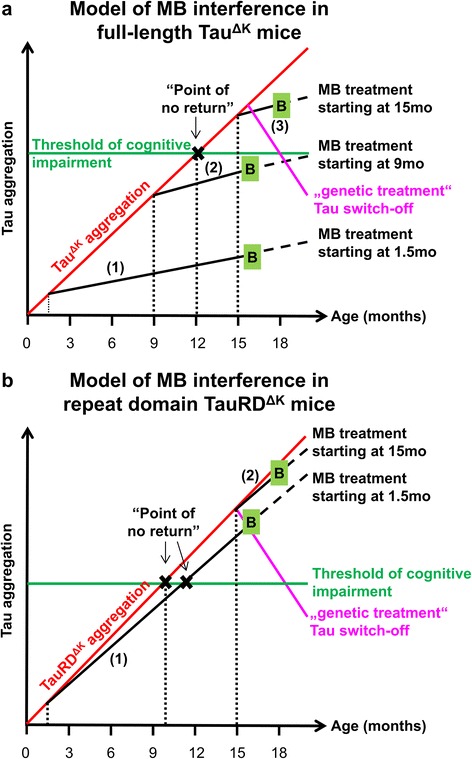
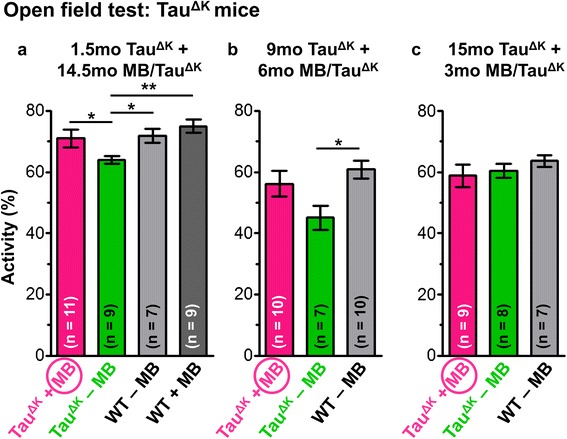
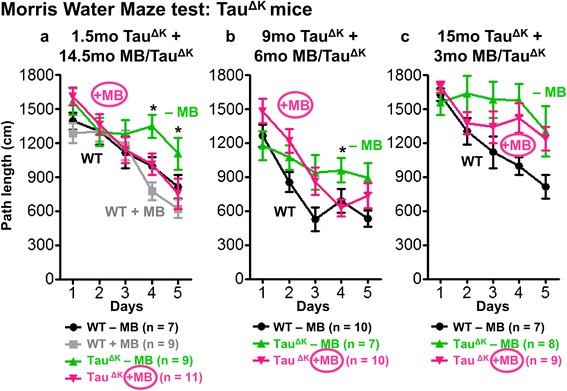
Neurofibrillary tangles (NFT) composed of Tau are hallmarks of neurodegeneration in Alzheimer disease. Transgenic mice expressing full-length pro-aggregant human Tau (2N4R Tau-ΔK280, termed Tau(ΔK)) or its repeat domain (TauRD-ΔK280, TauRD(ΔK)) develop a progressive Tau pathology with missorting, phosphorylation, aggregation of Tau, loss of synapses and functional deficits. Whereas TauRD(ΔK) assembles into NFT concomitant with neuronal death, Tau(ΔK) accumulates into Tau pretangles without overt neuronal loss. Both forms cause a comparable cognitive decline (with onset at 10mo and 12mo, respectively), which is rescued upon switch-off of transgene expression. Since methylene blue (MB) is able to inhibit Tau aggregation in vitro, we investigated whether MB can prevent or rescue Tau-induced cognitive impairments in our mouse models. Both types of mice received MB orally using different preventive and therapeutic treatment protocols, initiated either before or after disease onset. The cognitive status of the mice was assessed by behavior tasks (open field, Morris water maze) to determine the most successful conditions for therapeutic intervention.
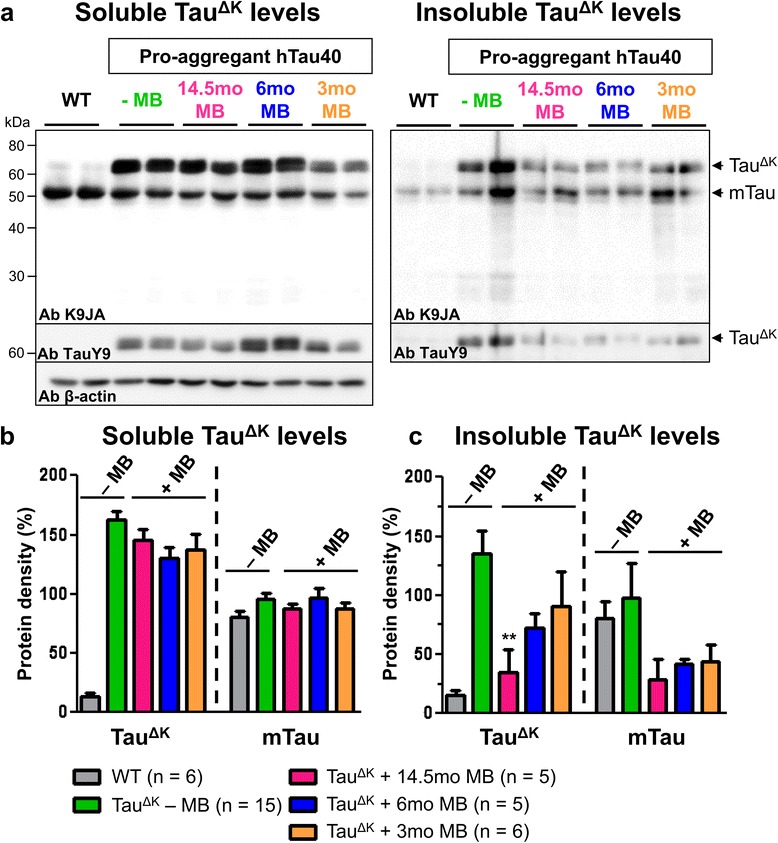
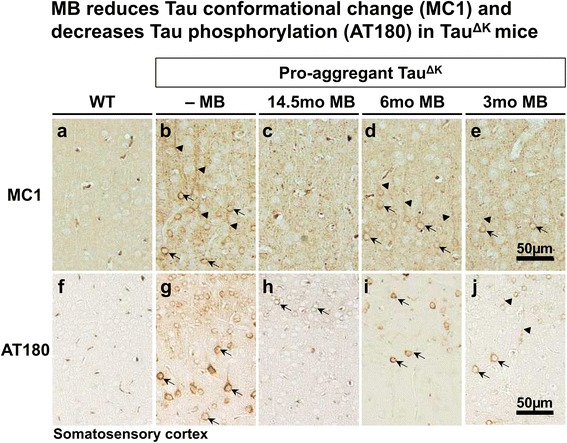
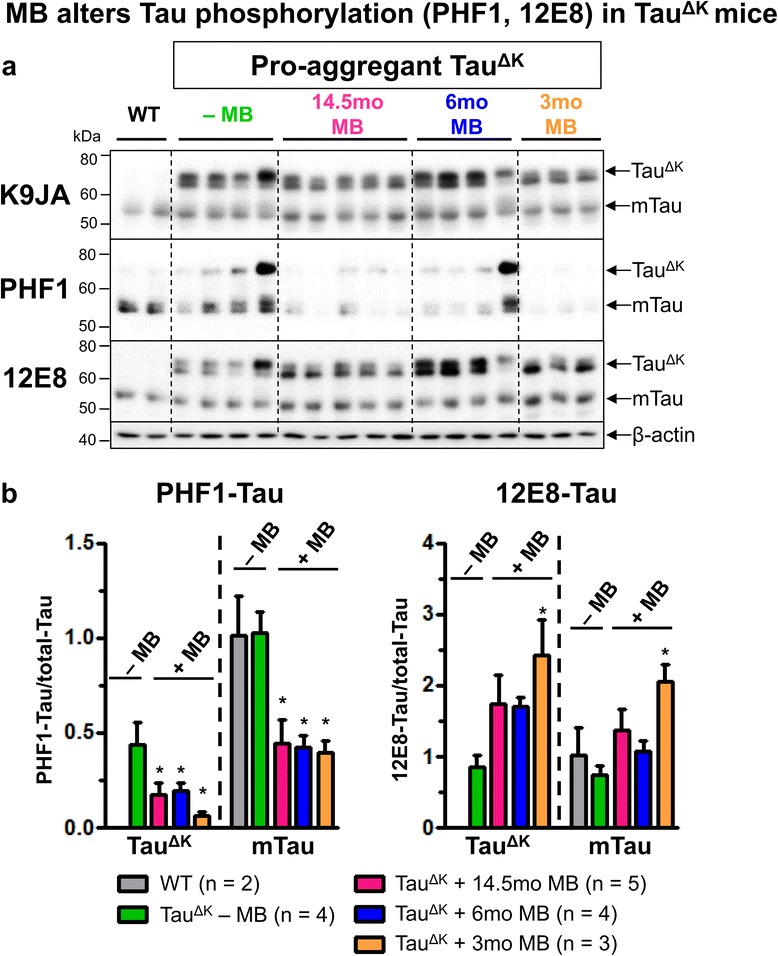
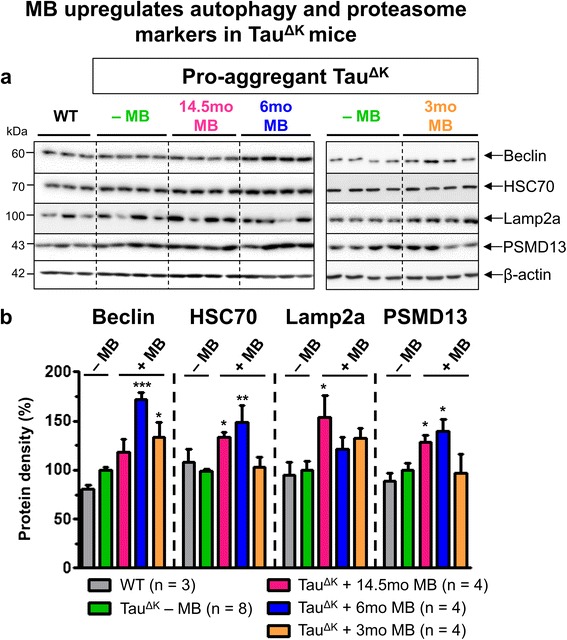
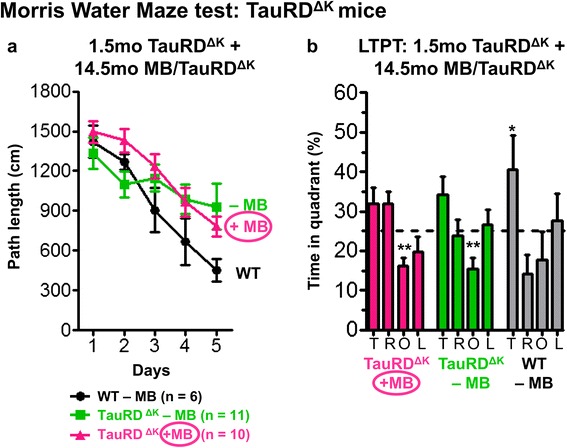
Preventive and therapeutic MB application failed to avert or recover learning and memory deficits of TauRD(ΔK) mice. Similarly, therapeutic MB treatment initiated after onset of cognitive impairments was ineffective in Tau(ΔK) mice. In contrast, preventive MB application starting before onset of functional deficits preserved cognition of Tau(ΔK) mice. Beside improved learning and memory, MB-treated Tau(ΔK) mice showed a strong decrease of insoluble Tau, a reduction of conformationally changed (MC1) and phosphorylated Tau species (AT180, PHF1) as well as an upregulation of protein degradation systems (autophagy and proteasome). This argues for additional pleiotropic effects of MB beyond its properties as Tau aggregation inhibitor.
Our data support the use of Tau aggregation inhibitors as potential drugs for the treatment of AD and other tauopathies and highlights the need for preventive treatment before onset of cognitive impairments.
神经原纤维缠结(NFT)由 Tau 组成,是阿尔茨海默病神经退行性变的标志。表达全长聚集性人 Tau(2N4R Tau-ΔK280,称为 Tau(ΔK))或其重复结构域(TauRD-ΔK280,TauRD(ΔK))的转基因小鼠会发生 Tau 病理进展,表现为 Tau 错误定位、磷酸化、聚集、突触丢失和功能缺陷。虽然 TauRD(ΔK)组装成 NFT 伴随着神经元死亡,但 Tau(ΔK)在没有明显神经元丢失的情况下积累为 Tau 预缠结。这两种形式都会导致类似的认知能力下降(分别在 10 个月和 12 个月时出现),而当转基因表达关闭时,这种下降可以得到挽救。由于亚甲蓝(MB)能够抑制 Tau 在体外的聚集,我们研究了 MB 是否可以预防或挽救我们的小鼠模型中的 Tau 诱导的认知障碍。两种类型的小鼠都通过不同的预防和治疗性治疗方案经口给予 MB,在疾病发作之前或之后开始给药。通过行为任务(旷场实验、Morris 水迷宫)评估小鼠的认知状态,以确定治疗干预最成功的条件。
预防和治疗性 MB 应用都未能避免或恢复 TauRD(ΔK)小鼠的学习和记忆缺陷。同样,在 Tau(ΔK)小鼠认知障碍发作后开始的治疗性 MB 治疗也无效。相比之下,在认知障碍发作前开始的预防性 MB 应用可保留 Tau(ΔK)小鼠的认知能力。除了改善学习和记忆能力外,MB 治疗的 Tau(ΔK)小鼠还表现出不溶性 Tau 大量减少,构象改变(MC1)和磷酸化 Tau 物种(AT180、PHF1)减少,以及蛋白降解系统(自噬和蛋白酶体)上调。这表明 MB 除了作为 Tau 聚集抑制剂的特性之外,还具有其他多效性效应。
我们的数据支持将 Tau 聚集抑制剂作为治疗 AD 和其他 Tau 病的潜在药物,并强调在认知障碍发作之前需要进行预防性治疗。