van Rijn S J, Hanson J M, Zierikzee D, Kooistra H S, Penning L C, Tryfonidou M A, Meij B P
Department of Clinical Sciences of Companion Animals, Faculty of Veterinary Medicine, Utrecht University, Utrecht, The Netherlands.
Department of Clinical Sciences, Swedish University of Agricultural Sciences, Uppsala, Sweden.
J Vet Intern Med. 2015 May-Jun;29(3):869-76. doi: 10.1111/jvim.12601. Epub 2015 May 8.
Transsphenoidal hypophysectomy is an effective treatment for dogs with pituitary-dependent hypercortisolism (PDH). However, long-term recurrence of hypercortisolism is a well-recognized problem, indicating the need for reliable prognostic indicators.
The aim of this study was to evaluate the prognostic value of perioperative plasma ACTH and cortisol concentrations for identifying recurrence of hypercortisolism after transsphenoidal hypophysectomy.
A total of 112 dogs with PDH that underwent transsphenoidal hypophysectomy met the inclusion criteria of the study.
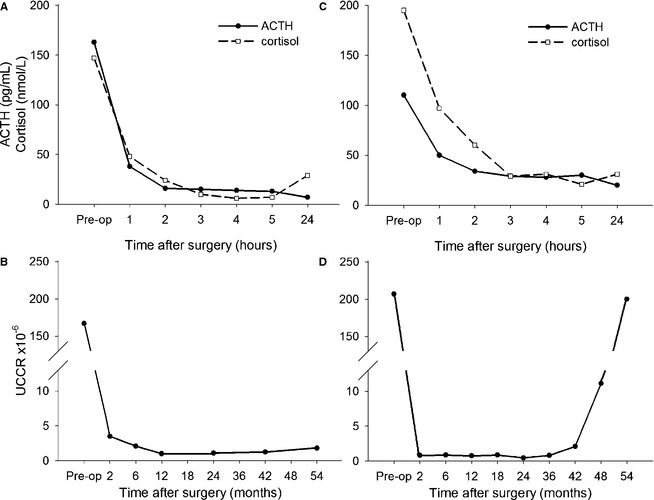
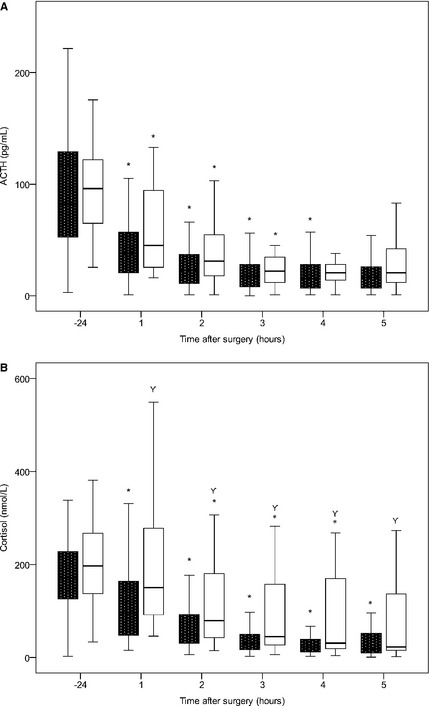
Hormone concentrations were measured preoperatively and 1-5 hours after surgery. Both absolute hormone concentrations and postoperative concentrations normalized to preoperative concentrations were included in analyses. The prognostic value of hormone concentrations was studied with Cox's proportional hazard analysis.
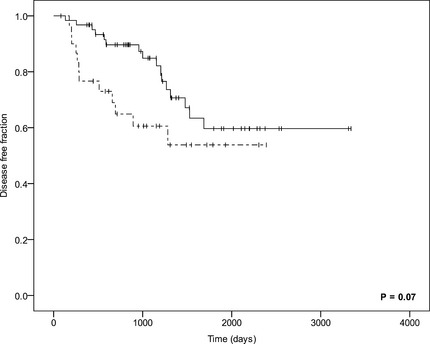
Median follow-up and disease-free period were 1096 days and 896 days, respectively. Twenty-eight percent of patients had recurrence, with a median disease-free period of 588 days. Both absolute and normalized postoperative cortisol concentrations were significantly higher in dogs with recurrence than in dogs without recurrence. High ACTH 5 hours after surgery, high cortisol 1 and 4 hours after surgery, high normalized ACTH 3 hours after surgery, high normalized cortisol 4 hours after surgery and the random slope of cortisol were associated with a shorter disease-free period.
Individual perioperative hormone curves provide valuable information about the risk of recurrence after hypophysectomy. However, because no single cutoff point could be identified, combination with other variables, such as the pituitary height/brain area (P/B) ratio, is still needed to obtain a good estimate of the risk for recurrence of hypercortisolism after hypophysectomy.
经蝶窦垂体切除术是治疗垂体依赖性高皮质醇血症(PDH)犬的有效方法。然而,高皮质醇血症的长期复发是一个公认的问题,这表明需要可靠的预后指标。
本研究旨在评估围手术期血浆促肾上腺皮质激素(ACTH)和皮质醇浓度对经蝶窦垂体切除术后高皮质醇血症复发的预后价值。
共有112只接受经蝶窦垂体切除术的PDH犬符合本研究的纳入标准。
术前及术后1 - 5小时测量激素浓度。分析中包括激素绝对浓度以及术后浓度与术前浓度的比值。采用Cox比例风险分析研究激素浓度的预后价值。
中位随访期和无病期分别为1096天和896天。28%的患者出现复发,中位无病期为588天。复发犬术后皮质醇的绝对浓度和比值均显著高于未复发犬。术后5小时ACTH水平高、术后1小时和4小时皮质醇水平高、术后3小时标准化ACTH水平高、术后4小时标准化皮质醇水平高以及皮质醇的随机斜率与较短的无病期相关。
围手术期个体激素曲线可为垂体切除术后复发风险提供有价值的信息。然而,由于无法确定单一的临界值,仍需结合其他变量,如垂体高度/脑面积(P/B)比值,以更好地评估垂体切除术后高皮质醇血症复发的风险。