Xu Hui, Sun Huiying, Zhang Haiyuan, Liu Jiawei, Fan Fangfang, Li Yilan, Ning Xuelian, Sun Yue, Dai Shaochun, Liu Baogang, Gao Min, Fu Songbin, Zhou Chunshui
The Laboratory of Medical Genetics, Harbin Medical University, Harbin, China.
The Tumor Hospital, Harbin Medical University, Harbin, China.
PLoS One. 2015 May 11;10(5):e0124033. doi: 10.1371/journal.pone.0124033. eCollection 2015.
Lung cancer is emerging rapidly as the leading death cause in Chinese cancer patients. The causal factors for Chinese lung cancer development remain largely unclear. Here we employed an shRNA library-based loss-of-function screen in a genome-wide and unbiased manner to interrogate potential tumor suppressor candidates in the immortalized human lung epithelial cell line BEAS-2B.
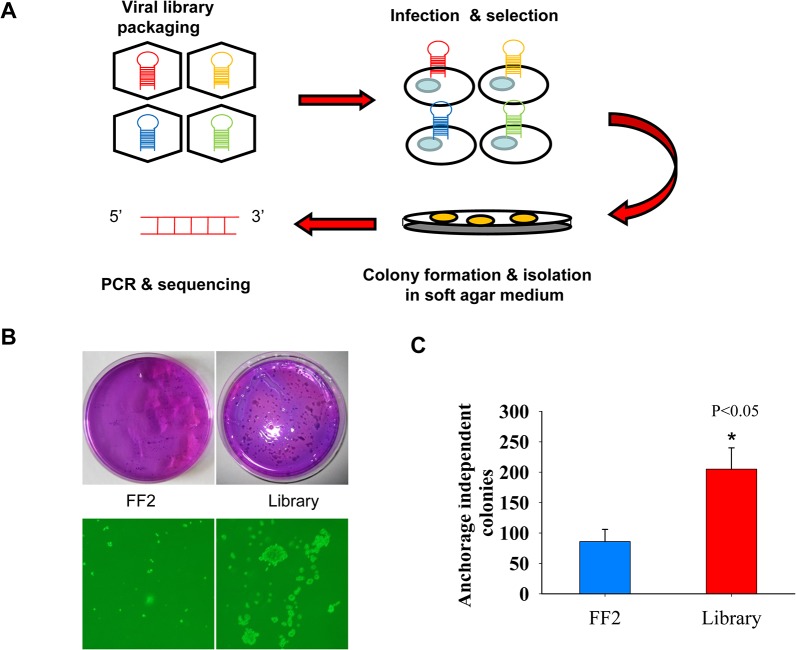
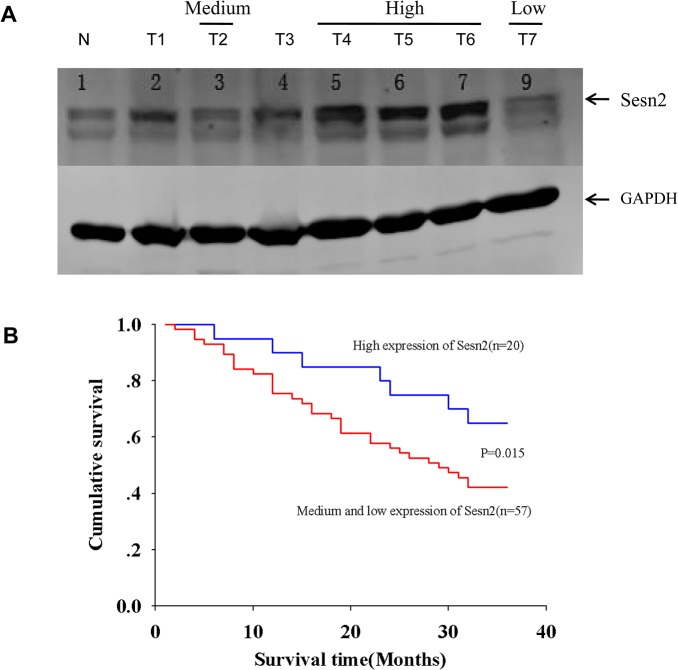
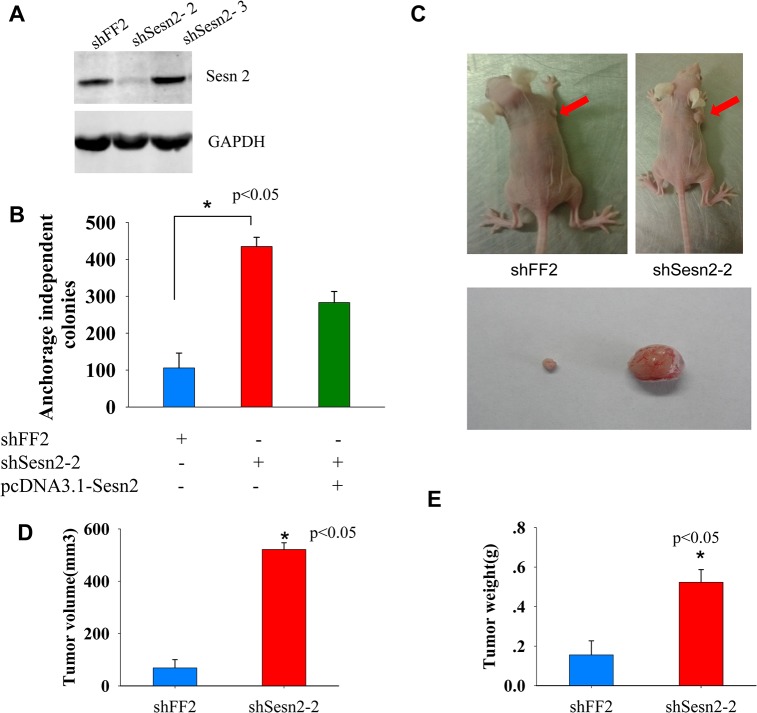
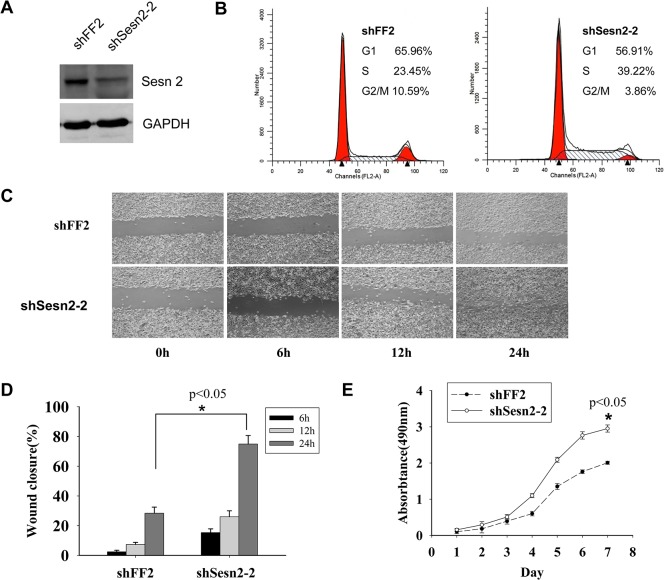
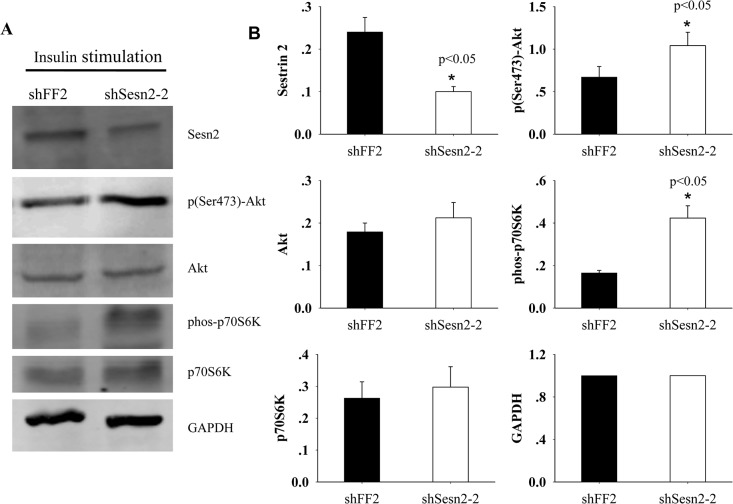
METHODS/RESULTS: Soft agar assays were conducted for screening BEAS-2B cells infected with the retroviral shRNA library with the acquired feature of anchorage-independent growth, large (>0.5mm in diameter) and well-separated colonies were isolated for proliferation. PCRs were performed to amplify the integrated shRNA fragment from individual genomic DNA extracted from each colony, and each PCR product is submitted for DNA sequencing to reveal the integrated shRNA and its target gene. A total of 6 candidate transformation suppressors including INPP4B, Sesn2, TIAR, ACRC, Nup210, LMTK3 were identified. We validated Sesn2 as the candidate of lung cancer tumor suppressor. Knockdown of Sesn2 by an shRNA targeting 3' UTR of Sesn2 transcript potently stimulated the proliferation and malignant transformation of lung bronchial epithelial cell BEAS-2B via activation of Akt-mTOR-p70S6K signaling, whereas ectopic expression of Sens2 re-suppressed the malignant transformation elicited by the Sesn2 shRNA. Moreover, knockdown of Sesn2 in BEAS-2B cells promoted the BEAS-2B cell-transplanted xenograft tumor growth in nude mice. Lastly, DNA sequencing indicated mutations of Sesn2 gene are rare, the protein levels of Sesn2 of 77 Chinese lung cancer patients varies greatly compared to their adjacent normal tissues, and the low expression level of Sesn2 associates with the poor survival in these examined patients by Kaplan Meier analysis.
Our shRNA-based screen has demonstrated Sesn2 is a potential tumor suppressor in lung epithelial cells. The expression level of Sesn2 may serve as a prognostic marker for Chinese lung cancer patients in the clinic.
肺癌正迅速成为中国癌症患者的主要死因。中国肺癌发生的致病因素在很大程度上仍不清楚。在此,我们以全基因组、无偏倚的方式,利用基于短发夹RNA(shRNA)文库的功能丧失筛选方法,在永生化的人肺上皮细胞系BEAS-2B中探究潜在的肿瘤抑制候选基因。
方法/结果:进行软琼脂试验以筛选感染逆转录病毒shRNA文库且获得不依赖贴壁生长特性的BEAS-2B细胞,分离出大的(直径>0.5mm)且分离良好的集落用于增殖。进行聚合酶链反应(PCR)以从每个集落提取的单个基因组DNA中扩增整合的shRNA片段,每个PCR产物提交进行DNA测序以揭示整合的shRNA及其靶基因。共鉴定出6个候选转化抑制因子,包括肌醇多磷酸-4-磷酸酶Ⅱ型(INPP4B)、硒蛋白S(Sesn2)、TIA-1相关蛋白(TIAR)、ACRC、核孔蛋白210(Nup210)、丝氨酸/苏氨酸激酶3(LMTK3)。我们验证了Sesn2作为肺癌肿瘤抑制因子的候选基因。通过靶向Sesn2转录本3'非翻译区的shRNA敲低Sesn2,通过激活Akt-雷帕霉素靶蛋白(mTOR)-核糖体蛋白S6激酶(p70S6K)信号通路,有力地刺激了肺支气管上皮细胞BEAS-2B的增殖和恶性转化,而Sesn2的异位表达重新抑制了由Sesn2 shRNA引发的恶性转化。此外,在BEAS-2B细胞中敲低Sesn2促进了BEAS-2B细胞移植裸鼠异种移植瘤的生长。最后,DNA测序表明Sesn2基因的突变很少见,77例中国肺癌患者的Sesn2蛋白水平与其相邻正常组织相比差异很大,通过Kaplan-Meier分析,Sesn2低表达水平与这些受试患者的不良生存相关。
我们基于shRNA的筛选表明Sesn2是肺上皮细胞中的一种潜在肿瘤抑制因子。Sesn2的表达水平可能作为中国肺癌患者临床预后的一个标志物。