Chae Hee Sung, Gil Minchan, Saha Subbroto Kumar, Kwak Hee Jeung, Park Hwan-Woo, Vellingiri Balachandar, Cho Ssang-Goo
Department of Stem Cell and Regenerative Biotechnology, Incurable Disease Animal Model & Stem Cell Institute (IDASI), Konkuk University, 120 Neungdong-ro, Gwangjin-gu, Seoul 05029, Korea.
Department of Cell Biology, Konyang University College of Medicine, Daejeon 35365, Korea.
J Pers Med. 2020 Sep 1;10(3):109. doi: 10.3390/jpm10030109.
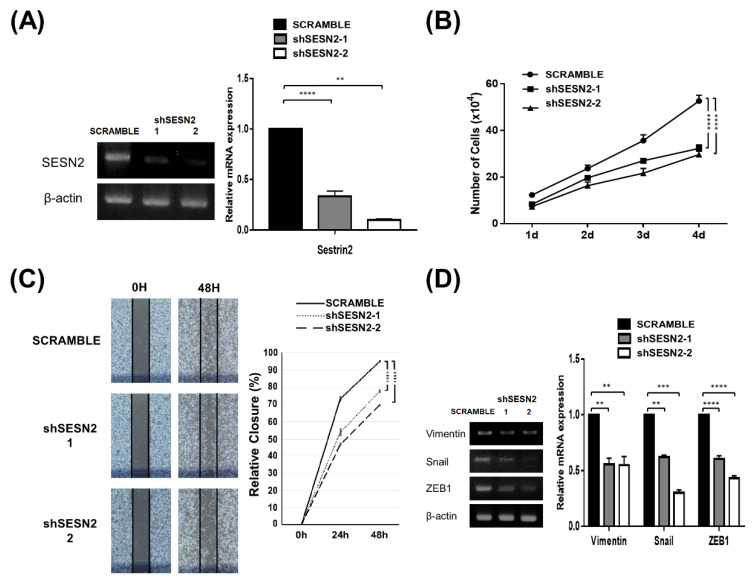
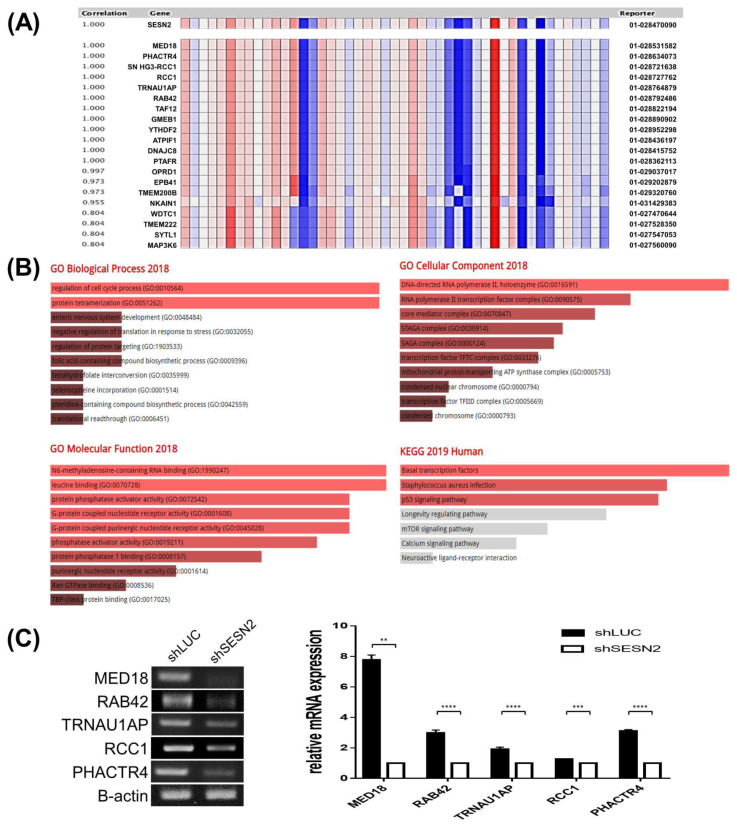
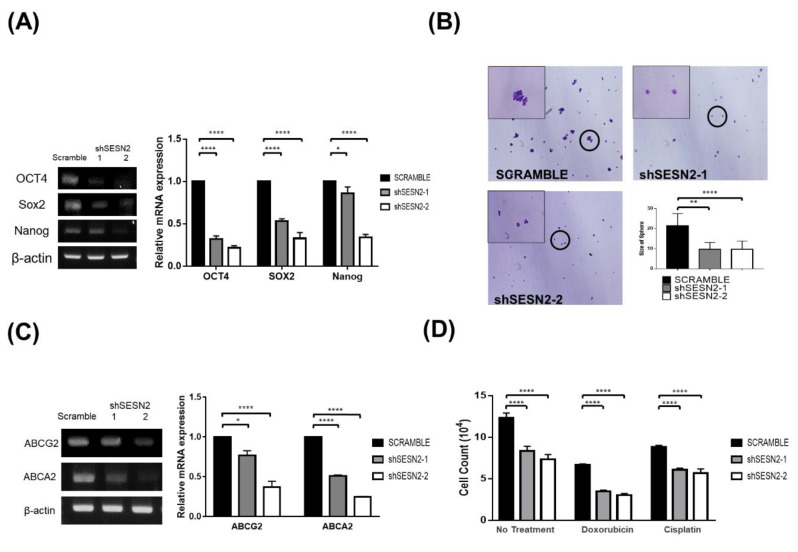
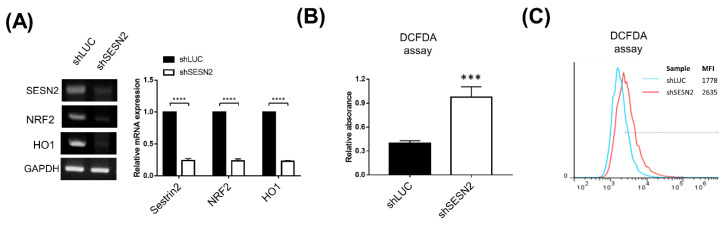
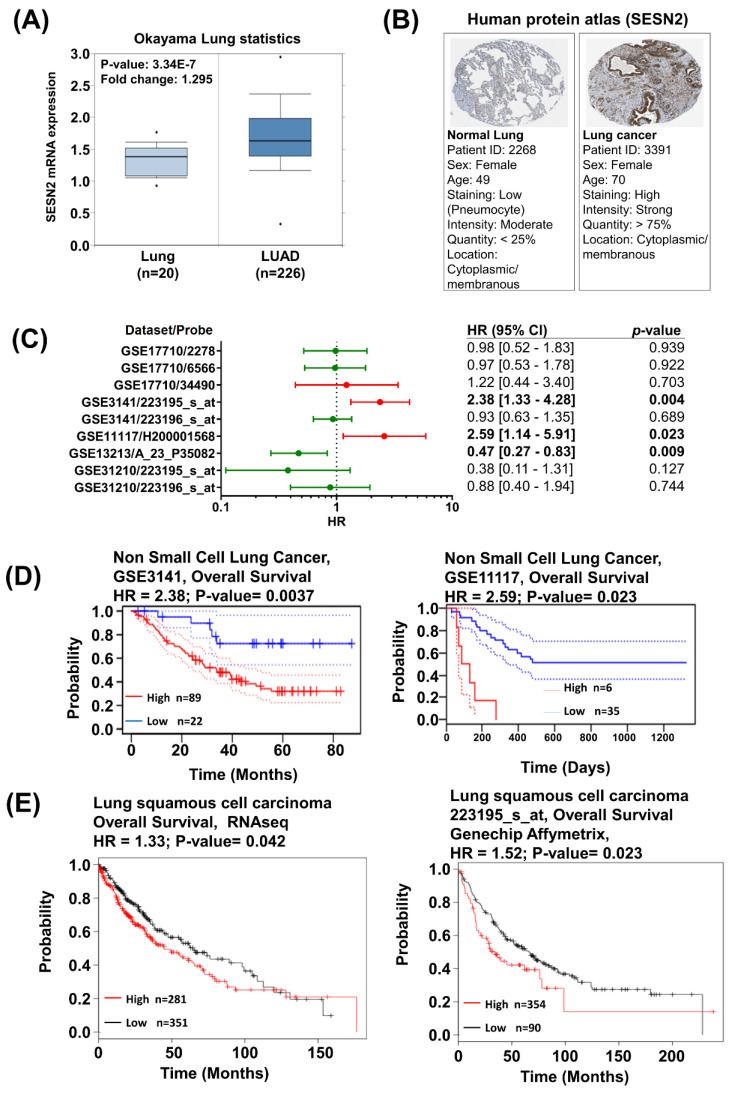
Lung cancer remains the most dangerous type of cancer despite recent progress in therapeutic modalities. Development of prognostic markers and therapeutic targets is necessary to enhance lung cancer patient survival. Sestrin family genes (Sestrin1, Sestrin2, and Sestrin3) are involved in protecting cells from stress. In particular, Sestrin2, which mainly protects cells from oxidative stress and acts as a leucine sensor protein in mammalian target of rapamycin (mTOR) signaling, is thought to affect various cancers in different ways. To investigate the role of Sestrin2 expression in lung cancer cells, we knocked down Sestrin2 in A549, a non-small cell lung cancer cell line; this resulted in reduced cell proliferation, migration, sphere formation, and drug resistance, suggesting that Sestrin2 is closely related to lung cancer progression. We analyzed Sestrin2 expression in human tissue using various bioinformatic databases and confirmed higher expression of Sestrin2 in lung cancer cells than in normal lung cells using Oncomine and the Human Protein Atlas. Moreover, analyses using Prognoscan and KMplotter showed that Sestrin2 expression is negatively correlated with the survival of lung cancer patients in multiple datasets. Co-expressed gene analysis revealed Sestrin2-regulated genes and possible associated pathways. Overall, these data suggest that Sestrin2 expression has prognostic value and that it is a possible therapeutic target in lung cancer.
尽管近年来治疗方式取得了进展,但肺癌仍然是最危险的癌症类型。开发预后标志物和治疗靶点对于提高肺癌患者的生存率至关重要。Sestrin家族基因(Sestrin1、Sestrin2和Sestrin3)参与保护细胞免受应激。特别是Sestrin2,它主要保护细胞免受氧化应激,并在哺乳动物雷帕霉素靶蛋白(mTOR)信号传导中作为亮氨酸传感蛋白发挥作用,被认为以不同方式影响各种癌症。为了研究Sestrin2表达在肺癌细胞中的作用,我们在非小细胞肺癌细胞系A549中敲低了Sestrin2;这导致细胞增殖、迁移、球体形成和耐药性降低,表明Sestrin2与肺癌进展密切相关。我们使用各种生物信息数据库分析了人类组织中Sestrin2的表达,并使用Oncomine和人类蛋白质图谱证实肺癌细胞中Sestrin2的表达高于正常肺细胞。此外,使用Prognoscan和KMplotter进行的分析表明,在多个数据集中,Sestrin2表达与肺癌患者的生存率呈负相关。共表达基因分析揭示了Sestrin2调节的基因和可能相关的途径。总体而言,这些数据表明Sestrin2表达具有预后价值,并且它可能是肺癌的治疗靶点。