Jin Qi, Pehrson Steen, Jacobsen Peter Karl, Chen Xu
Department of Cardiology, The Heart Centre, Rigshospitalet, University of Copenhagen, Copenhagen, Denmark.
Department of Cardiology, Shanghai Ruijin Hospital, Shanghai Jiao Tong University School of Medicine, Shanghai, China.
BMC Cardiovasc Disord. 2015 May 12;15:38. doi: 10.1186/s12872-015-0031-3.
Different atrial arrhythmias can coexist in the recipient and donor atria after heart transplantation.
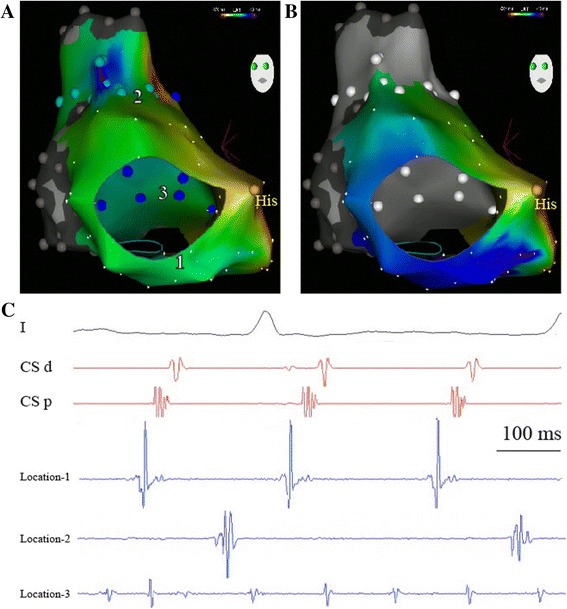
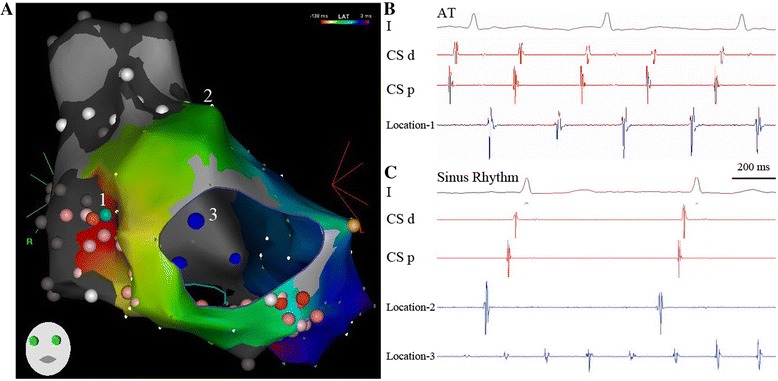
We report an unusual case of a patient with three different types of atrial arrhythmia after heart transplantation: an atrial fibrillation in the recipient atria, and a cavotricuspid isthmus dependent atrial flutter and a focal atrial tachycardia in the donor atria. 3D electroanatomical mapping and ablation were guided by remote magnetic navigation (RMN). Atrial fibrillation continued in the recipient atria even after the donor heart was converted to sinus rhythm by ablation.
It is critical to understand the surgical anatomy of a bi-atrial anastomosis and its relevant electrical activation pattern before ablation. Appropriate electroanatomical mapping strategy with RMN can facilitate the successful ablation of post-transplant atrial arrhythmias.
心脏移植后,受者和供者心房可并存不同类型的房性心律失常。
我们报告了一例心脏移植后出现三种不同类型房性心律失常的罕见病例:受者心房为房颤,供者心房为三尖瓣峡部依赖性房扑和局灶性房性心动过速。采用远程磁导航(RMN)指导三维电解剖标测和消融。即使通过消融使供者心脏恢复窦性心律,受者心房仍持续存在房颤。
在消融前了解双房吻合口的手术解剖结构及其相关电激动模式至关重要。采用RMN的适当电解剖标测策略有助于成功消融移植后房性心律失常。